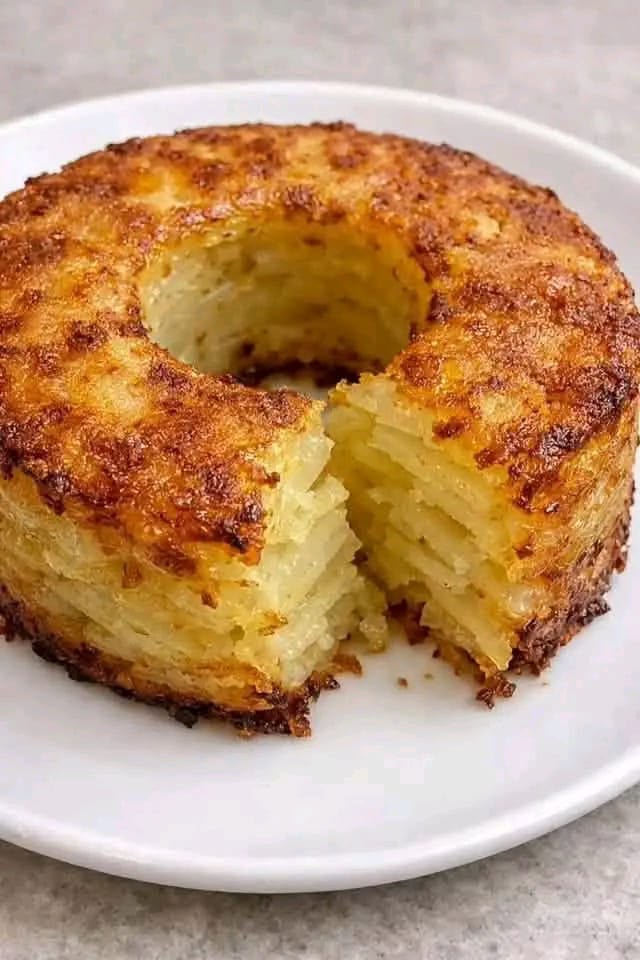
Crispy Potato Ring Cake
A beautifully golden potato ring cake is a wonderful way to turn everyday potatoes into something special. With crisp, buttery edges, delicate layers of tender potatoes and melted cheese throughout, this savoury bake looks impressive while using familiar kitchen ingredients.
Unlike ordinary mashed potatoes or roasted potato wedges, this recipe creates an attractive ring-shaped potato cake. Thin slices of potato are coated in a seasoned egg and butter mixture, combined with mozzarella or cheddar, and packed into a Bundt tin before baking until golden.
The result is a delightful contrast of textures. The outer crust becomes deeply browned and slightly crunchy, while the centre stays soft, rich and full of cheesy flavour. Every slice reveals the beautiful layers that make this dish particularly appealing.
One of the best things about this crispy potato ring cake is its versatility. Serve it alongside roast chicken, grilled vegetables or a hearty Sunday dinner. It also makes an attractive centrepiece for a family brunch, holiday gathering or weekend meal.
Although the finished cake looks elaborate, the method is straightforward. The most important details are slicing the potatoes evenly, coating them thoroughly, packing them firmly into the tin and allowing the baked ring to rest before turning it out.
If you enjoy comforting potato recipes with golden edges and a creamy middle, this cheesy potato ring cake deserves a place on your table.
Recipe Overview
- Recipe Name: Crispy Potato Ring Cake
- Category: Side Dish
- Style: Homemade savoury potato bake
- Preparation Time: Approximately 20 minutes
- Cooking Time: 45–55 minutes, plus optional 5–10 minutes for extra crispiness
- Resting Time: 10 minutes
- Total Time: Approximately 1 hour 15 minutes to 1 hour 35 minutes
- Servings: Approximately 6–8
- Oven Temperature: 400°F (200°C)
- Cooking Method: Oven baking
- Recommended Pan: Bundt tin or ring-shaped baking tin
- Difficulty: Easy to moderate
- Main Ingredients: Potatoes, cheese, eggs, Parmesan, flour and butter
The finished yield depends on the size of the potatoes and baking tin. A medium-sized ring tin works well, provided the potato mixture fits comfortably without overflowing.
Why You’ll Love This Recipe
- Beautiful presentation: The ring shape makes this humble potato dish look attractive enough for a special meal.
- Crispy exterior: Butter, cheese and oven heat help develop a richly coloured crust.
- Soft layered centre: Thin slices of potato become tender as they bake together.
- Delicious cheesy flavour: Mozzarella or cheddar and Parmesan add richness to every bite.
- Simple ingredients: The recipe uses affordable pantry staples and everyday potatoes.
- Family friendly: Its mild garlic and cheese flavours make it suitable for a wide range of tastes.
- Versatile serving options: Enjoy it for brunch, lunch, dinner or as a holiday side dish.
- Easy to customise: Herbs, different cheeses and carefully chosen vegetables can create new versions.
Ingredients
Gather the following ingredients before you begin. The quantities below follow the original recipe.
Potatoes and Cheese
- 4 large potatoes, peeled
- 1½ cups shredded mozzarella or cheddar cheese
- ½ cup grated Parmesan cheese
Binding Ingredients
- 2 large eggs
- ¼ cup plain flour (all-purpose flour)
- 3 tablespoons melted butter
Seasonings
- 1 teaspoon garlic powder
- ½ teaspoon onion powder
- ½ teaspoon paprika
- ½ teaspoon salt
- ¼ teaspoon black pepper
A little of the measured shredded cheese may be reserved for sprinkling over the cake before baking. Butter or another suitable cooking fat may be used to grease the pan; this is a preparation aid rather than an additional measured recipe ingredient.
Ingredient Notes
Potatoes
Potatoes are the main ingredient, so their variety and preparation affect the finished texture. Choose firm, fresh potatoes without green patches or signs of spoilage.
All-purpose varieties such as Maris Piper or Yukon Gold are suitable choices. They become tender during baking while providing enough structure for the stacked layers.
Cutting the potatoes into thin, even slices is particularly important. Thick pieces can remain firm while the outside of the cake browns.
Mozzarella or Cheddar
Mozzarella creates a mild, creamy flavour and a stretchy melted texture. Cheddar produces a stronger savoury taste and contributes to the golden cheese crust.
Either option works, or you can combine the two within the original 1½-cup quantity.
Parmesan Cheese
Parmesan adds concentrated savoury flavour and helps create a beautifully browned surface. Finely grated Parmesan distributes more evenly between the potato layers.
Eggs
The eggs help bind the potatoes, flour and cheese so the baked ring holds together when sliced. Whisking them thoroughly also helps the seasonings spread evenly.
Plain Flour
Flour absorbs some of the moisture released by the potatoes and contributes to the structure of the cake. It should be distributed evenly rather than added in one concentrated spot.
Melted Butter
Butter contributes richness and encourages golden browning. Allow it to cool slightly after melting so it combines smoothly with the eggs.
Garlic and Onion Powder
These seasonings add a gentle savoury flavour throughout the potato layers without introducing additional moisture.
Paprika
Paprika adds warm colour and mild flavour. Sweet paprika is a good choice for the original recipe.
Salt and Black Pepper
Salt enhances the flavour of the potatoes and cheese, while black pepper adds a subtle warmth. Remember that Parmesan also contributes saltiness.
Equipment You’ll Need
- Bundt tin or ring-shaped baking tin
- Large mixing bowl
- Small mixing bowl
- Mandoline slicer or sharp kitchen knife
- Whisk
- Measuring cups and spoons
- Spatula or large mixing spoon
- Pastry brush for greasing the tin
- Oven gloves
- Serving plate
- Thin silicone spatula for loosening the edges
A mandoline makes it easier to achieve uniformly thin potato slices. Always use its safety guard and keep your fingers clear of the blade.
Step-by-Step Instructions
Step 1: Preheat the Oven
Preheat your oven to 400°F (200°C). Generously grease a Bundt tin or ring-shaped baking tin, paying particular attention to the central tube, corners and decorative grooves.
Thorough greasing reduces sticking and makes it easier to release the finished cake.
Step 2: Prepare the Potatoes
Peel all four potatoes and slice them very thinly with a mandoline or sharp knife. Aim for slices approximately 1–2 mm thick where practical.
Try to keep the thickness consistent so the layers cook at roughly the same rate.
Step 3: Mix the Egg Seasoning
In a large bowl, whisk the two eggs with the three tablespoons of melted butter.
Add the garlic powder, onion powder, paprika, salt and black pepper. Whisk until the mixture looks evenly combined.
Step 4: Coat the Potatoes
Add the sliced potatoes to the seasoned egg mixture. Toss carefully until the slices are coated on both sides.
Separate any slices that have stuck together so the seasoning can reach the individual layers.
Step 5: Add the Cheese and Flour
Add the shredded mozzarella or cheddar, grated Parmesan and plain flour.
Mix gently using a spatula or clean hands until the cheese and flour are distributed throughout the potatoes. Avoid breaking the slices unnecessarily.
Step 6: Fill the Ring Tin
Transfer the potato mixture to the prepared tin. Arrange the slices tightly, spreading them evenly around the ring.
Press the mixture down gently as you go. This helps remove large air gaps and produces a more stable cake.
Step 7: Add the Cheese Topping
Sprinkle a little reserved shredded cheese over the exposed surface for additional browning.
Use some of the original measured cheese rather than adding an unmeasured extra quantity.
Step 8: Bake Until Golden
Place the tin in the preheated oven and bake for 45–55 minutes.
The cake should develop a deep golden exterior, and the potatoes should be tender all the way through. Test a thick section with a thin skewer or knife. It should pass through the layers without meeting firm, raw potato.
If the surface browns too quickly, loosely cover it with foil while the centre finishes cooking.
Step 9: Allow the Cake to Rest
Remove the tin from the oven and leave the potato ring to rest for approximately 10 minutes.
This resting period allows the cheese and egg mixture to settle, reducing the chance of the cake breaking during unmoulding.
Step 10: Invert onto a Plate
Carefully loosen the exposed outer and inner edges using a thin silicone spatula.
Place a serving plate over the tin, hold both securely with oven gloves and invert together. Lift the tin slowly to reveal the cake.
Step 11: Add Extra Crispiness
For an even crisper finish, transfer the cake to an oven-safe plate or baking tray and return it to the oven for 5–10 minutes.
Alternatively, broil or grill briefly, watching closely because exposed cheese can brown rapidly.
Step 12: Slice and Serve
Cut the potato ring into generous wedges using a sharp knife.
Serve while warm so the outside remains crisp and the cheese inside is soft and delicious.
How to Prepare Potatoes for Perfect Layers
The layered appearance is one of the most attractive features of this recipe. Getting the preparation right makes a noticeable difference to the finished cake.
Choose Evenly Sized Potatoes
Similar-sized potatoes are easier to slice consistently. Although the recipe calls for four large potatoes, the exact weight will vary, so avoid overfilling a small tin.
Slice Thinly
Thin slices soften more evenly and pack closely together. A mandoline is particularly helpful when preparing a large number of slices.
Control Excess Moisture
Freshly peeled potatoes can release moisture after slicing. If the slices are noticeably wet, gently pat them with kitchen paper before mixing.
There is no need to soak the potatoes for this recipe. Retaining some natural starch helps the layers cling together.
Mix Carefully
Use lifting and folding movements rather than vigorous stirring. The aim is to coat the slices while preserving their shape.
How to Achieve a Crispy Golden Crust
A good crispy potato ring cake should have a contrast between its golden outside and soft interior.
Grease the Tin Thoroughly
A well-greased metal tin supports even browning and helps the exterior release without tearing.
Preheat Properly
Allow the oven to reach 400°F (200°C) before baking. Starting in a cooler oven can extend cooking time and affect the final crust.
Use the Cheese Evenly
Cheese concentrated in only one section can burn before the potatoes are tender. Distribute it throughout the mixture and use a modest amount on the exposed surface.
Cook Until the Centre Is Tender
Do not remove the cake simply because the surface looks golden. Test the potatoes before finishing the bake.
Finish the Exposed Surface
Once unmoulded, the cake can be returned briefly to the oven on an oven-safe tray. This is especially helpful if the side that was against the tin needs a little additional crisping.
How to Remove the Potato Ring Without Breaking It
Unmoulding can be the trickiest part of making this dish, but careful preparation makes the process easier.
Allow Enough Resting Time
The original recipe calls for 10 minutes of resting. This lets the structure firm up while the potato cake remains warm.
Release the Inner and Outer Edges
Run a suitable flexible utensil around both the outside of the cake and the central tube. Avoid scratching a non-stick tin with metal utensils.
Use a Wide Plate
Choose a plate larger than the ring tin. This gives the cake room to land evenly after turning.
Invert with Confidence
Hold the plate and tin firmly together and turn them in one controlled movement. Avoid shaking the cake violently to release it.
Lift the Tin Slowly
If part of the cake still feels attached, set it down and loosen that section before trying again.
Expert Cooking Tips
- Use a mandoline for consistent potato thickness.
- Choose potatoes that are firm and free from green areas.
- Pat unusually wet potato slices dry before coating.
- Whisk the seasonings into the eggs before adding the potatoes.
- Cool the melted butter slightly before combining it with the eggs.
- Grate your own cheese if possible for even melting.
- Separate potato slices gently while coating them.
- Spread the flour evenly to avoid pockets of dry flour.
- Press the potato mixture into the tin without crushing it.
- Grease the central tube of the Bundt tin particularly well.
- Check the centre for tenderness rather than relying on colour alone.
- Allow the full resting time before unmoulding.
- Use a sharp knife to produce neat wedges.
- Serve soon after the final crisping stage for the best texture.
Common Mistakes to Avoid
1. Slicing the Potatoes Too Thickly
Thick slices can remain firm even after the exterior is browned. Thin, uniform slices create a more tender centre.
2. Forgetting to Grease the Tin
Cheese can stick stubbornly to dry metal. Grease every part of the ring tin thoroughly.
3. Using Excessively Wet Potatoes
Too much surface moisture can make the centre heavy and reduce crispness.
4. Mixing Too Aggressively
Rough stirring can break the potato slices, reducing the distinct layered appearance.
5. Leaving Large Air Pockets
Loose packing can cause sections of the ring to separate when sliced. Press the layers down gently as you fill the tin.
6. Overfilling the Pan
An overfilled tin may cook unevenly or spill during baking. Choose a suitably sized tin.
7. Removing the Cake Too Early
The outside may brown before the potatoes are completely tender. Always check the centre.
8. Skipping the Resting Time
Turning out the cake immediately can cause it to break apart. Resting helps the layers settle.
9. Broiling Without Watching
Cheese can change from golden to burnt very quickly under a hot grill. Check frequently.
Optional Recipe Variations
The following ideas are optional changes to the original recipe. They are not included in the main ingredient quantities.
1. Extra Cheesy Potato Ring
Replace part of the mozzarella with mature cheddar for a stronger cheese flavour. Keep the overall amount of shredded cheese consistent unless intentionally developing a richer variation.
2. Garlic and Herb Potato Ring
Add a little chopped rosemary, thyme or parsley to the seasoned egg mixture for extra aroma.
3. Smoked Paprika Version
Replace the regular paprika with smoked paprika for a slightly smoky taste.
4. Bacon and Cheese Potato Ring
Fold in a modest amount of cooked, well-drained and crumbled bacon. Reduce the added salt if necessary.
5. Spring Onion Potato Ring
Add finely chopped spring onions for a fresh, mild onion flavour.
6. Spicy Potato Ring
Use a small pinch of cayenne pepper or chilli flakes to give the cake gentle heat.
7. Three-Cheese Potato Ring
Combine mozzarella, cheddar and a little Gruyère for a richer cheese mixture.
8. Gluten-Free Potato Ring
Try replacing the plain flour with a suitable gluten-free plain flour blend. The texture may vary slightly depending on the blend used.
Serving Suggestions
This crispy potato ring cake is versatile enough to accompany many meals. Its rich cheese flavour works especially well with fresh vegetables, savoury proteins and lightly seasoned sauces.
With Roast Chicken
Serve a wedge alongside roast chicken and steamed green beans for a comforting family dinner.
With Grilled Steak
The golden potato layers pair beautifully with grilled steak, mushrooms and a fresh green salad.
With a Fresh Salad
A crisp salad with tomatoes, cucumber and a light lemon dressing balances the richness of the cheese.
With Breakfast or Brunch
Serve smaller slices with scrambled eggs, grilled tomatoes or sautéed mushrooms.
With Dipping Sauces
Garlic yoghurt sauce, sour cream with chives or a mild tomato sauce can complement the potatoes without overpowering them.
For Holiday Meals
Place the whole ring cake on a serving platter and cut it into wedges at the table. Its shape makes it an attractive alternative to a conventional potato gratin.
Storage and Reheating
How to Refrigerate
Allow leftovers to cool slightly, then transfer them to an airtight container. Refrigerate promptly, within two hours of cooking, and keep at 4°C or below.
For best quality and safe storage, use refrigerated leftovers within 3–4 days.
How to Reheat in the Oven
Preheat the oven to 350°F (175°C). Arrange the potato wedges on a baking tray and warm for approximately 10–15 minutes, or until thoroughly heated throughout.
Thicker pieces may require a little longer. Reheat leftovers to 74°C (165°F) in the centre.
How to Reheat in an Air Fryer
Place individual slices in the air fryer at approximately 350°F (175°C). Heat for 5–8 minutes, checking that the centre is thoroughly hot before serving.
This method can help restore some of the exterior crispness.
Can You Use a Microwave?
Yes, although the crust will generally soften. Heat individual portions in short intervals until steaming hot throughout.
Can You Freeze It?
Yes. Cool the cake promptly and freeze individual portions in suitable airtight containers or freezer wrapping.
For the best eating quality, use within approximately two months. Thaw in the refrigerator before reheating thoroughly.
Make-Ahead Preparation
You can grate the cheese, measure the seasonings and prepare the baking tin ahead of time. Slice and assemble the potatoes closer to baking to minimise browning and unnecessary moisture release.
Frequently Asked Questions
1. What is a crispy potato ring cake?
It is a savoury baked potato dish made by layering thinly sliced potatoes with cheese, eggs, butter, flour and seasonings in a ring-shaped tin.
2. Can I use a regular cake tin?
Yes, but the baking time may change because the centre of a solid cake tin heats differently from a ring-shaped tin.
3. Do I have to use a Bundt tin?
No. Any suitable oven-safe ring-shaped baking tin can work, provided it is deep enough and well greased.
4. Which potatoes are best?
All-purpose varieties such as Maris Piper or Yukon Gold are good options because they become tender while retaining enough structure for layering.
5. Can I use cheddar instead of mozzarella?
Yes. Cheddar creates a stronger cheese flavour, while mozzarella offers a milder, stretchier finish.
6. Can I combine different cheeses?
Absolutely. A mixture of mozzarella and cheddar works particularly well with the Parmesan already included.
7. Why does the recipe contain eggs?
Eggs help bind the potato slices and cheese together so the finished cake is easier to slice.
8. Can I leave out the flour?
The flour contributes to binding and moisture control. Removing it may make the cake less stable, so the results will not be identical.
9. How thin should I slice the potatoes?
Approximately 1–2 mm is a useful target. Consistency matters more than achieving an exact measurement.
10. Should I boil the potatoes first?
No. The original recipe uses raw, thinly sliced potatoes that cook directly in the oven.
11. Do I need to soak the potatoes?
No. Soaking is unnecessary for this method, and retaining some natural potato starch can help the layers hold together.
12. How do I know when the cake is cooked?
The outside should be golden, and a thin knife or skewer should pass through the thickest potato layers without resistance.
13. Why is my potato cake still firm inside?
The slices may be too thick, the tin may be overfilled or the cake may need additional baking time.
14. Why did my cake fall apart?
Possible reasons include loose packing, uneven slicing, insufficient baking or turning it out before it has rested.
15. How do I stop the cake sticking?
Grease the tin generously and loosen both the outer edge and central tube before unmoulding.
16. Can I make the crust crispier?
Yes. After turning out the cake, return it to the oven briefly on an oven-safe tray or use the grill carefully for extra browning.
17. Can I make this recipe without Parmesan?
You can experiment with another hard grated cheese, although the flavour and browning may change.
18. Is this suitable for brunch?
Yes. Serve it with eggs, tomatoes, mushrooms or a crisp salad for a filling savoury brunch.
19. Can I add vegetables?
Yes. Small amounts of cooked, well-drained vegetables can be used in optional variations. Avoid adding too much moisture.
20. Can I prepare it the night before?
For best results, prepare the ingredients ahead but assemble the raw potatoes closer to baking. A fully cooked cake can also be refrigerated and reheated.
21. Can I freeze leftover slices?
Yes. Wrap cooled individual portions well and freeze them for convenient future meals.
22. What should I serve with it?
Roast chicken, grilled meat, steamed vegetables, leafy salads and garlic yoghurt sauce are all suitable accompaniments.
Complete Recipe Card
Crispy Potato Ring Cake
A savoury oven-baked potato ring with a beautifully crisp golden crust, tender potato layers and rich melted cheese.
- Category: Side Dish
- Method: Oven Baking
- Prep Time: Approximately 20 minutes
- Cook Time: 45–55 minutes
- Optional Crisping: 5–10 minutes
- Rest Time: 10 minutes
- Yield: Approximately 6–8 servings
- Oven: 400°F (200°C)
Ingredients
- 4 large potatoes, peeled
- 1½ cups shredded mozzarella or cheddar cheese
- 2 large eggs
- ½ cup grated Parmesan cheese
- ¼ cup plain flour (all-purpose flour)
- 3 tablespoons melted butter
- 1 teaspoon garlic powder
- ½ teaspoon onion powder
- ½ teaspoon paprika
- ½ teaspoon salt
- ¼ teaspoon black pepper
Instructions
- Preheat the oven to 400°F (200°C) and generously grease a Bundt tin or ring-shaped baking tin.
- Peel the potatoes and cut them into very thin, even slices.
- In a large bowl, whisk the eggs, melted butter, garlic powder, onion powder, paprika, salt and black pepper.
- Add the potato slices and toss gently until evenly coated.
- Add the shredded mozzarella or cheddar, Parmesan and flour. Mix carefully to combine.
- Arrange the potato mixture tightly in the prepared ring tin, layering evenly and pressing down gently.
- Sprinkle a little of the measured shredded cheese over the exposed surface.
- Bake for 45–55 minutes until deeply golden and the potatoes are fully tender.
- Remove from the oven and allow to rest for 10 minutes.
- Loosen the edges carefully and invert the cake onto a serving plate.
- For additional crispiness, return the cake to the oven for 5–10 minutes on an oven-safe tray, or grill briefly while watching closely.
- Cut into wedges and serve hot.
Recipe Notes
- Slice the potatoes as uniformly as possible.
- Grease the ring tin thoroughly to prevent sticking.
- Do not skip the resting period before unmoulding.
- Check the centre for tender potatoes before removing the cake from the oven.
- Use an oven-safe tray or plate if returning the unmoulded cake to the oven.
- Store leftovers refrigerated and reheat thoroughly before serving.
Hashtags: #PotatoRingCake #CheesyPotatoes #CrispyPotatoes #PotatoRecipes #HomemadeCooking