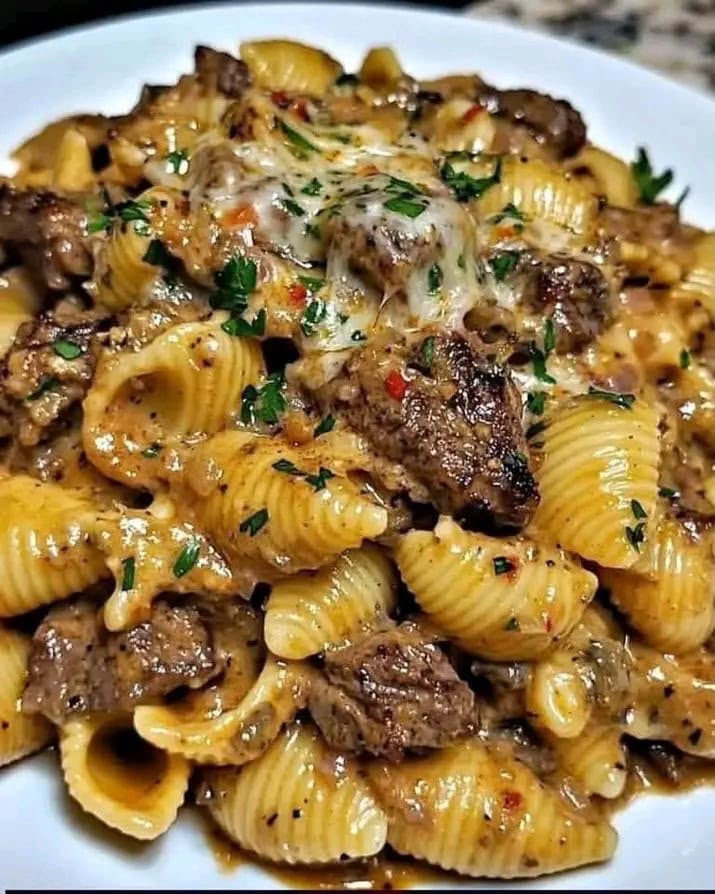
Creamy Garlic Steak Pasta Shells
Rich, cheesy, garlicky and wonderfully comforting, these creamy garlic steak pasta shells bring together juicy pieces of browned steak, tender pasta and a luxurious Parmesan cream sauce. It is the kind of satisfying dinner that feels special enough for a weekend but is straightforward enough for a busy evening.
Introduction
There is something irresistible about pasta coated in a smooth, creamy garlic sauce, especially when tender pieces of steak are tucked between every mouthful. This creamy garlic steak pasta shells recipe combines the hearty flavour of pan-seared beef with the richness of mozzarella, Parmesan and double cream.
The pasta shells are particularly well suited to this dish. Their curved shape catches the sauce, allowing pockets of creamy garlic goodness to collect inside each shell. Rather than simply sitting on top of the pasta, the sauce becomes part of every bite.
The steak provides a delicious contrast to the silky pasta. Searing the pieces in a hot pan develops a beautifully browned exterior while helping the beef retain its tenderness. The flavourful browned bits left in the pan also contribute depth to the finished sauce.
Garlic, butter and Italian seasoning create a savoury foundation, while smoked paprika and a little chilli add warmth. The mozzarella gives the sauce a wonderfully cheesy texture, and the Parmesan provides the distinctive savoury finish that makes this dish so satisfying.
Despite its rich flavour, the recipe uses familiar ingredients and simple techniques. You cook the pasta, brown the steak, prepare the creamy sauce and combine everything in one pan. There is no complicated preparation or lengthy oven cooking involved.
Serve it for a cosy family dinner, a casual gathering or whenever you fancy something more indulgent than ordinary pasta. With a little fresh parsley and extra Parmesan, the finished dish looks every bit as tempting as it tastes.
Recipe Overview
- Recipe: Creamy Garlic Steak Pasta Shells
- Category: Main Course
- Style: American-inspired comfort food
- Preparation Time: Approximately 15 minutes
- Cooking Time: Approximately 20–25 minutes
- Total Time: Approximately 35–40 minutes
- Servings: Approximately 4
- Difficulty: Easy to Moderate
- Cooking Method: Stovetop
- Main Ingredients: Steak, pasta shells, garlic, cream, mozzarella and Parmesan
These times are estimates based on the cooking process. Actual preparation and cooking time will vary depending on the steak cut, size of the beef pieces and pasta brand.
Why You’ll Love This Recipe
- Rich garlic flavour: Fresh garlic and butter provide a delicious savoury base without overwhelming the steak.
- Wonderfully creamy sauce: Double cream, mozzarella and Parmesan come together in a smooth, comforting coating.
- Hearty and satisfying: The combination of beef, pasta and cheese makes a filling main meal.
- Perfect pasta shape: Shells capture the sauce inside their curved centres.
- Simple preparation: Everything comes together using a pasta saucepan and one main frying pan.
- Flexible seasoning: The chilli flakes can be adjusted to suit personal preferences.
- Great for sharing: The recipe makes approximately four generous portions.
- Easy to customise: You can experiment with vegetables, alternative cheeses or different pasta shapes.
Ingredients
For the Pasta and Steak
- 12 oz (approximately 340 g) pasta shells
- 1 lb (approximately 454 g) steak, cut into bite-sized pieces
- 2 tablespoons olive oil
- ½ teaspoon salt
- ¼ teaspoon black pepper
- ½ teaspoon smoked paprika
For the Creamy Garlic Cheese Sauce
- 2 tablespoons butter
- 4 cloves garlic, minced
- 1 cup (240 ml) double cream (heavy cream)
- ½ cup (120 ml) beef stock (beef broth)
- 1 cup shredded mozzarella cheese
- ½ cup grated Parmesan cheese
- 1 teaspoon Italian seasoning
- ½ teaspoon red pepper flakes
For Garnishing
- 2 tablespoons chopped fresh parsley
The ingredient quantities above match the original recipe. Extra Parmesan may be sprinkled over individual servings if desired.
Ingredient Notes
Steak
Choose a tender steak cut that cooks relatively quickly. Sirloin, ribeye and rump are suitable options, although the cooking time may vary. Cut the beef into evenly sized pieces so that everything cooks at a similar rate. Remove any particularly tough connective tissue before cooking.
Pasta Shells
Medium pasta shells work beautifully because their curved shape collects the creamy sauce. Use dried pasta and follow its package directions for cooking until al dente. Avoid overcooking because the shells will warm again in the skillet.
Fresh Garlic
Four cloves provide a noticeable garlic flavour. Finely mince the cloves so they distribute evenly through the sauce. Garlic burns quickly, so it should be cooked briefly over reduced heat rather than browned aggressively.
Double Cream
Double cream is the British equivalent most suitable for the heavy cream called for in the original recipe. Its richness helps create a smooth sauce that coats the pasta well. Avoid boiling it vigorously once the cheese has been added.
Beef Stock
Beef stock adds savoury depth and helps loosen the cream. It also lifts some of the browned steak flavour from the bottom of the skillet. Choose a stock with a seasoning level that suits the rest of the dish.
Mozzarella Cheese
Shredded mozzarella contributes a soft, melted texture. Low-moisture mozzarella generally melts more conveniently into a pasta sauce than fresh mozzarella packed in liquid.
Parmesan Cheese
Parmesan gives the sauce its deeper savoury flavour. Finely grated cheese tends to melt more easily and evenly. Freshly grated Parmesan is particularly useful for avoiding a grainy finish.
Smoked Paprika and Italian Seasoning
Smoked paprika adds a gentle smoky note to the steak, while Italian seasoning brings a blend of familiar dried herbs to the sauce.
Red Pepper Flakes
The chilli flakes add gentle warmth to the rich cream sauce. For a milder family dinner, they can be reduced or omitted as an optional adjustment.
Fresh Parsley
Parsley brightens the appearance and flavour of the finished dish. Sprinkle it over the pasta just before serving for the freshest result.
Equipment You’ll Need
- Large saucepan for cooking pasta
- Large frying pan or deep skillet
- Colander
- Sharp knife and chopping board
- Wooden spoon or silicone spatula
- Measuring cups and spoons
- Cheese grater
- Tongs or serving spoon
- Instant-read food thermometer, if desired
Step-by-Step Instructions
Step 1: Cook the Pasta Shells
Bring a large saucepan of salted water to the boil. Add the 12 oz of pasta shells and cook according to the packet instructions until al dente. The pasta should be tender but retain a slight bite. Drain thoroughly and set aside while preparing the steak and sauce.
Step 2: Heat the Olive Oil
Place a large skillet over medium-high heat and add the 2 tablespoons of olive oil. Allow the pan to become properly hot before adding the steak. A hot cooking surface helps develop flavourful browning.
Step 3: Season and Brown the Steak
Pat the bite-sized steak pieces dry with kitchen paper. Season with the ½ teaspoon salt, ¼ teaspoon black pepper and ½ teaspoon smoked paprika. Add the beef to the hot skillet and cook until browned on the outside and cooked to your preferred safe doneness. Avoid crowding the pan; cook in batches if necessary. Remove the steak and place it on a plate.
Step 4: Melt the Butter
Reduce the heat. Add the 2 tablespoons of butter to the same skillet, allowing it to melt around the browned bits left by the beef. These pan juices will contribute extra flavour to the finished sauce.
Step 5: Cook the Garlic
Add the four minced garlic cloves to the melted butter. Stir continuously for approximately 30 seconds, just until fragrant. Keep the heat moderate to prevent the garlic from burning or becoming bitter.
Step 6: Add the Cream and Beef Stock
Pour in the ½ cup beef stock followed by the 1 cup double cream. Stir gently, scraping the bottom of the skillet to release the cooked-on steak flavour. Add the 1 teaspoon Italian seasoning and ½ teaspoon red pepper flakes.
Step 7: Simmer the Sauce
Allow the mixture to simmer gently for approximately 2–3 minutes, stirring occasionally. The sauce should begin to thicken slightly. Keep the heat low enough to maintain a gentle simmer rather than a rolling boil.
Step 8: Melt the Cheese
Reduce the heat to low. Gradually stir in the 1 cup shredded mozzarella and ½ cup grated Parmesan. Continue stirring until the cheese is melted and the sauce looks creamy and well combined.
Step 9: Return the Steak and Pasta
Add the drained pasta shells and browned steak back into the skillet. Gently fold everything together until the shells and beef are coated with the creamy garlic cheese sauce. Take care not to break the pasta shells.
Step 10: Finish Cooking
Cook over low heat for another 2 minutes, stirring gently so the pasta warms through and absorbs some of the sauce. Ensure the steak is properly cooked and heated through without unnecessarily prolonging its cooking time.
Step 11: Garnish and Serve
Remove the skillet from the heat. Sprinkle with the 2 tablespoons chopped fresh parsley and a little extra Parmesan if desired. Serve immediately while the sauce is creamy and the cheese is beautifully melted.
How to Cook Tender Steak for Pasta
One of the most important parts of creamy garlic steak pasta shells is achieving flavourful beef without making it tough. The right preparation and pan temperature make a considerable difference.
Begin by cutting the steak into similarly sized pieces. If the steak has a visible grain, slice across it to shorten the muscle fibres. This can improve tenderness, particularly with less expensive cuts.
Dry the surface of the beef before adding the seasoning. Excess moisture encourages steaming rather than browning. A properly heated skillet allows the outside to develop a savoury crust while the interior cooks.
Avoid adding too many steak pieces at once. When a pan is crowded, its temperature falls and liquid accumulates around the meat. Cooking in batches gives the steak more contact with the hot surface.
Cooking time depends on the cut, thickness and desired doneness. Use a food thermometer where helpful; for whole-cut beef steaks, USDA guidance recommends 63°C (145°F) followed by a three-minute rest. If you prefer a different doneness, follow applicable food-safety guidance, particularly when serving people at increased risk from foodborne illness.
Remember that the steak returns to the warm sauce for the final two minutes. Avoid excessive cooking during the first stage so that the finished beef remains as tender as possible.
How to Make a Smooth Garlic Cheese Sauce
The creamy garlic sauce is what brings this dish together. It needs to be rich enough to cling to the ridged pasta shells while remaining smooth enough to flow between the pieces of steak.
Start with the butter and garlic over reduced heat. Garlic releases its aroma quickly, so thirty seconds is usually enough. Once fragrant, the beef stock can be added to loosen the browned bits from the skillet.
Adding the double cream after the stock creates the main body of the sauce. Gentle simmering gives the mixture a little time to thicken before the cheese goes in.
For the smoothest result, lower the heat before adding mozzarella and Parmesan. Stir the cheeses in gradually, allowing them to melt into the warm liquid. High heat can cause a cheese sauce to separate or become oily.
Different cheeses behave differently when melted. Mozzarella may create a slightly stretchy texture, while Parmesan adds a stronger savoury finish. Finely grated cheese and gentle stirring help keep everything balanced.
If the sauce becomes thicker than you prefer after the pasta is added, a small splash of reserved pasta cooking water can loosen it. This is an optional adjustment rather than an ingredient in the original recipe.
How to Get Perfectly Coated Pasta Shells
Pasta shells are especially good for creamy sauces because of their shape. Their hollow centres catch small amounts of sauce, while the ridged surfaces help hold the cheese mixture.
For the best texture, cook the shells only until al dente. They continue to soften slightly when combined with the hot sauce, so fully overcooked pasta may become too soft during the final stage.
Drain the shells well, but do not rinse them. The natural starch left on the pasta can help the sauce cling to the surface.
When combining the pasta with the sauce, use gentle folding movements rather than vigorous stirring. This keeps the shells intact while distributing the steak pieces throughout.
Serve soon after cooking. Cheese-based sauces naturally thicken as they cool, and the shells will continue absorbing liquid while standing.
Expert Cooking Tips
- Choose a tender steak: Sirloin or ribeye works particularly well for quick cooking.
- Cut evenly: Similar-sized steak pieces are easier to cook consistently.
- Pat the steak dry: Removing excess surface moisture improves browning.
- Preheat the pan: Let the skillet become hot before adding the beef.
- Cook in batches: Avoid overcrowding the pan when browning the steak.
- Keep the browned bits: They add savoury depth to the cream sauce.
- Watch the garlic: Minced garlic can burn quickly in hot butter.
- Use gentle heat: Cream sauces should simmer softly rather than boil vigorously.
- Grate Parmesan finely: Fine shreds incorporate more readily into the sauce.
- Add cheese gradually: This encourages even melting and better consistency.
- Cook pasta al dente: The shells will soften slightly when returned to the sauce.
- Combine just before serving: Freshly mixed pasta has the best creamy texture.
- Taste before adding extra salt: Beef stock and Parmesan already contribute saltiness.
- Garnish at the end: Fresh parsley adds a lovely finishing touch.
Common Mistakes to Avoid
1. Using a Pan That Is Too Cool
A cool skillet makes it harder to brown the steak properly. Preheat the pan before adding the beef.
2. Overcrowding the Steak
Too much beef in the pan encourages steaming. Cook in smaller batches when necessary.
3. Overcooking the Beef
Small steak pieces can become tough when cooked excessively. Monitor doneness and remember the final heating stage.
4. Burning the Garlic
Garlic becomes bitter if left over high heat. Reduce the heat before adding it to the butter.
5. Boiling the Cream Too Aggressively
High heat can affect the smoothness of dairy sauces. Maintain a gentle simmer.
6. Adding Cheese Over High Heat
Excessive heat can make the cheese sauce oily or grainy. Reduce the temperature before stirring in the cheese.
7. Overcooking the Pasta
Soft pasta may become mushy after it is tossed with the warm sauce. Aim for al dente.
8. Forgetting to Stir the Sauce
Regular gentle stirring helps the cheese melt evenly and prevents sticking.
9. Leaving the Finished Pasta Standing Too Long
The sauce thickens as it cools and the shells absorb liquid. Serve promptly for the best result.
Optional Recipe Variations
1. Mushroom Steak Pasta
Add sautéed mushrooms for an earthy flavour that pairs naturally with browned beef and garlic cream sauce.
2. Spinach Garlic Pasta
Stir a handful of fresh spinach into the sauce near the end of cooking until just wilted.
3. Extra-Spicy Steak Pasta
Increase the red pepper flakes slightly for more noticeable heat.
4. Creamy Steak and Broccoli Pasta
Add cooked broccoli florets when returning the pasta to the skillet for a colourful variation.
5. Cheddar Steak Pasta
Replace part of the mozzarella with grated mature Cheddar for a stronger cheese flavour.
6. Chicken Pasta Shells
Use bite-sized chicken pieces instead of steak, ensuring the chicken reaches an internal temperature of 74°C (165°F).
7. Sun-Dried Tomato Pasta
Add a small amount of chopped sun-dried tomatoes for a tangy contrast to the creamy sauce.
All these variations are optional and are not part of the original ingredient list.
Serving Suggestions
Creamy garlic steak pasta shells are a substantial main dish, so lighter accompaniments work especially well. A simple green salad with a sharp vinaigrette balances the richness of the cheese sauce.
Steamed green beans, roasted asparagus or tender broccoli also make excellent sides. Their fresh flavour and contrasting textures help create a well-rounded dinner.
For a particularly comforting meal, serve the pasta with warm garlic bread or crusty bread. The bread is perfect for enjoying any extra sauce left on the plate.
Finish each portion with freshly chopped parsley, a modest sprinkle of Parmesan and freshly ground black pepper if desired.
For drinks, chilled sparkling water with lemon or unsweetened iced tea pairs nicely with the rich garlic and cheese flavours.
Storage and Reheating
Refrigerating Leftovers
Allow leftovers to cool promptly and refrigerate in an airtight container within two hours of cooking. Keep refrigerated at 4°C (40°F) or below and use within three to four days.
Reheating on the Stovetop
Place the leftover pasta in a skillet over low to medium heat. Add a small splash of milk, cream or water to loosen the sauce, stirring gently until thoroughly heated. Reheat leftovers to 74°C (165°F).
Microwave Reheating
Transfer a portion to a microwave-safe dish, cover loosely and heat in short intervals, stirring between intervals. Add a little liquid if the sauce has thickened. Heat until steaming hot throughout.
Can You Freeze It?
Freezing is possible, although creamy cheese sauces may separate and pasta shells can soften after thawing. For the best texture, enjoy the dish fresh or refrigerated. If freezing, use an airtight freezer-safe container and thaw in the refrigerator before reheating.
Making Ahead
For convenient meal preparation, cut and refrigerate the raw steak separately, grate the cheeses and prepare the garlic in advance. Cook the pasta and prepare the sauce closer to serving time for the creamiest result.
Frequently Asked Questions
1. What steak is best for creamy steak pasta?
Sirloin and ribeye are excellent choices because they are relatively tender and cook quickly. Rump steak can also work when carefully prepared.
2. Can I use another pasta shape?
Yes. Penne, rigatoni, fusilli and small macaroni are all suitable substitutes. Pasta shapes with ridges or curves catch the sauce particularly well.
3. Can I use frozen steak?
Yes, but thaw it safely in the refrigerator before cutting and cooking. Pat it dry to help achieve good browning.
4. Why is my steak tough?
Tough steak may result from the cut, uneven slicing or excessive cooking. Choose a tender cut and avoid prolonged heating.
5. Can I make the sauce without mozzarella?
Yes, although the texture and flavour will change. Another suitable melting cheese may be used as an optional substitution.
6. What does Parmesan add to the sauce?
Parmesan provides a savoury, slightly nutty flavour and helps give the sauce a richer taste.
7. Can I use single cream?
Single cream contains less fat and may produce a thinner sauce with a greater risk of splitting. Double cream is more reliable for this recipe.
8. How do I keep the sauce creamy?
Maintain gentle heat, add the cheese gradually and avoid boiling the finished sauce aggressively.
9. Why did my cheese sauce become grainy?
Excessive heat or poorly melting cheese may cause a grainy texture. Use finely grated cheese and low heat.
10. Can I prepare this recipe without chilli flakes?
Absolutely. Leave them out for a milder pasta dish.
11. Is smoked paprika necessary?
It contributes a gentle smoky flavour, but the recipe can still be made without it as an optional adjustment.
12. Can I add vegetables?
Yes. Mushrooms, spinach, broccoli and asparagus are particularly compatible with the garlic cheese sauce.
13. How do I stop pasta shells sticking together?
Use plenty of boiling water and stir the pasta occasionally while it cooks. Combine it with the sauce soon after draining.
14. Should I rinse the cooked pasta?
No. Rinsing removes surface starch that can help the sauce adhere to the shells.
15. Can I use pre-grated Parmesan?
Yes, but freshly grated Parmesan often melts more smoothly. Some packaged grated cheeses contain anti-caking ingredients that affect texture.
16. Can I make this pasta ahead of time?
It is best served freshly prepared, although the ingredients can be measured and prepared ahead to reduce cooking time.
17. How long does the dish keep in the fridge?
Store it in an airtight container and use within three to four days when properly refrigerated.
18. Can I reheat it without drying it out?
Yes. Add a small splash of milk, cream or water and reheat gently while stirring.
19. Can I use chicken instead of steak?
Yes. Chicken is a suitable variation, but it must be fully cooked to 74°C (165°F).
20. Is this pasta suitable for a family dinner?
Yes. It makes approximately four portions and can easily be served with a salad or vegetables.
21. What if the sauce is too thick?
Stir in a little reserved pasta cooking water, milk or stock until it reaches your preferred consistency.
22. What if the sauce is too thin?
Allow it to simmer gently for a little longer before adding the pasta, stirring regularly as the liquid reduces.
23. Can I double the recipe?
Yes. Double the ingredients and use a sufficiently large skillet. Brown the steak in batches to avoid crowding.
24. Does the steak need to rest?
A short rest after cooking helps retain juices. Since the pieces are small, they do not require a lengthy resting period before being added back to the pasta.
25. What makes this recipe especially creamy?
The combination of double cream, melted mozzarella, Parmesan and a little beef stock creates a rich coating that settles into the pasta shells.
Complete Recipe Card
Creamy Garlic Steak Pasta Shells
Description: Tender browned steak and ridged pasta shells coated in a rich garlic, mozzarella and Parmesan cream sauce. A hearty, cheesy stovetop pasta dinner finished with fresh parsley.
- Course: Main Course
- Style: American-inspired
- Method: Stovetop
- Prep Time: Approximately 15 minutes
- Cook Time: Approximately 20–25 minutes
- Total Time: Approximately 35–40 minutes
- Servings: Approximately 4
Ingredients
- 12 oz pasta shells
- 1 lb steak, cut into bite-size pieces
- 2 tablespoons olive oil
- 2 tablespoons butter
- 4 cloves garlic, minced
- 1 cup heavy cream (double cream)
- ½ cup beef broth (beef stock)
- 1 cup shredded mozzarella cheese
- ½ cup grated Parmesan cheese
- 1 teaspoon Italian seasoning
- ½ teaspoon smoked paprika
- ½ teaspoon red pepper flakes
- ½ teaspoon salt
- ¼ teaspoon black pepper
- 2 tablespoons chopped fresh parsley
How to Make
- Cook the pasta shells in salted boiling water until al dente. Drain and set aside.
- Heat the olive oil in a large skillet over medium-high heat.
- Add the steak pieces, season with salt, black pepper and smoked paprika, and cook until browned on the outside and appropriately cooked through. Remove the steak and set aside.
- Lower the heat and add the butter to the same skillet.
- Stir in the minced garlic and cook for about 30 seconds until fragrant.
- Pour in the beef broth and heavy cream, then add the Italian seasoning and red pepper flakes.
- Simmer gently for 2–3 minutes until the sauce begins to thicken.
- Stir in the mozzarella and Parmesan until melted and creamy.
- Add the cooked pasta shells and browned steak back into the skillet.
- Toss everything together until the pasta and steak are coated in the creamy garlic cheese sauce.
- Cook for another 2 minutes over low heat.
- Sprinkle with fresh parsley and extra Parmesan, if desired, then serve hot.
Recipe Notes
- Choose tender steak for the best results.
- Cook the pasta until al dente to prevent it becoming too soft.
- Use freshly grated Parmesan for smoother melting.
- Avoid boiling the cheese sauce over high heat.
- Serve promptly for the best creamy consistency.
- Cool and refrigerate leftovers promptly, then reheat thoroughly.
Hashtags: #CreamySteakPasta #GarlicParmesanPasta #PastaShells #EasyDinnerRecipes #ComfortFood
Share Your Creamy Steak Pasta
These creamy garlic steak pasta shells are a lovely choice when you want a filling dinner with plenty of cheesy, garlicky flavour. Try the recipe at home and let us know how yours turned out. Did you keep it classic or add mushrooms, spinach or extra Parmesan?
Save this recipe for your next pasta night, share it with friends who love comforting homemade meals and follow along for more easy family dinner inspiration.