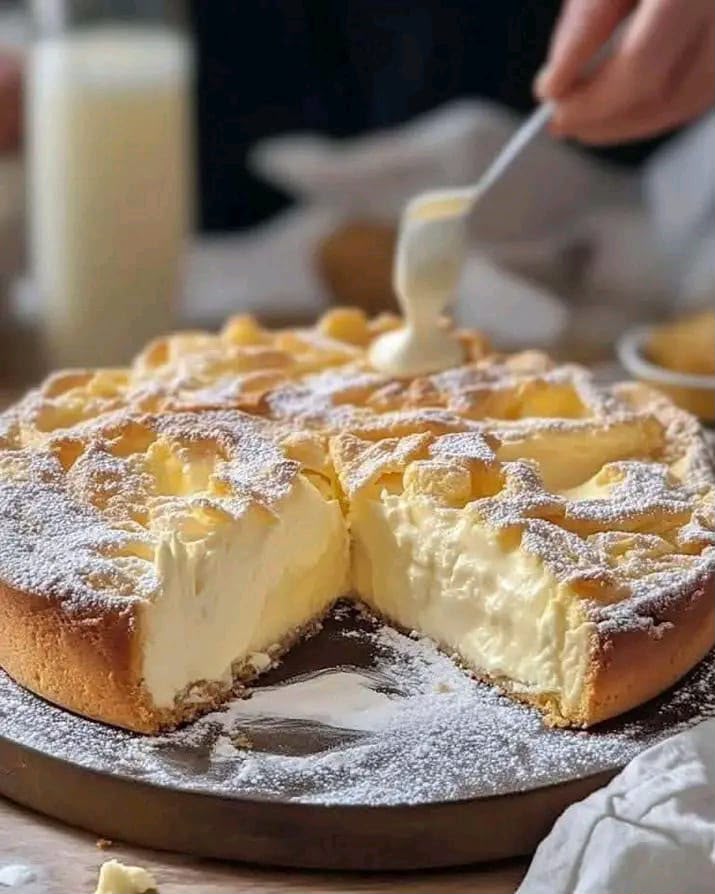
Creamy Custard Cheesecake Pie
Creamy custard cheesecake pie is a beautiful homemade dessert combining a buttery pastry crust, a rich vanilla cream cheese filling and a delicate golden topping. Every slice offers a delicious contrast between crisp pastry and a smooth, luxurious centre.
If you enjoy traditional cheesecake but love the comforting character of a homemade custard tart, this recipe brings both desserts together. The cream cheese provides a pleasant tanginess, while double cream and soured cream help create a velvety filling that feels wonderfully indulgent.
What makes this dessert particularly attractive is its rustic appearance. The golden pastry edges, softly browned topping and generous dusting of icing sugar give it the look of something from a cosy neighbourhood bakery.
Unlike a no-bake cheesecake, this version is gently baked until the outside is set and the centre retains a slight wobble. After cooling and chilling, the filling becomes firm enough to slice while remaining beautifully creamy.
It is an excellent choice for birthdays, weekend gatherings, family celebrations, afternoon tea or a simple dessert after Sunday lunch. You can prepare it ahead of time, making entertaining much easier.
With straightforward ingredients and a little patience during cooling, this creamy custard cheesecake pie can become a dependable favourite in your home baking collection.
Recipe Overview
- Recipe: Creamy Custard Cheesecake Pie
- Category: Dessert
- Style: Homemade baked cheesecake pie
- Preparation Time: Approximately 20 minutes
- Baking Time: 45–55 minutes
- Initial Oven Cooling: 20 minutes
- Additional Cooling: Until completely cool
- Refrigeration: At least 3 hours
- Total Time: Approximately 5–6 hours, depending on cooling
- Servings: Approximately 8–10 slices
- Oven Temperature: 350°F (175°C)
- Baking Dish: 9-inch springform or deep pie pan
- Cooking Method: Oven baking
- Difficulty: Easy to moderate
- Main Ingredients: Cream cheese, eggs, double cream, soured cream, sugar and pastry
The preparation and serving estimates are intended as practical guidance. Your actual timing may vary depending on your oven, pan depth and the temperature of your ingredients.
Why You’ll Love This Recipe
- Beautifully creamy texture: The combination of cream cheese, double cream and soured cream creates a rich filling that remains soft and smooth after chilling.
- Buttery pastry crust: A prepared pastry base adds structure and a lovely contrast to the delicate cheesecake centre.
- Simple ingredients: Most of the ingredients are everyday baking essentials available in ordinary supermarkets.
- Make-ahead convenience: The cheesecake needs chilling, so you can comfortably prepare it before your guests arrive.
- Attractive presentation: A golden decorative topping and light dusting of icing sugar create a classic bakery-style finish.
- Versatile flavour: Vanilla and lemon provide a balanced base that works with fresh berries, fruit sauces or a simple cup of tea.
- Suitable for celebrations: The impressive appearance makes this dessert feel special without requiring complicated decorating techniques.
- Easy to customise: Optional additions such as citrus zest or chocolate can give the basic cheesecake a different character.
Ingredients
For the Cheesecake Crust and Filling
- 1 prepared 9-inch pie crust or shortcrust pastry
- 16 oz (approximately 454 g) cream cheese, softened
- ¾ cup (approximately 150 g) granulated sugar
- 3 large eggs
- 1 cup (approximately 240 ml) double cream
- ½ cup (approximately 120 ml) soured cream
- 2 tablespoons cornflour (cornstarch)
- 1 teaspoon vanilla extract
- 1 tablespoon lemon juice
- ¼ teaspoon salt
- Icing sugar (powdered sugar), for dusting
Optional Pastry Topping
- 1 sheet puff pastry, cut into small strips or pieces
- 1 egg, beaten, for brushing
The optional puff pastry topping gives the finished dessert a more decorative appearance. The cheesecake can also be prepared without it for a simpler, smoother surface.
Ingredient Notes
Cream Cheese
Cream cheese provides the signature rich texture and gentle tang of the filling. Full-fat block-style cream cheese generally produces a firmer, more dependable baked cheesecake than a very soft spreadable variety.
Allow it to soften before mixing. Cold cream cheese can remain lumpy even after prolonged beating, which may encourage overmixing.
Granulated Sugar
Sugar sweetens the cheesecake while balancing the natural acidity of the cream cheese and lemon juice. The supplied amount produces a pleasantly sweet filling without completely hiding its dairy flavour.
Eggs
Three large eggs help the custard-style filling set during baking. Eggs also give the cheesecake its delicate structure, allowing it to hold together when sliced.
Add the eggs separately and avoid beating vigorously once they are incorporated.
Double Cream
Double cream makes the filling richer and contributes to its smooth mouthfeel. The original recipe specifies American heavy cream; British double cream is a practical substitute, although its higher fat content may make the result slightly richer.
Soured Cream
Soured cream introduces a mild tanginess that keeps the dessert from tasting overly sweet. It also helps create the soft, creamy consistency associated with baked cheesecakes.
Cornflour
Cornflour, known as cornstarch in the United States, helps stabilise the filling. Its small quantity supports a smooth texture without turning the cheesecake into a firm sponge cake.
Vanilla Extract
Vanilla supplies a warm, familiar flavour that complements the dairy ingredients. Pure vanilla extract gives a lovely aromatic finish.
Lemon Juice
A tablespoon of lemon juice brightens the filling without making it distinctly lemon-flavoured. It balances the richness of the cream cheese and double cream.
Prepared Pie Crust
A ready-made shortcrust pastry base makes preparation convenient. Choose a crust suitable for a deep 9-inch tin, as the filling is relatively generous.
Puff Pastry
The optional puff pastry pieces add texture and a decorative top. Keep the pastry cold until you are ready to arrange it, and avoid creating an overly thick layer that could prevent even baking.
Icing Sugar
A generous dusting of icing sugar creates an attractive final appearance. Apply it shortly before serving for the neatest finish.
Equipment You’ll Need
- 9-inch springform cake tin or deep pie dish
- Large mixing bowl
- Electric hand mixer or stand mixer
- Measuring cups and spoons
- Kitchen scales, if using metric quantities
- Rubber spatula
- Small bowl for the optional egg wash
- Pastry brush
- Cooling rack
- Fine-mesh sieve for icing sugar
- Sharp knife for serving
If using a springform tin, make sure the pastry is pressed securely against the base and sides and that the tin closes properly. A baking tray underneath can catch any accidental drips.
Step-by-Step Instructions
Step 1: Preheat the Oven
Preheat your oven to 350°F (175°C). Lightly grease a 9-inch springform cake tin or deep pie dish.
Arrange an oven shelf near the centre so that the cheesecake receives balanced heat throughout baking.
Step 2: Prepare the Pastry Base
Press the prepared pie crust or shortcrust pastry into the bottom and sides of the tin. Work gently to prevent tearing and ensure the pastry is evenly distributed.
Press the pastry into the corners where the base meets the sides. This helps create a secure shell for the creamy filling.
Step 3: Beat the Cream Cheese and Sugar
Place the softened cream cheese in a large mixing bowl. Add the granulated sugar and beat until the mixture becomes smooth and creamy.
Pause occasionally to scrape the sides and bottom of the bowl. Continue until no obvious lumps remain.
Step 4: Incorporate the Eggs
Add the three large eggs one at a time, mixing gently after each addition.
Use a low mixer speed once the eggs go in. The goal is to incorporate them evenly rather than whip additional air into the mixture.
Step 5: Add the Remaining Filling Ingredients
Pour in the double cream and soured cream. Add the cornflour, vanilla extract, lemon juice and salt.
Mix gently until the ingredients are completely combined and the filling looks glossy and smooth. Scrape the bowl once more to catch any unmixed cream cheese.
Step 6: Fill the Pastry Shell
Pour the cheesecake mixture into the prepared crust. Use a spatula to spread the filling evenly and smooth the surface.
Leave adequate space beneath the rim of the pastry to avoid overflowing during baking.
Step 7: Add the Optional Pastry Topping
If using the decorative topping, arrange small puff pastry strips or pieces over the cheesecake filling.
Brush the exposed pastry lightly with the beaten egg. Avoid allowing excessive egg wash to collect in puddles on the custard filling.
For a more rustic appearance, arrange the pastry loosely with small gaps rather than covering the entire cheesecake in a heavy, tightly sealed layer.
Step 8: Bake the Cheesecake
Place the pie in the preheated oven and bake for 45–55 minutes, until the outer edges are set but the centre still has a slight wobble.
Check towards the end of the baking time. A particularly deep filling or substantial decorative topping may need additional time. If the pastry starts browning too quickly, loosely cover the top with foil.
Step 9: Cool Gradually
Turn off the oven and crack the door open slightly. Leave the cheesecake inside for about 20 minutes.
This gradual cooling period reduces the sudden temperature change that can contribute to cracking.
Step 10: Cool Completely
Remove the pie from the oven and place it on a cooling rack. Allow it to cool completely before refrigeration.
Do not attempt to remove a warm cheesecake from its tin. The filling continues to settle and firm as it cools.
Step 11: Refrigerate
Transfer the cooled cheesecake to the refrigerator for at least 3 hours.
For particularly tidy slices, chilling overnight is an excellent option.
Step 12: Finish and Serve
Just before serving, dust the surface generously with icing sugar.
Slice with a sharp knife, wiping the blade clean between cuts. Serve chilled to enjoy the contrast between the buttery pastry and rich, creamy custard centre.
How to Make a Smooth Cheesecake Filling
The secret to a beautiful cheesecake filling begins before the ingredients reach the oven. Ingredient temperature, mixing speed and the order of preparation all make a difference.
Start by allowing the cream cheese to soften sufficiently. When pressed with a spoon, it should yield easily without feeling warm or melted.
Beat the cream cheese and sugar thoroughly before introducing the eggs. This is the best stage to eliminate lumps because the mixture is still thick enough for the mixer to work effectively.
Once the eggs are added, reduce the mixing speed. Vigorous beating can introduce excessive air, which may cause the cheesecake to rise dramatically and then sink or crack.
When adding the cream, soured cream and other ingredients, mix only until the batter becomes uniform. A smooth, pourable mixture is exactly what you want.
Finally, pour the filling carefully into the crust. If large bubbles appear on the surface, gently tap the filled tin against the worktop a couple of times to release them.
How to Prepare a Golden Pastry Crust
The buttery crust is an important part of this recipe because it provides structure and a pleasant textural contrast.
When pressing shortcrust pastry into the tin, aim for an even thickness. Thin spots may tear during filling, while particularly thick patches can remain underbaked.
Keep the pastry cool while preparing the cheesecake mixture. If the kitchen is warm, placing the lined tin in the refrigerator briefly can help the pastry retain its shape.
The original recipe bakes the pastry and filling together. However, some ready-made crusts have specific manufacturer instructions, so check the packaging before use.
If using the optional puff pastry topping, cut it into relatively small, thin pieces. Puff pastry needs space and heat to expand, and a dense arrangement can remain soft where it touches the moist filling.
Brush lightly with beaten egg for colour. Remember that pastry touching the cheesecake filling may remain softer than the exposed golden edges.
How to Tell When Your Cheesecake Is Perfectly Baked
Baked cheesecake is different from an ordinary sponge cake. A fully baked cheesecake does not need to feel completely firm when it first comes out of the oven.
The edges should appear set and slightly puffed, while the central area should retain a gentle wobble when the tin is moved carefully.
The centre should not look liquid or ripple like uncooked batter. A soft, unified movement is preferable to a loose, watery appearance.
As the cheesecake cools, the filling continues setting. Refrigeration then transforms the warm custard into a stable, sliceable dessert.
Avoid inserting a knife repeatedly into the centre to test for doneness. This can leave unnecessary marks and may create cracks.
If the topping is browning before the filling is ready, protect it loosely with foil and continue baking as required.
Because ovens and baking dishes differ, the suggested 45–55 minutes is a guide rather than an absolute guarantee. Check the filling itself before deciding the cheesecake is finished.
Expert Baking Tips
- Use softened cream cheese: This helps create a lump-free filling without excessive mixing.
- Choose full-fat ingredients: They generally provide the richest and most stable consistency.
- Measure accurately: Too much cornflour can make the filling firmer than intended.
- Add eggs individually: This keeps the batter evenly combined.
- Keep mixing gentle: Excessive air can affect the cheesecake’s final appearance.
- Scrape the bowl: Cream cheese often collects around the bottom and sides.
- Check the pastry fit: A deep filling needs adequate room inside the crust.
- Keep puff pastry chilled: Cold pastry is easier to handle and arrange neatly.
- Use a central oven shelf: This encourages even cooking.
- Watch the browning: Cover the topping loosely if it becomes too dark.
- Cool gradually: Sudden temperature changes can encourage cracks.
- Refrigerate thoroughly: Chilling improves both texture and slicing.
- Use a clean knife: Wiping between cuts produces more attractive slices.
- Dust at the last minute: Icing sugar looks freshest just before serving.
Common Mistakes to Avoid
1. Using Cold Cream Cheese
Cold cream cheese can leave lumps throughout the filling. Let it soften before beginning.
2. Overmixing the Eggs
Too much air can lead to excessive rising, sinking and cracking. Mix gently once the eggs are added.
3. Using a Shallow Pie Dish
The filling is generous. Choose a deep dish or suitable springform tin to avoid overflowing.
4. Adding Too Much Pastry on Top
A heavy layer of puff pastry can interfere with even baking. Use small pieces with gaps between them.
5. Baking Until Completely Firm
Waiting until the centre feels hard can produce an overbaked filling. A slight wobble is desirable.
6. Removing the Cheesecake Too Quickly
A sudden temperature change can contribute to cracks. Follow the gradual cooling step.
7. Refrigerating While Very Hot
Allow the cheesecake to cool properly before refrigerating to reduce excess condensation.
8. Cutting Before Chilling
Warm filling may collapse or stick to the knife. Refrigerate for at least 3 hours.
9. Dusting Too Early
Icing sugar gradually dissolves against moisture. Add it shortly before serving.
Optional Recipe Variations
The following suggestions are optional adaptations and are not part of the original ingredient list.
1. Lemon Cheesecake Pie
Add a little finely grated lemon zest for a more noticeable citrus aroma. Keep the original tablespoon of lemon juice.
2. Vanilla Bean Cheesecake
Use vanilla bean paste instead of vanilla extract for an aromatic flavour and attractive vanilla specks.
3. Berry-Topped Cheesecake
Serve chilled slices with fresh strawberries, raspberries or blueberries for a refreshing contrast.
4. Chocolate Cheesecake Pie
For a chocolate variation, incorporate cooled melted chocolate into the filling. The additional chocolate may change the firmness and baking behaviour.
5. Cinnamon Pastry Topping
Sprinkle a small amount of cinnamon sugar over the optional puff pastry before baking for a warmly spiced finish.
6. Caramel Cheesecake
Drizzle a little caramel sauce over individual slices shortly before serving.
7. Orange Cheesecake
Add finely grated orange zest to the filling for a delicate citrus fragrance.
8. Plain Custard Cheesecake
Omit the optional puff pastry topping entirely. The result is a smoother, more traditional-looking baked cheesecake with the same creamy filling.
Serving Suggestions
This creamy custard cheesecake pie is delicious served simply with icing sugar, but several accompaniments can make it even more enjoyable.
Fresh strawberries: Their natural acidity balances the rich filling and adds colour to the plate.
Raspberry sauce: A small spoonful of tangy fruit sauce provides a pleasant contrast without overwhelming the vanilla flavour.
Whipped cream: A modest spoonful of lightly whipped cream creates an elegant dessert presentation.
Warm berry compote: Serve a little compote alongside the chilled cheesecake rather than pouring it over the whole dessert.
Coffee: Espresso, cappuccino or freshly brewed coffee pairs particularly well with the sweet, creamy texture.
Tea: English breakfast tea or Earl Grey makes this pie suitable for afternoon tea.
For the cleanest appearance, serve each slice on a small dessert plate and keep additional toppings separate until the last moment.
Storage and Make-Ahead Tips
Refrigeration
Store the cheesecake in an airtight container or cover it carefully and refrigerate promptly after cooling. For best quality, enjoy within 3–4 days, provided it has been handled and stored safely.
Freezing
The cheesecake can be frozen without the icing sugar topping. Wrap completely chilled portions securely and place them in a freezer-safe container.
For best quality, aim to use frozen cheesecake within approximately 1–2 months. The pastry may lose some crispness after thawing.
Thawing
Thaw frozen slices overnight in the refrigerator. Avoid thawing at room temperature for extended periods because the filling contains eggs and dairy.
Reheating
This cheesecake is designed to be served chilled, so reheating is generally unnecessary. Warming can soften the filling and affect the pastry texture.
Make-Ahead Preparation
Prepare the cheesecake the evening before serving and refrigerate it overnight. Add icing sugar immediately before slicing.
Food Safety
Keep the finished dessert refrigerated at 4°C (40°F) or below. Do not leave it unrefrigerated for longer than 2 hours, or 1 hour in very hot conditions above 32°C (90°F).
Frequently Asked Questions
1. What is creamy custard cheesecake pie?
It is a baked dessert combining a pastry crust with a rich cream cheese filling that has a smooth, custard-like texture.
2. Is it a cheesecake or a custard pie?
It combines characteristics of both. Cream cheese gives it a cheesecake flavour, while eggs and cream create a soft custard-style consistency.
3. Can I use a shop-bought pie crust?
Yes. A prepared 9-inch pastry crust is included in the original recipe. Choose a deep version that accommodates the filling.
4. Can I make the crust from scratch?
Yes. Homemade shortcrust pastry can replace a prepared crust, provided it is suitable for the baking dish and filling.
5. Do I have to use puff pastry on top?
No. The decorative topping is optional, and the cheesecake can be baked without it.
6. Why is my cheesecake filling lumpy?
The cream cheese may have been too cold or insufficiently beaten before the other ingredients were added.
7. Why did my cheesecake crack?
Cracking can result from excessive mixing, overbaking or rapid cooling. Small cracks do not necessarily affect the flavour.
8. Should the centre wobble after baking?
Yes. A slight, gentle wobble is normal. The centre should not appear liquid or uncooked.
9. How long should I bake the cheesecake?
The original recipe specifies 45–55 minutes at 350°F (175°C). Actual baking time depends on the oven and depth of the pie.
10. Can I use low-fat cream cheese?
It is possible, but lower-fat varieties may produce a softer filling with a different texture.
11. Why is cornflour included?
Cornflour helps stabilise the cheesecake filling and supports a smooth, sliceable consistency.
12. Can I replace the soured cream?
Thick plain Greek yoghurt is one possible substitute, although the texture and tanginess may differ from the original recipe.
13. Can I use whipping cream instead of double cream?
Yes, but a lower-fat cream may produce a slightly less rich cheesecake. The supplied American recipe uses heavy cream.
14. Does this recipe need a water bath?
No water bath is specified. Gentle mixing, careful baking and gradual cooling help achieve a creamy result.
15. Can I make this cheesecake the day before?
Yes. Overnight chilling is especially convenient and generally makes neat slicing easier.
16. How long must the cheesecake chill?
At least 3 hours after complete cooling, according to the supplied instructions.
17. Can I freeze individual slices?
Yes. Wrap them carefully, freeze without icing sugar and thaw overnight in the refrigerator.
18. Why is my pastry bottom soft?
Moist cheesecake filling can soften pastry during baking. Using a suitable crust and avoiding excessive moisture helps.
19. Can I add fruit directly to the filling?
Fruit is best treated as an optional variation. Very juicy fruit can change the moisture balance and baking time.
20. What is the best way to cut clean slices?
Use a sharp knife and wipe it clean between cuts. A thoroughly chilled cheesecake slices more easily.
21. Can I reduce the sugar?
A small adjustment may be possible, but reducing the sugar significantly can alter the flavour and texture.
22. Why did my cheesecake sink after baking?
Some settling is normal. Excessive air incorporated during mixing can cause a more noticeable rise and collapse.
23. Should I serve it warm or cold?
Serve it chilled, as the original recipe recommends, for the most stable and creamy texture.
24. How do I keep the icing sugar looking fresh?
Dust the cheesecake immediately before serving. Moisture from the filling can dissolve the sugar over time.
25. What makes this recipe different from traditional cheesecake?
The pastry crust and optional decorative puff pastry topping provide a distinct pie-like appearance and texture compared with the usual biscuit-based cheesecake.
Complete Recipe Card
Creamy Custard Cheesecake Pie
Description: A rich homemade baked cheesecake pie with a buttery pastry crust, velvety vanilla custard-style cream cheese filling and optional golden puff pastry topping.
- Category: Dessert
- Method: Baking
- Prep Time: Approximately 20 minutes
- Cook Time: 45–55 minutes
- Oven Cooling: 20 minutes
- Additional Cooling: Until completely cool
- Chill Time: At least 3 hours
- Yield: Approximately 8–10 slices
- Temperature: 350°F (175°C)
Ingredients
- 1 prepared 9-inch pie crust or shortcrust pastry
- 16 oz cream cheese, softened
- ¾ cup granulated sugar
- 3 large eggs
- 1 cup heavy cream (double cream)
- ½ cup sour cream (soured cream)
- 2 tablespoons cornstarch (cornflour)
- 1 teaspoon vanilla extract
- 1 tablespoon lemon juice
- ¼ teaspoon salt
- Powdered sugar (icing sugar), for dusting
Optional Pastry Topping
- 1 sheet puff pastry, cut into small strips or pieces
- 1 egg, beaten, for brushing
Instructions
- Preheat the oven to 350°F (175°C) and lightly grease a 9-inch springform tin or deep pie pan.
- Press the prepared pie crust evenly into the bottom and sides of the tin.
- Beat the softened cream cheese and sugar together in a large bowl until smooth and creamy.
- Add the three eggs individually, mixing gently after each one.
- Add the heavy cream, sour cream, cornstarch, vanilla extract, lemon juice and salt. Mix until smooth.
- Pour the filling into the prepared pastry crust and level the surface.
- If using the optional topping, arrange small pieces of puff pastry over the filling and brush lightly with the beaten egg.
- Bake for 45–55 minutes, until the edges are set and the centre retains a slight wobble.
- Turn off the oven, open the door slightly and leave the cheesecake inside for approximately 20 minutes.
- Remove the cheesecake and allow it to cool completely.
- Refrigerate for at least 3 hours before serving.
- Dust with powdered sugar, slice and serve chilled.
Recipe Notes
- Use softened cream cheese to avoid lumps.
- Mix the eggs gently to prevent incorporating excessive air.
- Use a deep baking dish with enough capacity for the filling.
- The puff pastry topping is entirely optional.
- The cheesecake continues firming during cooling and refrigeration.
- For attractive slices, refrigerate overnight if convenient.
- Keep leftovers refrigerated and covered.
Hashtags: #CustardCheesecake #CheesecakePie #HomemadeDesserts #CreamyCheesecake #EasyBakingRecipes