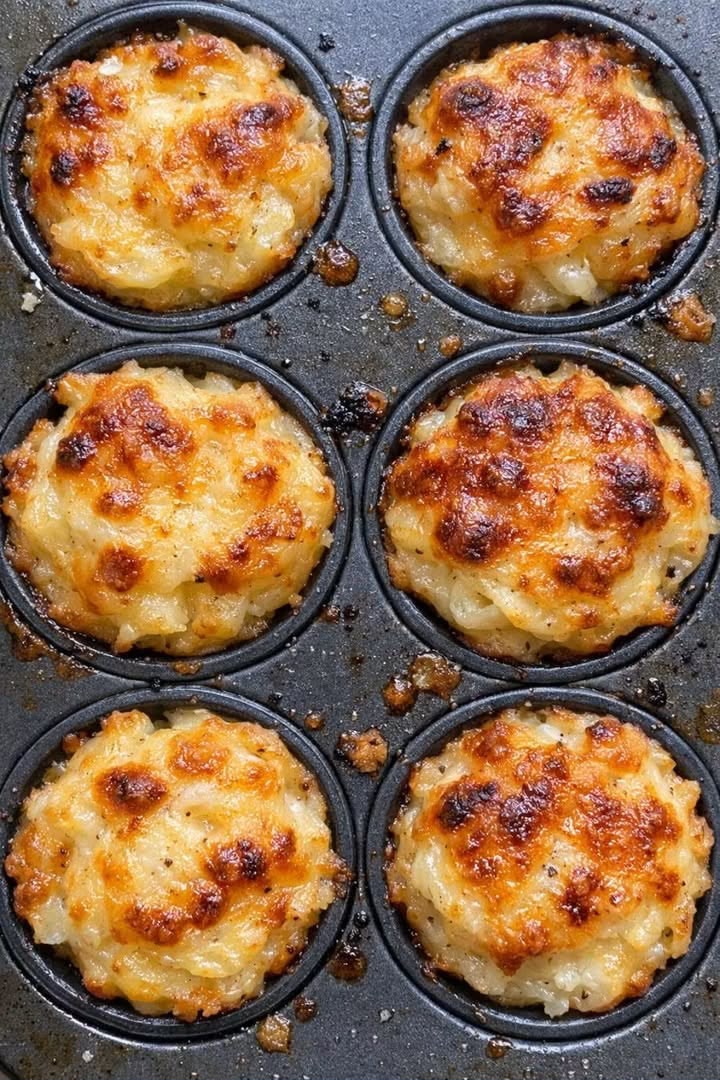
Cheesy Potato Muffin Cups
Golden, crispy around the edges and wonderfully cheesy in the middle, these cheesy potato muffin cups turn everyday potatoes into a delicious homemade side dish. Baked in a muffin tin rather than fried, they develop beautifully browned tops while remaining soft and tender inside.
There is something especially satisfying about the combination of grated potato, melted cheese and a lightly crunchy exterior. Every bite offers a balance of comforting potato flavour, savoury seasoning and deliciously gooey cheese.
What makes these little potato cups particularly appealing is their individual size. Instead of making one large potato bake, you can prepare neat portions that are easy to serve alongside dinner, add to a brunch plate or offer as a warm party snack.
The recipe also uses familiar kitchen ingredients. Potatoes, eggs, cheese, flour, melted butter and a handful of seasonings come together in one bowl before being baked until golden. There is no complicated shaping or special cooking technique involved.
These cheesy potato muffin cups are versatile enough for a relaxed weekend breakfast, a family lunch or a cosy evening meal. They pair particularly well with eggs, roasted vegetables, grilled chicken and simple salads.
Whether you enjoy them straight from the oven or reheat a batch for another meal, this recipe is a practical way to transform a few humble potatoes into something wonderfully comforting.
Recipe Overview
- Recipe: Cheesy Potato Muffin Cups
- Category: Side Dish, Snack or Breakfast
- Style: Homestyle comfort food
- Preparation Time: Approximately 15–20 minutes
- Cooking Time: 25–30 minutes
- Optional Broiling: 1–2 minutes
- Resting Time: 5 minutes
- Total Time: Approximately 45–57 minutes
- Yield: Approximately 10–12 standard muffin cups, depending on potato size and filling level
- Oven Temperature: 400°F (200°C)
- Cooking Method: Oven baking
- Equipment: Standard muffin tin
- Main Ingredients: Potatoes, shredded cheese, eggs and Parmesan
- Difficulty: Easy
The preparation time and yield are estimates, as the exact number of cups depends on the size of your potatoes and muffin tin. The recipe works with either mozzarella or cheddar, allowing you to adjust the finished flavour and texture.
Why You’ll Love This Recipe
- Golden, crispy tops: The exposed potato and cheese develop a beautifully browned surface during baking.
- Soft, cheesy centres: Eggs, butter and melted cheese help create a tender interior.
- Simple ingredients: Most of the ingredients are common kitchen staples.
- Easy preparation: Everything is mixed in one bowl before baking.
- Individual portions: The muffin tin makes serving straightforward.
- Family-friendly flavour: Mild potato, cheese and garlic make a comforting combination.
- Flexible serving options: Enjoy these cups for breakfast, brunch, dinner or snacking.
- Convenient leftovers: Cooked cups can be refrigerated and reheated for another meal.
One of the biggest advantages of this recipe is that the potatoes cook in relatively small portions. The exposed tops and edges can brown while the grated potato mixture cooks through, provided the potatoes are properly prepared and the cups are not overfilled.
Ingredients
For the original cheesy potato muffin cups recipe, gather the following ingredients:
- 3 large potatoes, peeled and grated
- 1½ cups shredded mozzarella or cheddar cheese
- 2 large eggs
- ¼ cup grated Parmesan cheese
- 2 tablespoons all-purpose flour (plain flour)
- 2 tablespoons melted butter
- 1 teaspoon garlic powder
- ½ teaspoon onion powder
- ½ teaspoon salt
- ¼ teaspoon black pepper
- 1 tablespoon chopped parsley, optional
For preparing the muffin tin: Grease the tin generously with a suitable cooking fat or non-stick spray. The quantity is not specified in the original recipe.
For topping: Reserve a little of the measured shredded cheese, or use a small additional amount if desired, before baking.
These ingredients create a savoury potato mixture that holds together during baking while developing a rich, golden surface.
Ingredient Notes
Potatoes
Potatoes provide the main structure, texture and comforting flavour. Large potatoes are grated into thin strands so they can cook evenly inside the muffin cups. Russet potatoes are an excellent choice for a fluffy, crisp-edged result, while Yukon Gold potatoes provide a slightly creamier texture.
Mozzarella or Cheddar
The 1½ cups of shredded cheese give the muffin cups their cheesy flavour and help create a soft interior. Mozzarella produces a mild, stretchy texture, whereas cheddar contributes a stronger savoury flavour and a richer golden colour.
You can choose either cheese without changing the original quantity.
Eggs
Two large eggs help bind the grated potato mixture together. As the cups bake, the eggs set and provide structure, making the individual portions easier to remove from the muffin tin.
Parmesan
Parmesan adds a concentrated savoury flavour. Its finely grated texture allows it to distribute throughout the potatoes, and cheese near the surface can help form a deliciously browned finish.
Plain Flour
Two tablespoons of plain flour help absorb a little remaining moisture and bind the mixture. This is especially useful when working with freshly grated potatoes.
Melted Butter
Butter adds richness and helps the potatoes brown. Allow it to cool slightly after melting so it combines comfortably with the eggs and cheese.
Garlic and Onion Powder
These seasonings add depth without introducing extra moisture. Their fine texture makes them easy to distribute evenly through the grated potatoes.
Salt and Black Pepper
Salt brings out the natural flavour of the potatoes and cheese, while black pepper adds gentle warmth. The amount of salt may be adjusted in a future batch depending on how salty your chosen cheeses are.
Fresh Parsley
Parsley is optional. Its fresh, slightly herbal flavour works particularly well with the richness of the cheese and butter.
Equipment You’ll Need
- Standard muffin tin
- Box grater or food processor with grating attachment
- Large mixing bowl
- Clean kitchen towel
- Measuring cups and spoons
- Mixing spoon or spatula
- Small knife for loosening the baked cups
- Oven gloves
- Wire cooling rack, if available
A non-stick muffin tin can make removal easier, but it should still be greased generously. Potatoes and melted cheese can stick firmly to metal surfaces, especially around their crispy edges.
Step-by-Step Instructions
Step 1: Preheat the Oven
Preheat your oven to 400°F (200°C). Generously grease each cavity of a muffin tin, paying particular attention to the bottom and sides. Proper greasing helps prevent the cheese and potatoes from sticking as they brown.
Step 2: Grate the Potatoes
Peel the three large potatoes and grate them using the coarse side of a box grater or an appropriate food processor attachment. Aim for fairly even strands so the potatoes bake at a similar rate.
Step 3: Remove Excess Moisture
Transfer the grated potatoes to a clean kitchen towel. Gather the towel around the potatoes and squeeze firmly over a sink or bowl, removing as much excess liquid as possible.
This step is especially important. Excess moisture can make the centres heavy and prevent the edges from becoming properly crisp.
Step 4: Combine the Ingredients
Place the drained grated potatoes in a large mixing bowl. Add the two eggs, shredded mozzarella or cheddar, grated Parmesan, plain flour, melted butter, garlic powder, onion powder, salt and black pepper.
If using parsley, add it at this stage. Mix thoroughly until the grated potato strands are coated and the cheese and seasonings are evenly distributed.
Step 5: Fill the Muffin Tin
Spoon the potato mixture into the prepared muffin cavities. Press each portion down lightly to help it hold together, but avoid packing it too tightly.
Leave a little room at the top so the mixture can cook evenly without overflowing.
Step 6: Add the Cheese Topping
Sprinkle a little extra shredded cheese over each cup, or use some of the cheese reserved from the original measured quantity. This helps create an appetising melted cheese topping.
Step 7: Bake Until Golden
Place the muffin tin in the preheated oven and bake for 25–30 minutes. The tops should become deeply golden and the edges should look crisp.
Check that the grated potato in the centre is tender before removing the cups. If the tops colour too quickly but the centres remain firm, allow a little extra baking time while monitoring the browning.
Step 8: Optional Broiling
For a darker, crunchier top, broil or grill the potato cups for 1–2 minutes at the end of baking. Watch continuously, as the cheese can change from golden to burnt very quickly.
Step 9: Allow the Cups to Rest
Remove the muffin tin from the oven and leave the potato cups to rest for approximately five minutes. This allows the melted cheese and egg mixture to settle slightly, making the cups easier to handle.
Step 10: Carefully Remove
Run a small knife gently around the edge of each potato cup. Carefully lift the cups from the muffin tin, taking care not to break their crispy edges.
Step 11: Serve Warm
Serve the cheesy potato muffin cups while they are warm, with golden tops, tender potato centres and delicious melted cheese. They are especially enjoyable shortly after baking, when the contrast between their crispy exterior and soft interior is at its best.
Choosing and Preparing the Best Potatoes
The type of potato you use has a noticeable effect on the finished muffin cups. Starchy potatoes such as Russets tend to give a lighter interior and develop crisp edges particularly well.
Yukon Gold potatoes contain less starch and have a naturally buttery flavour. They produce a slightly creamier result, which can be especially appealing when paired with cheddar or mozzarella.
Regardless of variety, choose firm potatoes without significant green patches or signs of spoilage. Peel them before grating, as required by the original recipe.
Coarsely grated potato works well because the strands retain some definition during baking. Extremely finely grated potatoes can produce a denser mixture, particularly if much of their moisture remains.
Once grated, the potato should be squeezed thoroughly. Use a sturdy, clean towel and work in batches if necessary. Removing liquid before mixing the ingredients makes a substantial difference to the final texture.
Prepare and mix the potatoes promptly after grating to reduce discolouration. Avoid soaking them unnecessarily, as that introduces additional water that must then be removed.
How to Make Crispy Potato Muffin Cups
Achieving crispy edges and tender centres depends on controlling moisture, portion size and oven heat.
First, remove as much moisture as practical from the raw grated potatoes. A wet mixture produces steam during baking, which can leave the cups softer than intended.
Second, distribute the mixture evenly among the muffin cavities. Portions of similar size bake more consistently, making it easier to achieve golden tops without overcooking the smaller cups.
Third, grease the muffin tin properly. The fat helps reduce sticking and supports browning where the potato mixture touches the hot metal.
Fourth, avoid pressing the mixture into an extremely dense mass. Lightly compacting the potatoes is enough to help them hold their shape while still allowing heat to reach the interior.
Finally, give the cups the full baking time and look for visible signs of doneness rather than relying only on the clock. The exterior should be golden and the potatoes should feel tender when tested in the centre.
How to Create a Golden Cheese Topping
The rich, browned cheese topping is one of the most appealing features of these potato muffin cups. It adds flavour, colour and a lightly crisp finish.
Cheddar is particularly useful if you prefer a stronger cheese flavour and golden surface. Mozzarella gives a softer, stretchier centre and a milder taste.
Parmesan contributes savoury depth and complements either cheese. The combination of grated Parmesan and the main shredded cheese creates a satisfying balance between flavour and texture.
For even distribution, mix most of the shredded cheese into the potatoes and reserve a little for sprinkling over the tops. If you would rather use the entire measured quantity inside the mixture, a small additional topping is optional.
Do not add an excessively thick cheese layer, because it may brown before the grated potatoes underneath have cooked properly.
The optional final broiling step can deepen the colour. Because cheese contains fat and proteins that brown rapidly under direct heat, remain close to the oven and remove the tin as soon as the desired colour is reached.
Expert Cooking Tips
- Use evenly sized potatoes: This helps produce consistent quantities and makes portioning easier.
- Choose a coarse grater: Grated strands produce the characteristic potato texture.
- Squeeze thoroughly: Removing excess water is essential for crisp edges.
- Measure your flour: Too much flour can make the potato cups heavy.
- Mix the eggs evenly: Ensure the binding ingredients reach every portion of grated potato.
- Distribute the cheese: Avoid leaving large pockets of cheese in one part of the mixture.
- Grease every cavity: Pay particular attention to the sides where melted cheese can stick.
- Keep portions similar: Consistent filling levels encourage even baking.
- Press gently: Lightly compact the mixture rather than packing it firmly.
- Use the middle oven shelf: This generally encourages more balanced heating.
- Check the centres: Golden tops alone do not guarantee that the potatoes are tender.
- Monitor broiling closely: The topping can darken within seconds.
- Rest before removing: Five minutes allows the cups to firm up.
- Serve promptly: The crispest texture is usually enjoyed shortly after baking.
Common Mistakes to Avoid
1. Leaving Too Much Water in the Potatoes
Wet grated potatoes can produce soggy cups. Squeeze them firmly in a clean towel before adding the remaining ingredients.
2. Using Too Much Flour
Excess flour may make the centres dense or doughy. Stick to the original two tablespoons unless deliberately developing a different recipe.
3. Forgetting to Grease the Pan
Cheese can bond firmly to the muffin tin as it cools. Generous greasing helps preserve the shape and crispy edges during removal.
4. Overfilling the Muffin Cavities
Very large portions may brown on the outside while remaining undercooked inside. Divide the mixture evenly and avoid overfilling.
5. Pressing the Mixture Too Firmly
Excessive compression can produce a dense texture. Press just enough to help the strands hold together.
6. Baking at an Incorrect Temperature
A cooler oven may not brown the cups effectively, while excessive heat can darken the cheese before the potato is tender. Use the specified 400°F (200°C).
7. Removing the Cups Immediately
Freshly baked potato cups are delicate while hot. Allowing five minutes of resting time makes removal easier.
8. Leaving the Cups Under the Grill Too Long
The optional broiling stage requires close attention. Even an additional minute can produce overly dark cheese.
9. Storing While Still Steaming Hot
Sealing very hot cups in a container creates condensation that softens their exterior. Allow them to stop steaming, then refrigerate promptly.
Optional Recipe Variations
The following ideas are optional adaptations and are not part of the original ingredient list.
1. Cheddar and Chive Potato Cups
Use sharp cheddar as the main cheese and mix in finely chopped fresh chives. This version has a pleasantly savoury flavour and works particularly well with breakfast eggs.
2. Mozzarella and Herb Cups
Choose mozzarella and add a small amount of dried Italian herbs. The flavour is mild, aromatic and delicious alongside tomato-based dishes.
3. Spicy Potato Muffin Cups
Mix in a little smoked paprika, chilli flakes or finely chopped jalapeño. Adjust the amount according to your preference for heat.
4. Bacon and Cheese Cups
Fold a small quantity of fully cooked, well-drained crispy bacon into the potato mixture. Its salty, smoky flavour complements cheddar particularly well.
5. Spring Onion Potato Cups
Add finely chopped spring onions for freshness and a delicate onion flavour. Avoid adding excessive amounts, which could affect the moisture balance.
6. Three-Cheese Potato Cups
Combine mozzarella, cheddar and Parmesan within the original total cheese quantities, using a little extra only if intentionally adapting the recipe.
7. Gluten-Free Potato Cups
Replace the two tablespoons of plain flour with a suitable gluten-free flour blend. Check that any prepared ingredients are labelled gluten-free if required for dietary reasons.
Serving Suggestions
These cheesy potato muffin cups are versatile enough to accompany a variety of meals. Their rich, savoury flavour works particularly well with fresh vegetables and simple proteins.
- Breakfast: Serve with scrambled eggs, grilled tomatoes and fresh fruit.
- Weekend brunch: Arrange alongside poached eggs, sautéed mushrooms and a green salad.
- Family dinner: Pair with roast chicken, grilled fish or baked vegetables.
- Party appetiser: Serve as small finger-food portions with your favourite dipping sauce.
- Light lunch: Enjoy with a crisp mixed salad and a yoghurt-based dip.
- Comfort-food meal: Serve with roasted vegetables and a homemade gravy.
For dipping, try a little soured cream, garlic yoghurt sauce or mild tomato relish. These are optional accompaniments rather than ingredients in the original recipe.
A light sprinkle of parsley immediately before serving can provide a fresh contrast to the golden cheese topping.
Storage and Reheating
Refrigerating Leftovers
Allow the baked potato cups to cool briefly, then transfer them to an airtight container and refrigerate within two hours of cooking. Store at 4°C (40°F) or colder and use within 3–4 days.
Reheating in the Oven
Place the potato cups on a baking tray and reheat at approximately 350°F (175°C) until thoroughly hot in the centre. Depending on their size and starting temperature, this may take around 10–15 minutes.
An oven is preferable to a microwave when you want to restore some of the original crispness.
Air Fryer Reheating
For an optional reheating method, arrange the cups in an air fryer basket without overcrowding and heat at approximately 350°F (175°C) until hot throughout. Check frequently to prevent the cheese from becoming overly dark.
Microwave Reheating
Microwave individual portions until steaming hot throughout. This is convenient, although the edges will generally be softer than when reheated in an oven.
Freezing
Fully baked and cooled potato cups may be frozen in an airtight freezer-safe container for approximately 2–3 months for best quality. Freeze them separately on a tray first if you want to prevent them from sticking together.
Reheat thoroughly before serving, allowing additional cooking time if reheating from frozen.
Making Ahead
For convenient preparation, you can grate and squeeze the potatoes shortly before baking and prepare the remaining measured ingredients in advance. Combining everything just before filling the muffin tin is preferable because grated raw potatoes may discolour or release more moisture during prolonged storage.
Frequently Asked Questions
1. What are cheesy potato muffin cups?
They are individual savoury potato portions made from grated potatoes, cheese, eggs, flour and seasonings, baked in a muffin tin until golden.
2. Do I need to cook the potatoes first?
No. The original recipe uses raw grated potatoes, which cook in the oven.
3. Which potatoes work best?
Russet potatoes are a good choice for crisp edges, while Yukon Gold potatoes create a creamier interior.
4. Can I leave the skins on?
The original recipe specifies peeled potatoes. Leaving the skins on is an optional adaptation that produces a more rustic texture.
5. Why must I squeeze the grated potatoes?
Removing excess moisture helps prevent soggy centres and encourages better browning.
6. Can I use cheddar instead of mozzarella?
Yes. The original recipe allows either cheddar or mozzarella in the same quantity.
7. Can I combine different cheeses?
Yes. A mixture of cheddar and mozzarella provides both savoury flavour and a soft, melted texture.
8. Is Parmesan necessary?
Parmesan is included in the original recipe for flavour. Omitting it changes the recipe, but you can experiment with another suitable hard cheese if needed.
9. What holds the potato cups together?
The eggs, flour, melted cheese and natural starch from the potatoes help the mixture set during baking.
10. Can I make them without eggs?
An egg-free version would require a tested alternative binder. Simply leaving out the eggs may cause the cups to crumble.
11. Can I use gluten-free flour?
Yes. A suitable gluten-free flour blend may be used as a substitution, although the final texture can differ slightly.
12. How do I prevent sticking?
Grease the muffin tin thoroughly and let the cups rest for five minutes before gently loosening them.
13. Why are my potato cups soggy?
Excess potato moisture, overfilling or insufficient baking can lead to a soft, wet texture.
14. How do I know when they are cooked?
The tops should be golden, the edges crisp and the potatoes in the centres tender when tested.
15. Can I use a mini muffin tin?
Yes, as an adaptation. Smaller portions will usually need a shorter baking time, so begin checking early.
16. Can I use a silicone muffin tray?
Yes, although the sides may not become quite as crisp as they do in a metal muffin tin.
17. Can I add vegetables?
Yes. Finely chopped, well-drained vegetables can be added as an optional variation. Avoid introducing too much moisture.
18. Can I make these potato cups spicy?
Yes. A little chilli powder, paprika or finely diced jalapeño can add heat.
19. Are they suitable for breakfast?
Absolutely. They pair well with eggs, tomatoes and other traditional breakfast accompaniments.
20. Can I prepare them for a party?
Yes. Their individual portions make them convenient for serving at gatherings. Keep them safely hot when serving over an extended period.
21. Can I freeze baked potato cups?
Yes. Freeze fully cooked, cooled cups in a suitable airtight container for approximately 2–3 months for best quality.
22. What is the best way to reheat them?
An oven or air fryer generally gives the best balance of a hot centre and lightly crisp exterior.
23. Why are my cups falling apart?
They may not have baked long enough, the ingredients may not have been mixed evenly, or they may have been removed while too hot.
24. Can I add more cheese on top?
Yes. A little additional cheese is an optional topping, although an excessive amount may brown too quickly.
25. How should I serve them for the best texture?
Let them rest briefly after baking, remove them carefully and serve while still warm.
Cheesy Potato Muffin Cups Recipe Card
Recipe Description
Easy oven-baked cheesy potato muffin cups with golden, crispy edges, soft grated potato centres and a rich melted cheese topping.
- Category: Side Dish, Breakfast, Snack
- Method: Baking
- Prep Time: Approximately 15–20 minutes
- Bake Time: 25–30 minutes
- Optional Broiling: 1–2 minutes
- Rest Time: 5 minutes
- Yield: Approximately 10–12 standard cups
- Oven: 400°F (200°C)
Ingredients
- 3 large potatoes, peeled and grated
- 1½ cups shredded mozzarella or cheddar cheese
- 2 large eggs
- ¼ cup grated Parmesan cheese
- 2 tablespoons all-purpose flour (plain flour)
- 2 tablespoons melted butter
- 1 teaspoon garlic powder
- ½ teaspoon onion powder
- ½ teaspoon salt
- ¼ teaspoon black pepper
- 1 tablespoon chopped parsley, optional
Instructions
- Preheat the oven to 400°F (200°C) and generously grease a muffin tin.
- Peel and grate the potatoes using a coarse grater.
- Wrap the grated potatoes in a clean kitchen towel and squeeze out as much moisture as possible.
- Place the potatoes in a large bowl with the eggs, shredded cheese, Parmesan, flour, melted butter, garlic powder, onion powder, salt and black pepper. Add parsley if using.
- Mix until the ingredients are evenly combined.
- Spoon the mixture into the muffin cavities and press down lightly.
- Sprinkle a little extra shredded cheese over each cup, or use some reserved from the measured amount.
- Bake for 25–30 minutes, until deeply golden on top, crisp around the edges and tender in the centre.
- If desired, broil for 1–2 minutes for a darker topping, watching closely.
- Leave the cups in the tin for approximately five minutes.
- Carefully loosen each cup with a small knife and lift it out.
- Serve warm and enjoy the crispy golden tops and tender cheesy centres.
Recipe Notes
- Drain the grated potatoes thoroughly for the best texture.
- Choose cheddar for a stronger savoury flavour or mozzarella for a mild, stretchy centre.
- Avoid overfilling the muffin tin.
- Check that the potato centres are fully tender before serving.
- Allow the cups to rest before removing them from the pan.
- Refrigerate leftovers promptly and reheat thoroughly.
Recipe Hashtags
#CheesyPotatoMuffinCups #PotatoRecipes #CheesyPotatoes #EasySideDishes #HomemadeComfortFood