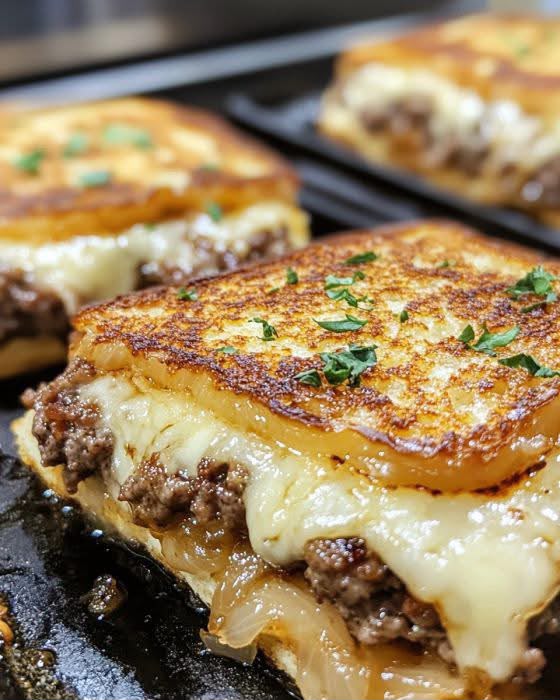
Cheesy Patty Melt Sandwiches
There is something incredibly satisfying about biting into a perfectly toasted sandwich filled with juicy beef, beautifully melted cheese and sweet caramelised onions. Cheesy Patty Melt Sandwiches bring together everything wonderful about a classic cheeseburger and a golden, buttery toasted sandwich in one irresistible meal.
Unlike an ordinary burger served in a soft bun, a patty melt uses slices of bread toasted directly in a skillet. The result is a crisp, golden exterior that contrasts beautifully with the tender beef and creamy cheese tucked inside.
As the sandwich cooks, the cheese softens and melts around the beef, holding the layers together. The caramelised onions add a gentle sweetness that balances the savoury meat and rich cheese.
These homemade patty melts are inspired by classic American diner cooking. They are generously filled, beautifully browned and best enjoyed straight from the pan while the cheese is still warm and stretchy.
Although they look like something from a restaurant, the ingredients are simple and the entire recipe can be prepared using an everyday frying pan or cast-iron skillet.
Whether you are planning a comforting family dinner, a satisfying weekend lunch or an easy meal after a busy day, these cheesy patty melt sandwiches are a delicious choice.
Recipe Overview
- Recipe: Cheesy Patty Melt Sandwiches
- Category: Main Course, Lunch, Dinner
- Cuisine: American Diner-Style
- Preparation Time: Approximately 15 minutes (estimated)
- Cooking Time: Approximately 25–35 minutes (estimated, depending on skillet size)
- Total Time: Approximately 40–50 minutes (estimated)
- Servings: 4 sandwiches
- Difficulty: Easy to Moderate
- Cooking Method: Stovetop Skillet
- Main Ingredients: Minced beef, sandwich bread, onions, provolone or Swiss cheese, cheddar cheese
- Best Served: Hot, immediately after cooking
Why You Will Love This Recipe
1. Wonderfully Crispy Bread
Butter-toasted sandwich bread develops a deeply golden crust that gives every bite a satisfying crunch. The crispy exterior is one of the defining features of a delicious patty melt.
2. Rich, Melted Cheese
A combination of provolone or Swiss cheese and cheddar gives these sandwiches a creamy, savoury filling. The cheese melts around the beef and onions, creating the classic gooey texture.
3. Sweet Caramelised Onions
Slowly cooked onions provide a wonderful contrast to the seasoned beef. Their natural sweetness develops as they soften and brown in the skillet.
4. Simple Everyday Ingredients
You do not need complicated sauces or speciality equipment. Most of the ingredients are easily available at ordinary supermarkets.
5. A Satisfying Family Dinner
These hearty sandwiches can be served with potatoes, salad or vegetables for a complete, comforting meal.
6. Easy to Customise
You can experiment with different cheeses, breads and toppings without changing the basic cooking method.
7. Restaurant-Style Results at Home
With careful heat control and a heavy skillet, you can recreate the crisp bread, juicy meat and melted cheese associated with classic diner sandwiches.
Ingredients
This recipe makes four generously filled cheesy patty melt sandwiches.
For the Beef Patties
- 1 lb (approximately 454 g) minced beef
- 1 tablespoon Worcestershire sauce
- ½ teaspoon garlic powder
- ½ teaspoon salt
- ¼ teaspoon black pepper
For the Caramelised Onions
- 2 large onions, thinly sliced
- 1 tablespoon olive oil
For the Sandwiches
- 8 slices thick sandwich bread
- 8 slices provolone or Swiss cheese
- 4 slices cheddar cheese
- 2 tablespoons butter
- 1 tablespoon chopped parsley, optional
Ingredient note: These quantities follow the original supplied recipe. The provolone or Swiss cheese is an either-or choice, rather than a requirement to use both.
Ingredient Notes
Minced Beef
Minced beef is the main ingredient and provides the hearty, savoury filling. Beef containing a moderate amount of fat generally produces a juicier patty than extremely lean mince.
Look for fresh mince with an even texture. Keep it refrigerated until you are ready to season and shape the patties.
Thick Sandwich Bread
Thick bread is particularly important because it must support a generous beef patty, onions and plenty of cheese without collapsing.
Good choices include sturdy white sandwich bread, sourdough or rye bread. Avoid very soft, thin slices that become soggy quickly.
Onions
Two large onions create a generous quantity of sweet, tender filling. Yellow or brown onions work particularly well because their flavour becomes mellow as they cook.
Slice them thinly and as evenly as possible so that they soften at a similar rate.
Provolone or Swiss Cheese
Provolone offers a mild, creamy flavour and melts beautifully. Swiss cheese has a slightly nuttier character that pairs especially well with beef and caramelised onions.
Both are excellent choices for a homemade patty melt.
Cheddar Cheese
Cheddar contributes extra flavour and richness. Using it alongside the other cheese creates a more interesting combination than using only one variety.
Butter
Butter gives the bread its golden colour, appealing flavour and crisp surface. Softened butter is easiest to spread in a thin, even layer.
Olive Oil
Olive oil helps the onions cook gently without sticking excessively to the skillet.
Worcestershire Sauce
This classic seasoning deepens the savoury flavour of the beef. Only a small amount is needed, so measure it carefully to avoid overpowering the meat.
Garlic Powder, Salt and Pepper
These simple seasonings bring out the flavour of the beef without distracting from the cheese and onions.
Fresh Parsley
Parsley is an optional finishing garnish. It adds a touch of freshness and colour to the rich, golden sandwiches.
Equipment You Will Need
- Large heavy-based frying pan or cast-iron skillet
- Sharp kitchen knife
- Chopping board
- Mixing bowl
- Wide spatula
- Kitchen tongs or wooden spoon
- Measuring spoons
- Plate for holding the cooked onions
- Instant-read food thermometer
A cast-iron skillet is especially useful because it retains heat well and helps create an evenly browned crust on the bread. However, a good non-stick or stainless-steel frying pan will also work.
How to Make Cheesy Patty Melt Sandwiches
Step 1: Heat the Olive Oil
Place a large skillet over medium heat and add the tablespoon of olive oil. Allow it to warm until it coats the base of the pan evenly.
A heavy skillet is ideal because it distributes heat steadily, making it easier to cook the onions without scorching them.
Step 2: Caramelise the Onions
Add the two thinly sliced onions to the skillet. Cook for approximately 10–12 minutes, stirring frequently, until they become soft, golden and lightly caramelised.
If the onions start browning too quickly, reduce the heat slightly. They should soften and develop sweetness rather than burn.
For deeper caramelisation, continue cooking gently for longer if needed. Transfer the onions to a plate and set aside.
Step 3: Season the Beef
Place the minced beef in a mixing bowl. Add the Worcestershire sauce, garlic powder, salt and black pepper.
Mix gently until the seasonings are evenly distributed. Avoid overworking the meat because excessive mixing can make the finished patties dense.
Step 4: Shape Four Thin Patties
Divide the seasoned beef into four equal portions. Shape each portion into a thin patty roughly matching the shape and size of your bread.
Make the patties slightly larger than the bread where practical, as the meat will shrink during cooking.
Keeping them relatively thin ensures that they fit comfortably inside the finished sandwiches.
Step 5: Cook the Beef Patties
Return the skillet to medium heat. Add the patties, working in batches if necessary.
Cook for approximately 3–4 minutes per side, until nicely browned and cooked through. Actual cooking time will depend on their thickness and the temperature of the pan.
For food safety, minced beef should reach an internal temperature of 71°C (160°F), measured with a food thermometer.
Remove the cooked patties from the skillet and set aside briefly while preparing the sandwiches.
Step 6: Butter the Bread
Spread the two tablespoons of butter over one side of each of the eight bread slices.
Make sure the butter covers the surface evenly, particularly near the edges. These buttered sides will face outward and touch the skillet during toasting.
Step 7: Assemble the Sandwiches
Place one slice of bread in the skillet, butter-side down.
Arrange a layer of provolone or Swiss cheese over the unbuttered side, add one cooked beef patty, then spoon caramelised onions over the top.
Add the remaining cheese allocated to that sandwich, including the cheddar, and finish with a second slice of bread, butter-side up.
Repeat with the remaining ingredients, dividing the eight slices of provolone or Swiss cheese and four slices of cheddar between the four sandwiches.
Step 8: Toast the First Side
Cook the sandwich over medium-low heat for approximately 3–4 minutes.
Allow the bread to develop a rich golden-brown crust while the cheese begins melting inside.
Watch the underside carefully. If it colours too quickly, lower the heat so that the cheese has enough time to soften.
Step 9: Flip and Finish Cooking
Slide a wide spatula beneath the sandwich and carefully turn it over.
Continue cooking until the second side becomes golden and crisp and the cheese has completely melted.
Press very gently with the spatula if necessary, but avoid flattening the sandwich so much that the juicy filling escapes.
Step 10: Repeat with the Remaining Sandwiches
Prepare the remaining sandwiches using the same method. If your skillet is large enough, you may be able to toast two at a time.
Keep the heat moderate and check the bread frequently to prevent burning.
Step 11: Garnish and Serve
Transfer the finished sandwiches to a serving plate or chopping board.
Sprinkle with chopped parsley if desired. Serve immediately while the bread is crispy, the beef is juicy and the cheese is wonderfully gooey.
For easier eating, slice each sandwich diagonally using a sharp knife.
How to Make Perfect Caramelised Onions
Caramelised onions are one of the ingredients that make a patty melt distinctive. They add sweetness and tenderness, balancing the richness of the beef and cheese.
The key is to control the heat. If the skillet is too hot, the edges of the onions may burn before the centres soften. A moderate temperature allows the onions to release moisture and gradually develop colour.
Slice the onions into thin, even strips before cooking. This gives them a more consistent texture and prevents some pieces becoming overly dark while others remain undercooked.
Stir the onions regularly, especially as they begin browning. They should become soft and golden rather than crisp and dry.
The original recipe specifies 10–12 minutes, which usually produces softened onions with some browning. For a deeper, sweeter caramelised flavour, additional gentle cooking time may be needed, sometimes 25–40 minutes depending on the onions and pan.
Before assembling the sandwiches, let any excess moisture evaporate from the onions. This helps prevent the bread from becoming soggy.
How to Cook Juicy Beef Patties
A good patty melt depends on beef that remains tender and flavourful after cooking.
Begin by handling the mince gently. Combine the Worcestershire sauce and seasonings without repeatedly squeezing or kneading the mixture.
Divide the beef into equal portions so that the patties cook at approximately the same rate.
Patty melts work especially well with thin patties because the beef needs to fit inside the bread without making the sandwich unnecessarily bulky.
Use medium heat to create an appetising browned surface. Avoid constantly moving or pressing down on the patties as they cook.
Pressing the meat firmly with a spatula can squeeze out moisture and reduce tenderness.
Always check the internal temperature with a food thermometer rather than relying only on appearance. Minced beef should reach 71°C (160°F).
Once the patties are cooked, move them directly into the sandwich assembly process so the filling stays warm and the cheese melts more easily.
How to Get Crispy Bread and Melted Cheese
The difference between an ordinary toasted sandwich and an excellent patty melt often comes down to careful heat management.
Spread butter in a thin, even layer across the bread. Too little butter can leave dry patches, while too much may make the sandwich greasy.
Choose bread thick enough to support the filling. Bread with some structure is less likely to collapse under the weight of the beef and onions.
When assembling the sandwich, position cheese close to the bread. As it melts, it helps hold the layers together and creates a delicious creamy texture.
Cook over medium-low heat instead of turning the heat up aggressively. This allows the bread to brown slowly while the heat moves through the filling.
If the bread becomes deeply golden before the cheese melts, lower the heat and cover the skillet briefly with a lid to trap warmth. Remove the lid before serving so any condensation does not soften the crust.
Finally, serve the sandwiches as soon as they are ready. Their crispy exterior and stretchy cheese are at their best straight from the skillet.
Expert Cooking Tips
- Use sturdy bread. Thick sandwich bread, rye or sourdough holds the filling better than thin, delicate slices.
- Slice onions evenly. Uniform slices cook more consistently and produce a better filling.
- Control onion heat. Reduce the temperature if the onions begin burning before they soften.
- Do not rush caramelisation. Give the onions extra time if you want deeper sweetness.
- Keep the beef patties thin. This makes the sandwiches easier to assemble and eat.
- Shape patties to fit the bread. Rectangular or oval patties can provide better coverage than small round ones.
- Avoid overmixing minced beef. Gentle handling helps maintain a tender texture.
- Use a thermometer. Check for a safe internal temperature of 71°C (160°F).
- Drain excessive skillet grease. Too much fat can leave the toasted bread oily.
- Layer cheese around the filling. This encourages even melting and helps the sandwich stay together.
- Toast slowly. Medium-low heat produces a more controlled golden crust.
- Use a wide spatula. A stable spatula makes flipping easier and reduces the chance of spilling the filling.
- Do not overfill. Spread the onions evenly rather than creating a large mound in the centre.
- Serve immediately. Freshly cooked patty melts have the best combination of crisp bread and melted cheese.
Common Mistakes to Avoid
1. Using Bread That Is Too Thin
Thin bread can become soaked with juices and may tear when you flip the sandwich. Choose thicker, sturdier slices for better results.
2. Cooking Over High Heat
High heat can burn the bread before the cheese melts. Keep the heat at medium-low during final toasting.
3. Overworking the Beef
Mixing minced beef too aggressively can produce a dense texture. Combine the seasonings gently and stop once everything is distributed.
4. Making the Patties Too Thick
Very thick patties create an awkward sandwich and make even cooking more difficult. Thin, broad patties are better suited to patty melts.
5. Using Wet Onions
Onions containing excess liquid can soften the bread. Let moisture evaporate before assembling the sandwich.
6. Adding Too Much Filling
Overloading the sandwich makes it difficult to flip and can cause the cheese and onions to spill out.
7. Flipping Too Early
Allow the first side to develop a stable golden crust before turning the sandwich. This helps it remain intact.
8. Pressing Too Hard
Flattening the sandwich excessively can push melted cheese and meat juices into the skillet.
9. Judging Beef Doneness by Colour Alone
Browned surfaces do not guarantee that minced beef is safely cooked. Use an instant-read thermometer.
Optional Patty Melt Variations
The original recipe is delicious as written, but these optional ideas provide different flavours and textures.
1. Classic Rye Bread Patty Melt
Replace the regular sandwich bread with rye bread. Its distinctive flavour pairs especially well with Swiss cheese and caramelised onions.
2. Mushroom and Swiss Patty Melt
Add sautéed mushrooms to the filling. Cook them separately until their moisture evaporates before adding them to the sandwiches.
3. Spicy Jalapeño Patty Melt
Include a few thinly sliced jalapeños for gentle heat. You can use fresh or pickled jalapeños depending on your preference.
4. Extra Cheddar Patty Melt
For a stronger cheddar flavour, replace some of the provolone or Swiss cheese with additional cheddar.
5. Sourdough Patty Melt
Use thick sourdough slices for a slightly tangy flavour and a particularly satisfying toasted crust.
6. Bacon Patty Melt
Add a layer of fully cooked, crispy bacon for an extra savoury variation.
7. Burger Sauce Patty Melt
Serve with a separate dipping sauce made from mayonnaise, ketchup and a little mustard. Keeping the sauce on the side helps protect the bread’s crispness.
What to Serve with Patty Melt Sandwiches
Cheesy patty melts are hearty enough to enjoy on their own, but a simple side dish can turn them into a complete family meal.
Crispy French Fries
Classic chips or thin French fries are a natural pairing. Their salty, crispy texture complements the juicy beef and melted cheese.
Roasted Potato Wedges
Seasoned potato wedges offer a comforting alternative. Serve them with ketchup or a favourite dipping sauce.
Fresh Green Salad
A light salad with cucumber, lettuce and tomatoes provides freshness that balances the rich sandwich filling.
Coleslaw
Crunchy coleslaw adds a pleasant contrast to the warm toasted bread and soft onions.
Pickles
Dill pickles bring a sharp, tangy flavour that cuts through the richness of the beef and cheese.
Tomato Soup
A bowl of warm tomato soup makes these sandwiches especially comforting during cooler weather.
Serving Presentation
Cut the sandwiches diagonally and arrange them on a plate with the filling visible. Serve while the cheese is still soft and melted.
A small bowl of dipping sauce and a side of crisp potatoes complete the classic diner-style presentation.
Storage and Reheating
How to Store Leftover Patty Melts
Allow cooked sandwiches to cool briefly, then refrigerate promptly in an airtight container. Do not leave perishable leftovers at room temperature for more than two hours.
For best quality, enjoy refrigerated leftovers within 3–4 days, provided they have been stored at 4°C (40°F) or below.
Reheating in a Skillet
For the crispiest result, place the sandwich in a dry skillet over medium-low heat.
Warm gently, turning occasionally, until the filling is piping hot and the bread becomes crisp again. Reheat leftovers thoroughly to 74°C (165°F).
Reheating in an Oven
Preheat the oven to approximately 180°C (350°F). Place the sandwiches on a baking tray and heat until thoroughly warmed through, typically around 10–15 minutes depending on thickness.
Can You Use a Microwave?
A microwave can warm the sandwich, but the bread may become soft or chewy. A skillet or oven generally gives a better texture.
Can You Freeze Patty Melts?
Cooked beef patties freeze well when wrapped securely. However, fully assembled sandwiches may lose some of their crisp texture after freezing and reheating.
For better results, freeze the cooked patties separately and prepare fresh bread and cheese when serving.
Make-Ahead Preparation
You can prepare the caramelised onions ahead of time and store them in the refrigerator in a covered container.
You can also shape the beef patties in advance and keep them chilled until cooking. Handle raw minced beef carefully and follow appropriate refrigeration and food-safety practices.
Assemble and toast the sandwiches immediately before serving for the best flavour and texture.
Frequently Asked Questions
1. What is a patty melt sandwich?
A patty melt is a toasted sandwich made with a cooked beef patty, melted cheese and usually onions, served between slices of bread rather than a traditional burger bun.
2. What is the difference between a patty melt and a cheeseburger?
A cheeseburger usually comes in a soft burger bun, while a patty melt is grilled or toasted in a skillet using sliced bread. Patty melts commonly include caramelised onions.
3. What bread is best for patty melts?
Thick white sandwich bread, rye and sourdough all work well. Choose bread with enough structure to support the filling.
4. Can I use sourdough bread?
Yes. Sourdough produces an excellent golden crust and adds a slightly tangy flavour.
5. Is Swiss cheese necessary?
No. The original recipe allows either Swiss or provolone cheese. Both melt well and complement the beef.
6. Can I use only cheddar cheese?
Yes, as an optional variation. Cheddar provides a fuller flavour, although the melting texture may differ from the original cheese combination.
7. How do I stop the bread from becoming soggy?
Cook excess moisture out of the onions, avoid overfilling and serve the sandwiches immediately after toasting.
8. Why is my bread burning before the cheese melts?
The skillet is probably too hot. Reduce the heat to medium-low so the cheese can melt gradually as the bread browns.
9. How thin should the beef patties be?
They should be thin enough to fit easily inside the bread while remaining substantial enough to hold together during cooking.
10. Can I cook the beef patties ahead of time?
Yes. Refrigerate cooked patties promptly and reheat them thoroughly before assembling the sandwiches.
11. Can I prepare the onions in advance?
Absolutely. Cook the onions ahead of time, refrigerate them safely and warm them before adding them to the sandwiches.
12. How long does it take to caramelise onions?
The original recipe calls for 10–12 minutes, which produces softened onions with some browning. A deeper caramelisation usually takes longer.
13. Can I use red onions?
Yes. Red onions can be used as an optional substitution, although their flavour and sweetness will be slightly different.
14. Can I use a non-stick frying pan?
Yes. A non-stick pan works well for both the patties and the toasted sandwiches. Adjust the heat according to your pan.
15. Is a cast-iron skillet better?
Cast iron retains heat particularly well and can create a beautifully browned crust, but it is not essential.
16. Can I make the sandwiches without butter?
Yes, although butter contributes to the classic golden colour and rich flavour. A small amount of suitable cooking oil can be used as an alternative.
17. What temperature should minced beef reach?
Minced beef should reach 71°C (160°F) internally for food safety.
18. Can I add mushrooms?
Yes. Cook sliced mushrooms separately until browned and their moisture has evaporated before adding them to the sandwich.
19. Are patty melts suitable for meal preparation?
The fillings can be prepared in advance, but freshly toasted sandwiches give the best results.
20. What is the best way to reheat leftovers?
Use a skillet over medium-low heat to help restore the crispy bread while warming the filling thoroughly.
21. Can I make these sandwiches for a crowd?
Yes. Prepare the onions and patties in batches, then toast the assembled sandwiches shortly before serving.
22. What sauce goes well with patty melts?
Mustard, ketchup, burger sauce or a creamy garlic sauce can all work well. Serve sauces on the side to maintain a crisp crust.
23. Can I make smaller patty melts?
Yes. Use smaller bread slices and divide the beef into smaller portions, adjusting the cooking time and checking the internal temperature.
24. How can I get stretchy melted cheese?
Choose a good melting cheese such as provolone, avoid excessive heat and allow the sandwich to warm gently until the cheese softens completely.
25. When should I serve the sandwiches?
Serve them immediately after cooking, while the bread is crisp and the cheese is warm and gooey.
Cheesy Patty Melt Sandwiches Recipe Card
Description: Golden, buttery toasted sandwiches packed with juicy seasoned beef, sweet caramelised onions and layers of rich, melted cheese.
- Category: Main Course
- Cuisine: American
- Method: Stovetop
- Prep Time: Approximately 15 minutes (estimated)
- Cook Time: Approximately 25–35 minutes (estimated)
- Total Time: Approximately 40–50 minutes (estimated)
- Yield: 4 sandwiches
Ingredients
- 1 lb minced beef
- 8 slices thick sandwich bread
- 2 large onions, thinly sliced
- 8 slices provolone or Swiss cheese
- 4 slices cheddar cheese
- 2 tablespoons butter
- 1 tablespoon olive oil
- 1 tablespoon Worcestershire sauce
- ½ teaspoon garlic powder
- ½ teaspoon salt
- ¼ teaspoon black pepper
- 1 tablespoon chopped parsley, optional
Instructions
- Heat the olive oil in a large skillet over medium heat.
- Add the sliced onions and cook for 10–12 minutes, stirring regularly, until softened and golden. Cook longer over gentle heat if deeper caramelisation is desired. Remove and set aside.
- Season the minced beef with Worcestershire sauce, garlic powder, salt and black pepper.
- Divide the beef into four equal portions and shape into thin patties.
- Cook the patties in the same skillet for approximately 3–4 minutes per side, adjusting the time as necessary until they reach 71°C (160°F) internally.
- Butter one side of each bread slice.
- Place a slice of bread butter-side down in the skillet. Add some provolone or Swiss cheese, a cooked beef patty, caramelised onions and the remaining cheese allocated to that sandwich, including one slice of cheddar.
- Top with another slice of bread, butter-side up.
- Cook over medium-low heat for approximately 3–4 minutes until golden and crisp underneath.
- Carefully flip the sandwich and cook until the other side is golden and the cheese has melted completely.
- Repeat with the remaining bread, beef, onions and cheese.
- Sprinkle with parsley if desired and serve immediately.
Helpful Recipe Notes
- Use thick bread for better structure and crispness.
- Keep the heat medium-low when toasting the sandwiches.
- Cook the onions until excess moisture has evaporated.
- Use a food thermometer to confirm the beef is fully cooked.
- Serve hot for the best melted-cheese texture.
Recipe Hashtags
#PattyMelt #CheesySandwich #BeefRecipes #EasyDinnerIdeas #ComfortFood
Final Thoughts
Cheesy Patty Melt Sandwiches are a brilliant example of how simple ingredients can become something wonderfully comforting when cooked with care.
The combination of crispy buttered bread, juicy beef, deeply savoury cheese and sweet caramelised onions makes every bite satisfying. The textures are just as important as the flavours, with a golden crust giving way to a warm, rich filling.
Whether you choose classic Swiss cheese, creamy provolone or your favourite sturdy bread, the most important techniques remain the same: cook the beef properly, soften the onions, assemble the layers evenly and toast the sandwiches gently.
Serve these homemade patty melts fresh from the skillet with crispy potatoes, a simple salad or your favourite dipping sauce for a delicious lunch or family dinner.
If you make these sandwiches, share how they turned out in the comments. Save the recipe for your next comfort-food craving, share it with friends and follow along for more easy homemade meals.