Introduction
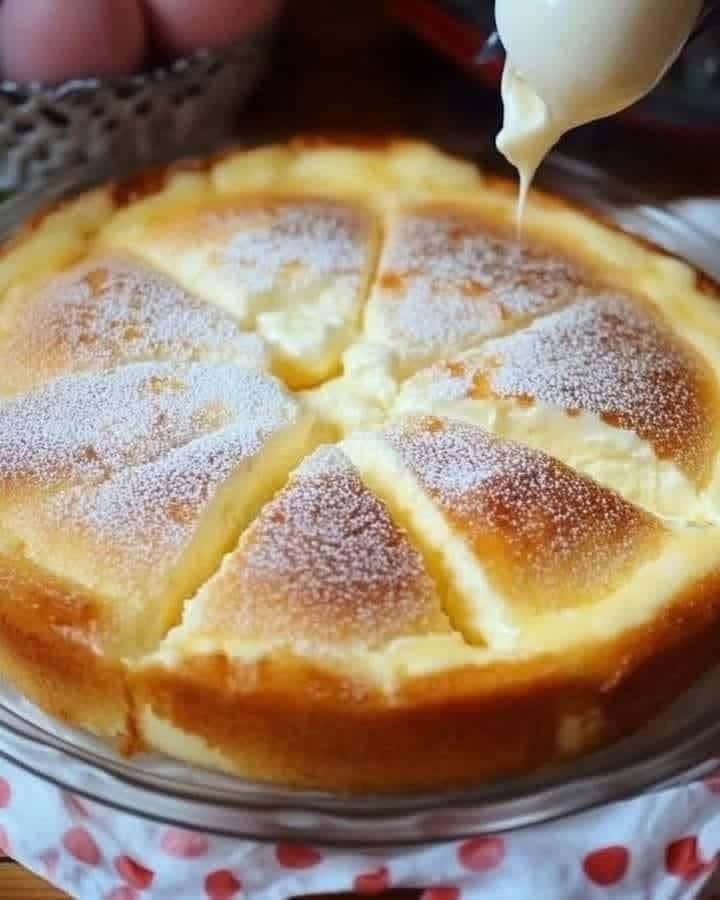
Fluffy Japanese Cotton Cheesecake with Creamy Vanilla Sauce is a beautiful dessert that combines the delicate texture of a soufflé with the rich, comforting flavor of classic cheesecake. Its golden surface, cloud-like interior, and light dusting of powdered sugar make it an irresistible treat for cheesecake lovers.
Unlike traditional American cheesecake, which is usually dense and creamy, Japanese cotton cheesecake has a remarkably soft, airy texture. Each slice feels light and delicate, with a gentle sweetness and a subtle cream cheese flavor.
What makes this dessert especially appealing is the contrast between its lightly golden exterior and its soft, moist center. When served warm or at room temperature, the cheesecake has a tender, almost melt-in-your-mouth consistency.
A smooth vanilla sauce adds another layer of richness. Poured over individual slices, the sauce complements the cheesecake without overwhelming its delicate flavor.
This dessert is perfect for family celebrations, afternoon gatherings, holidays, or whenever you want to prepare something special using simple baking ingredients.
Although Japanese cotton cheesecake may look complicated, the process becomes manageable when you understand the importance of properly whipped egg whites, gentle folding, and careful temperature control.
With the right technique, you can create a beautifully risen cheesecake with a soft, fluffy interior and a lovely golden top.
Why You Will Love This Recipe
Japanese cotton cheesecake is famous for its incredibly light texture.
The combination of cream cheese, whipped egg whites, and a small amount of flour creates a dessert that is softer than traditional cheesecake and more delicate than an ordinary sponge cake.
Another wonderful feature is its balanced sweetness. The cheesecake is rich enough to feel indulgent without being overly heavy.
The ingredients are simple and widely available, making this recipe suitable for home bakers.
The vanilla sauce adds a creamy finishing touch and can be prepared while the cheesecake cools.
This recipe is also versatile. You can serve the cheesecake plain, dust it with powdered sugar, or pair it with fresh berries and fruit sauces.
Its elegant appearance makes it ideal for special occasions, yet its comforting flavor is perfect for everyday enjoyment.
Recipe Information
Preparation Time: 25 minutes
Baking Time: 65–75 minutes
Cooling Time: 60 minutes
Total Time: Approximately 2 hours 40 minutes
Servings: 8–10 slices
Difficulty: Intermediate
Oven Temperature: 300°F (150°C)
Pan Size: 8-inch round cake pan
Course: Dessert
Cuisine: Japanese-Inspired
Main Ingredients
Cream Cheese
Cream cheese provides the cheesecake’s signature flavor and smooth texture.
Use full-fat cream cheese for the best results. Allow it to soften before mixing to prevent lumps.
Eggs
Eggs are essential for creating the airy structure of Japanese cotton cheesecake.
The yolks add richness, while whipped egg whites provide volume and lightness.
Milk
Milk helps create a smooth cream cheese mixture and keeps the cheesecake moist.
Whole milk works especially well.
Butter
Unsalted butter contributes a delicate richness and improves the texture.
Cake Flour
Cake flour has a lower protein content than all-purpose flour, helping produce a soft, tender crumb.
Cornstarch
Cornstarch contributes to the delicate structure of the cheesecake.
Sugar
Granulated sugar sweetens the cheesecake and helps stabilize the whipped egg whites.
Vanilla Extract
Vanilla adds warmth and enhances the cream cheese flavor.
Lemon Juice
A small amount of lemon juice provides subtle brightness and helps balance the sweetness.
Ingredients
For the cheesecake:
8 oz (225 g) full-fat cream cheese, softened
¼ cup (60 g) unsalted butter
½ cup (120 ml) whole milk
6 large eggs, separated
¾ cup (150 g) granulated sugar
½ cup (60 g) cake flour
2 tablespoons (16 g) cornstarch
1 teaspoon vanilla extract
1 tablespoon fresh lemon juice
¼ teaspoon cream of tartar
¼ teaspoon salt
2 tablespoons powdered sugar, for dusting
For the creamy vanilla sauce:
1 cup (240 ml) whole milk
½ cup (120 ml) heavy cream
¼ cup (50 g) granulated sugar
2 large egg yolks
1 tablespoon cornstarch
1½ teaspoons vanilla extract
1 tablespoon unsalted butter
How to Choose the Best Ingredients
The quality and temperature of the ingredients can significantly affect the final cheesecake.
Choose full-fat cream cheese rather than reduced-fat varieties. Full-fat cream cheese creates a smoother batter and richer flavor.
Use fresh eggs because the egg whites need to whip into a stable meringue.
Separate the eggs carefully. Even a small amount of egg yolk can interfere with whipping the whites.
Cake flour is recommended for the softest texture. If unavailable, you can prepare a substitute using all-purpose flour and cornstarch, although the texture may differ slightly.
Whole milk provides a richer flavor than skim milk.
Fresh lemon juice is preferable because it offers a clean, natural citrus note.
Use pure vanilla extract whenever possible for the most pleasant flavor.
Prepare the Baking Pan
Begin by preparing an 8-inch round cake pan with sides at least three inches high.
Line the bottom with parchment paper.
Place a parchment collar around the inside walls, allowing it to extend slightly above the rim.
This helps support the cheesecake as it rises.
If using a springform pan, wrap the outside securely with several layers of heavy-duty aluminum foil to reduce the risk of water entering during baking.
A solid-bottom cake pan is preferable for water-bath baking.
Prepare a larger roasting pan that can comfortably hold the cake pan.
The cheesecake will bake in a water bath, which provides gentle, even heat and helps prevent excessive cracking.
Prepare the Cream Cheese Mixture
Place the softened cream cheese, butter, and milk in a heatproof bowl.
Set the bowl over a saucepan containing gently simmering water.
Make sure the bottom of the bowl does not touch the water.
Stir continuously until the cream cheese and butter melt into a smooth mixture.
Remove the bowl from the heat.
Allow the mixture to cool until warm rather than hot.
Add the egg yolks one at a time, whisking gently after each addition.
Stir in the vanilla extract and lemon juice.
Sift the cake flour, cornstarch, and salt together.
Gradually add the dry ingredients to the cream cheese mixture.
Whisk gently until the batter becomes smooth and free of visible flour lumps.
Avoid excessive mixing because too much air introduced at this stage can affect the cheesecake’s structure.
Prepare the Whipped Egg Whites
Place the six egg whites in a clean, dry mixing bowl.
Add the cream of tartar.
Begin beating on medium-low speed until the whites become foamy.
Gradually add the granulated sugar in three additions.
Continue beating until the egg whites form soft to medium peaks.
The meringue should look glossy and hold a gentle curve when the beaters are lifted.
Avoid whipping until stiff, dry peaks form.
Overwhipped egg whites can make the batter difficult to fold and may contribute to cracking.
Properly whipped egg whites are one of the most important elements of this recipe.
Step-by-Step Instructions
Step 1: Preheat the Oven
Preheat the oven to 300°F (150°C).
Place a kettle of water on the stove so hot water is ready for the water bath.
Step 2: Prepare the Cheesecake Batter
Make the smooth cream cheese mixture using cream cheese, butter, milk, egg yolks, flour, cornstarch, vanilla, and lemon juice.
Ensure the mixture is smooth before incorporating the egg whites.
Step 3: Whip the Egg Whites
Beat the egg whites with cream of tartar.
Gradually add the sugar until soft to medium peaks form.
Step 4: Fold the Meringue Into the Batter
Add approximately one-third of the whipped egg whites to the cream cheese mixture.
Fold gently with a silicone spatula.
Add the remaining egg whites in two additions.
Use slow, sweeping movements to preserve as much air as possible.
Stop folding when the batter appears evenly combined.
Step 5: Fill the Cake Pan
Pour the batter into the prepared cake pan.
Gently tap the pan once or twice on the countertop to release large trapped air bubbles.
Do not tap repeatedly because this can deflate the batter.
Step 6: Prepare the Water Bath
Place the filled cake pan inside the larger roasting pan.
Carefully pour hot water into the roasting pan until it reaches approximately one inch up the sides of the cake pan.
Step 7: Bake the Cheesecake
Transfer the roasting pan to the oven.
Bake for approximately 65–75 minutes.
The cheesecake should rise gently and develop a light golden surface.
The center should appear set but retain a slight wobble.
Avoid opening the oven frequently during baking.
Step 8: Cool Gradually
Turn off the oven.
Leave the cheesecake inside with the oven door slightly open for approximately 20–30 minutes.
Gradual cooling helps reduce sudden shrinking and cracking.
Step 9: Remove From the Pan
Remove the cheesecake from the water bath.
Allow it to cool further before carefully removing it from the cake pan.
Transfer to a serving plate.
Step 10: Add the Finishing Touch
Dust the top lightly with powdered sugar.
Slice with a sharp knife, wiping the blade between cuts.
Serve with creamy vanilla sauce.
How to Make the Creamy Vanilla Sauce
The vanilla sauce is a wonderful complement to the delicate cheesecake.
In a medium saucepan, combine the milk and heavy cream.
Heat over medium-low heat until steaming but not boiling.
In a separate bowl, whisk the egg yolks, sugar, and cornstarch until smooth.
Slowly pour a small amount of the warm milk mixture into the egg yolks while whisking continuously.
This process, called tempering, prevents the eggs from scrambling.
Gradually add the remaining warm milk mixture.
Return everything to the saucepan.
Cook over medium-low heat, stirring constantly, until the sauce thickens enough to lightly coat the back of a spoon and reaches 160°F (71°C).
Remove from the heat.
Stir in the butter and vanilla extract.
For an exceptionally smooth sauce, strain through a fine-mesh sieve.
Allow the sauce to cool slightly before serving.
If it becomes too thick, stir in a small amount of warm milk.
Tips for the Best Results
Room-temperature ingredients are essential for creating a smooth batter.
Cold cream cheese can produce lumps that are difficult to remove.
Use a clean mixing bowl when whipping the egg whites.
Whip the egg whites only to soft or medium peaks.
Fold the meringue gently to preserve the air responsible for the cheesecake’s fluffy texture.
Avoid overmixing after adding the egg whites.
Use a water bath to maintain gentle baking conditions.
Keep the oven temperature relatively low.
Excessive heat can cause the cheesecake to rise too quickly and crack.
Do not open the oven repeatedly during baking.
Allow the cheesecake to cool gradually before removing it.
Finally, use a clean, sharp knife to create attractive slices.
Flavor Variations
Lemon Cotton Cheesecake
Add one teaspoon of finely grated lemon zest to the cream cheese mixture.
Orange Vanilla Cheesecake
Replace the lemon juice with fresh orange juice and add a little orange zest.
Chocolate Cotton Cheesecake
Replace two tablespoons of cake flour with unsweetened cocoa powder.
Strawberry Cheesecake
Serve the finished cheesecake with fresh strawberries and strawberry sauce.
Matcha Cotton Cheesecake
Add one to two teaspoons of culinary-grade matcha powder to the dry ingredients.
Coffee Cheesecake
Dissolve one teaspoon of instant espresso powder in the warm milk before combining it with the cream cheese.
Almond Vanilla Cheesecake
Add a few drops of almond extract along with the vanilla.
Caramel Cotton Cheesecake
Serve slices with a drizzle of homemade caramel sauce.
How to Serve
Japanese cotton cheesecake is delicious when served slightly warm, at room temperature, or chilled.
For a classic presentation, dust the top with powdered sugar.
Cut the cheesecake into neat wedges and transfer each slice to a dessert plate.
Spoon a small amount of creamy vanilla sauce over the slice just before serving.
For a colorful presentation, add fresh strawberries, raspberries, or blueberries.
A light fruit sauce also complements the delicate cream cheese flavor.
If serving the cheesecake at a gathering, place the vanilla sauce in a small pitcher so guests can add their preferred amount.
A cup of coffee, black tea, or green tea makes an excellent accompaniment.
Meal Prep and Storage
Japanese cotton cheesecake can be prepared ahead of time.
After baking, allow it to cool gradually.
Once it has cooled sufficiently, transfer it to the refrigerator in a covered container.
Refrigerate within two hours of baking.
Store at 40°F (4°C) or below for up to three to four days.
The cheesecake may become slightly denser when chilled, but it will remain tender and flavorful.
For longer storage, individual slices can be wrapped carefully and frozen for up to one month for the best texture.
Thaw frozen slices overnight in the refrigerator.
Store the vanilla sauce separately in an airtight container in the refrigerator for up to two days.
Do not leave the cheesecake or vanilla sauce at room temperature for extended periods.
Common Mistakes to Avoid
Overwhipping the Egg Whites
Dry, stiff meringue can be difficult to incorporate and may cause uneven rising.
Overmixing the Batter
Aggressive mixing deflates the whipped egg whites and reduces the cheesecake’s airy texture.
Using Cold Cream Cheese
Cold cream cheese may create lumps.
Baking at Too High a Temperature
Excessive heat can cause cracking, excessive browning, and sudden rising.
Skipping the Water Bath
Without gentle, moist heat, the cheesecake may bake unevenly.
Opening the Oven Too Often
Sudden temperature changes can cause the cheesecake to collapse.
Cooling Too Quickly
Rapid cooling can lead to significant shrinking.
Removing the Cheesecake Too Early
The delicate structure needs time to set before unmolding.
Frequently Asked Questions
What makes Japanese cotton cheesecake different from regular cheesecake?
Japanese cotton cheesecake uses whipped egg whites to create a lighter, airier texture than traditional dense cheesecake.
Why did my cheesecake collapse?
Some shrinking is normal. Significant collapse can result from underbaking, unstable meringue, or sudden temperature changes.
Can I use all-purpose flour instead of cake flour?
Yes, although cake flour produces a more delicate texture.
Do I need a water bath?
A water bath is strongly recommended because it provides gentle, even heat.
Can I make this cheesecake without cream of tartar?
Yes. A small amount of lemon juice can help stabilize the egg whites, although results may vary.
Why is my cheesecake cracking?
Cracking can occur when the oven temperature is too high, the meringue is overwhipped, or the cheesecake cools too quickly.
Can I serve it cold?
Absolutely. Chilled Japanese cotton cheesecake has a slightly firmer texture and a more pronounced cream cheese flavor.
Can I freeze Japanese cotton cheesecake?
Yes. Wrap individual slices carefully and freeze for up to one month for the best quality.
Can I make the vanilla sauce ahead of time?
Yes. Refrigerate it separately and stir gently before serving.
Can I add fruit to the batter?
Fresh fruit can release moisture and affect the delicate structure. It is generally better to serve fruit alongside the finished cheesecake.
Final Thoughts
Fluffy Japanese Cotton Cheesecake with Creamy Vanilla Sauce is a delightful dessert that brings together the richness of cheesecake and the delicate texture of a soft soufflé.
Its golden surface, airy interior, and subtle vanilla flavor make it an elegant choice for both everyday treats and special celebrations.
The secret to success lies in carefully preparing the meringue, folding the batter gently, baking at a controlled temperature, and allowing the cheesecake to cool gradually.
Finished with powdered sugar and a smooth vanilla sauce, every slice offers a beautiful combination of lightness, creaminess, and comforting sweetness.
Whether you enjoy it warm, chilled, or accompanied by fresh fruit, this Japanese-inspired cheesecake is a wonderful recipe to add to your homemade dessert collection.