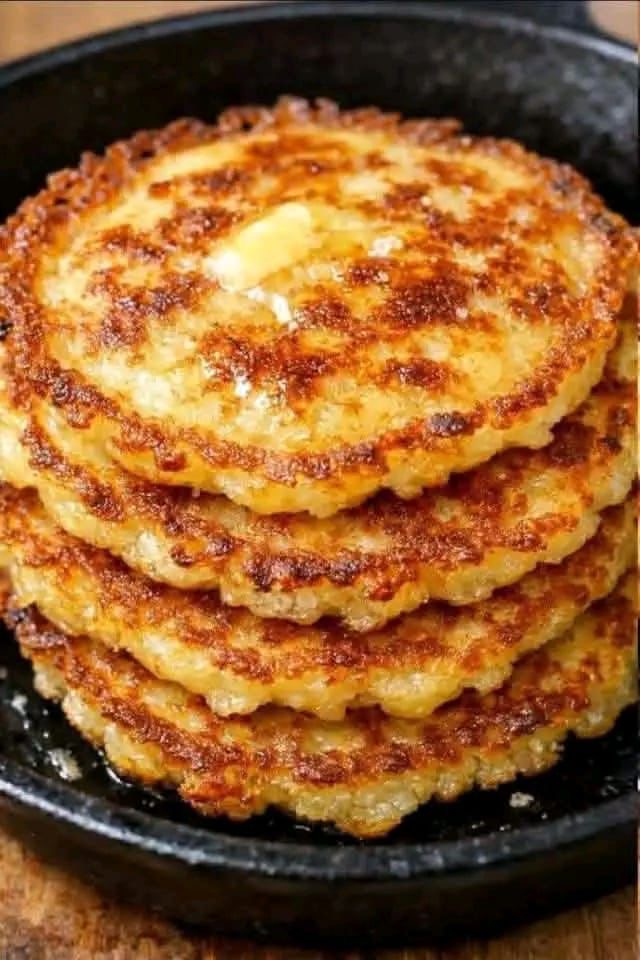
These Crispy Cheesy Potato Pancakes are a simple comfort-food recipe made with potatoes, melted cheese, onion, egg, and a few pantry seasonings. They cook until beautifully golden and crisp on the outside while remaining soft, cheesy, and tender in the center.
They are perfect for breakfast, brunch, lunch, or as an easy side dish. They are also an excellent way to turn leftover mashed potatoes into something completely different.
Why You’ll Love This Recipe
Potato pancakes are inexpensive, filling, and incredibly versatile. Adding cheese gives them extra flavor while helping create those irresistible golden, crispy edges.
This recipe is also easy to customize. You can add garlic, green onions, herbs, bacon, different cheeses, or spices depending on what you have available.
Serve them freshly cooked with sour cream, yogurt sauce, eggs, salad, or your favorite dipping sauce.
Recipe Information
Prep Time: 15 minutes
Cooking Time: 20 minutes
Total Time: About 35 minutes
Servings: 4–6
Difficulty: Easy
Ingredients
- 3 cups cooked mashed potatoes, cooled
- 1 cup shredded cheddar cheese
- 2 large eggs
- ½ cup all-purpose flour
- ¼ cup finely chopped onion or green onions
- 2 cloves garlic, minced
- ½ teaspoon salt
- ½ teaspoon black pepper
- ½ teaspoon garlic powder
- ¼ teaspoon paprika
- 2 tablespoons chopped parsley or chives
- 2–4 tablespoons oil or butter for frying
Choosing the Potatoes
Starchy potatoes work especially well because they produce a fluffy interior while helping the pancakes hold together.
Russet potatoes are an excellent option.
Yukon Gold potatoes also work and give the pancakes a slightly richer, creamier texture.
If you’re starting with fresh potatoes, boil them until tender, drain thoroughly, and mash them.
Let the potatoes cool before preparing the pancake mixture.
Using Leftover Mashed Potatoes
This recipe is particularly useful when you have leftover mashed potatoes.
However, mashed potato consistency varies.
If your mashed potatoes contain lots of milk, cream, or butter, the mixture may be softer. In that case, you may need a little additional flour.
If they’re relatively dry and firm, use less flour.
The final mixture should be soft enough to shape but firm enough to remain together in the skillet.
Prepare the Potato Mixture
Place the cooled mashed potatoes in a large mixing bowl.
Add the shredded cheddar cheese, eggs, flour, onion, garlic, parsley, salt, black pepper, garlic powder, and paprika.
Mix gently until everything is evenly combined.
Avoid aggressively mixing for too long.
Check the consistency.
If the mixture feels extremely sticky and cannot hold a shape, add flour one tablespoon at a time.
Shape the Pancakes
Scoop approximately ¼ to ⅓ cup of potato mixture.
Roll it gently into a ball and flatten it between your palms.
Aim for pancakes approximately ½ inch thick.
Don’t make them too thick because the outside may brown before the center becomes properly heated.
Repeat until all the mixture has been shaped.
Secret to Extra-Crispy Potato Pancakes
After shaping the pancakes, lightly coat both sides with flour.
You don’t need a thick coating.
A very thin layer helps remove surface moisture and encourages a crisp golden crust when the pancake hits the hot skillet.
For even more crunch, you can use fine breadcrumbs instead.
Heat the Skillet
Place a large heavy skillet over medium heat.
Cast iron works particularly well because it retains heat and helps produce an evenly browned crust.
Add enough oil to lightly coat the bottom.
Allow the oil to become hot before adding the pancakes.
If the pan isn’t sufficiently heated, the potatoes may absorb excessive oil rather than immediately developing a crust.
Fry Until Golden
Carefully place several potato pancakes in the skillet.
Don’t overcrowd the pan.
Cook for approximately 3–4 minutes on the first side.
Avoid moving them repeatedly.
Once the underside develops a deep golden crust, carefully flip each pancake.
Cook the second side for another 3–4 minutes.
The finished pancakes should be crisp and browned on both sides.
Keep the Pancakes Warm
Transfer cooked pancakes to a plate lined briefly with paper towels.
If preparing a large batch, place them on a baking sheet in an oven heated to approximately 200°F (95°C).
This keeps them warm while you finish frying the remaining pancakes.
For the crispiest results, avoid stacking freshly cooked pancakes tightly while they’re still steaming.
Add More Cheese
Cheddar provides excellent flavor and color, but it isn’t your only option.
Try:
- Mozzarella
- Monterey Jack
- Pepper Jack
- Parmesan
- Gouda
- Gruyère
You can also combine cheddar and mozzarella for both stronger flavor and a softer, cheesier center.
Cheesy Garlic Potato Pancakes
Increase the garlic to three cloves and add approximately ¼ cup grated Parmesan.
Fresh parsley works especially well with this variation.
Serve with garlic sour cream or ranch dressing.
Bacon and Cheddar Potato Pancakes
Add approximately ½ cup cooked and crumbled bacon to the potato mixture.
Combine it with sharp cheddar and chopped green onions.
Because bacon and cheese contain salt, reduce the additional salt slightly.
This variation makes a particularly hearty breakfast or brunch dish.
Loaded Potato Pancakes
Turn these into loaded baked potato-inspired pancakes by adding:
- Crispy bacon
- Cheddar
- Green onions
- Garlic
- Chives
After cooking, top each pancake with a small spoonful of sour cream and additional green onions.
Spicy Potato Pancakes
Add finely chopped jalapeño and use Pepper Jack cheese instead of cheddar.
A little smoked paprika or chili powder can also add warmth.
Serve them with a creamy dipping sauce to balance the spice.
Can You Make Them With Grated Potatoes?
Yes, although the texture will be different.
Fresh grated potatoes produce a result closer to traditional hash browns or latkes.
If using raw grated potatoes, squeeze out as much moisture as possible with a clean kitchen towel.
Removing the water is essential for crispness.
Why Potato Pancakes Fall Apart
There are several common reasons.
The potato mixture may contain too much moisture.
There may not be enough egg or flour to bind everything.
The pancakes may also have been flipped too early.
Give the first side enough time to form a firm golden crust before attempting to turn it.
Why They Become Greasy
Greasy pancakes usually indicate that the cooking oil wasn’t hot enough.
When food is added to properly heated oil, the exterior begins cooking immediately.
If the oil is too cool, the potato mixture can absorb more fat.
Keep the skillet around medium heat and allow it to recover between batches.
How to Get Even Browning
Try to make every pancake approximately the same thickness.
Maintain consistent skillet temperature.
If the outside is becoming dark too quickly while the center remains cold, reduce the heat slightly.
If the pancakes remain pale after several minutes, increase the heat slightly.
What to Serve With Potato Pancakes
These crispy pancakes are extremely versatile.
For breakfast, serve them with fried or scrambled eggs.
For lunch, pair them with a fresh green salad.
For dinner, they make a delicious side for roasted chicken, steak, grilled vegetables, or fish.
They can also be served as appetizers with several dipping sauces.
Best Dipping Sauces
Classic sour cream is one of the easiest options.
You can also try garlic yogurt sauce, ranch dressing, spicy mayonnaise, honey mustard, or a creamy herb dip.
For something fresh, mix Greek yogurt with lemon juice, garlic, parsley, salt, and pepper.
Make-Ahead Instructions
Prepare and shape the potato pancakes several hours ahead.
Arrange them in a single layer on a parchment-lined tray.
Cover and refrigerate.
Cook them shortly before serving.
Cold pancakes are often slightly easier to handle because the potato mixture has had time to firm up.
How to Store Leftovers
Allow cooked pancakes to cool completely.
Transfer them to an airtight container and refrigerate.
For best quality, enjoy within approximately 3–4 days.
Place parchment paper between layers to prevent them from sticking together.
How to Reheat Potato Pancakes
The oven or air fryer is preferable when you want to restore the crispy exterior.
Heat until warmed through and crisp again.
A skillet with a very small amount of oil also works well.
Microwaving is convenient, but it will usually make the outside softer.
Can You Freeze Them?
Yes.
Allow the cooked pancakes to cool completely.
Arrange them on a baking sheet and freeze until firm.
Then transfer them to a freezer-safe container with parchment between layers.
This prevents them from freezing into one large block.
Reheat directly from frozen in the oven or air fryer until thoroughly heated.
Common Mistakes to Avoid
Using very wet mashed potatoes: Add enough flour to create a mixture that holds its shape.
Skipping the hot pan: A properly heated skillet is essential for a golden crust.
Making pancakes too thick: Keep them moderately thin for even cooking.
Flipping too early: Wait until the first side develops a firm crust.
Overcrowding the skillet: Cook in batches so the temperature remains consistent.
Stacking immediately: Trapped steam can soften your crispy crust.
Frequently Asked Questions
Can I use instant mashed potatoes?
Yes. Prepare them slightly thicker than usual and allow them to cool before adding the other ingredients.
Can I make these without cheese?
Yes. Simply omit the cheese and add additional herbs and seasonings.
Can I bake them instead?
Yes. Place the shaped pancakes on a lightly greased baking sheet, brush or spray lightly with oil, and bake at about 425°F (220°C) until browned, turning them halfway through.
Can I cook them in an air fryer?
Yes. Lightly coat them with oil and air-fry until golden and crisp, flipping once. Exact cooking time depends on the air fryer and pancake thickness.
What’s the best cheese?
Sharp cheddar is an excellent starting point because it adds plenty of flavor without overpowering the potatoes.
Can I prepare the mixture the night before?
Yes. Cover it tightly and refrigerate. Shape and cook the pancakes the following day.
Final Thoughts
These Crispy Cheesy Potato Pancakes transform simple potatoes into a golden, savory dish with crunchy edges, a tender center, and plenty of melted cheese.
Whether you’re using freshly cooked potatoes or yesterday’s leftover mashed potatoes, this recipe is inexpensive, flexible, and easy to customize. Add bacon for a loaded version, garlic and Parmesan for extra savory flavor, or jalapeño and Pepper Jack for a spicy twist.
Serve them hot from the skillet with sour cream or your favorite dipping sauce for the best crispy texture. 🥔🧀✨