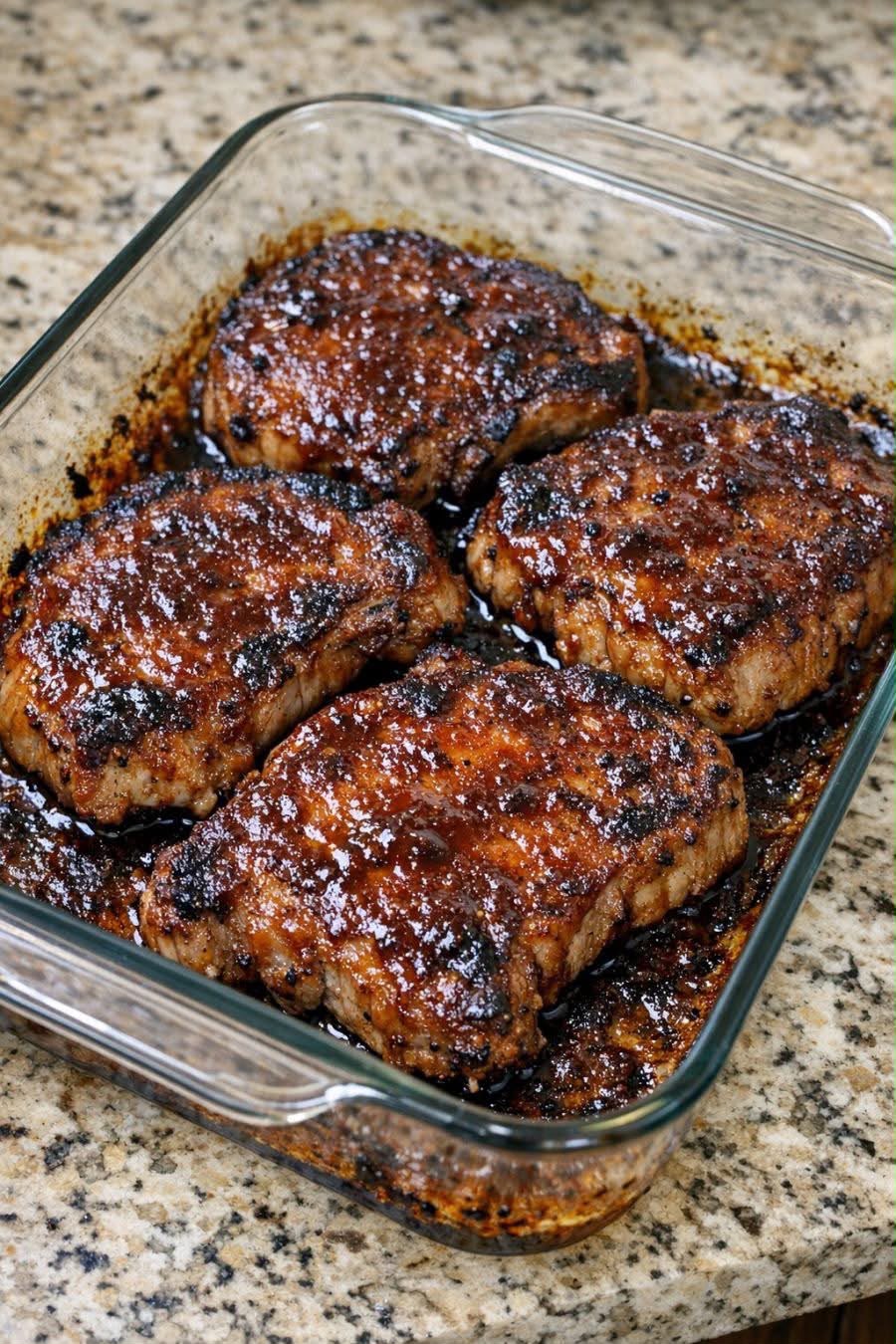
The technique that matters is when the glaze goes on. Brown sugar begins to burn at oven temperature well before pork reaches 145°F, so a chop glazed at the start comes out black and bitter with a raw centre. Bake the chops first, glaze them in the last ten minutes, and you get caramelisation instead of carbon.
Ten minutes of prep, thirty in the oven, and the glaze makes itself in the dish.
Why You Will Love This Recipe
No searing required. The oven does everything. There is no splattering skillet and no second pan to wash.
The glaze reduces on its own. Balsamic, brown sugar, and pan juices thicken in the dish as the chops finish.
It uses six pantry ingredients. Brown sugar, balsamic, soy sauce, garlic, mustard, and pork.
The flavour is genuinely complex. Sweet, sour, salty, and savoury all at once, from almost nothing.
It suits a weeknight and a dinner party equally. Forty minutes total, and it looks like it took considerably longer.
Recipe Overview
Prep time: 10 minutes
Cook time: 30 minutes
Total time: 40 minutes
Yield: 4 servings
Difficulty: Easy
Best for: Weeknight dinners, entertaining, meal prep
Ingredients
For the pork chops
• 4 bone-in pork chops, 1 to 1¼ inches thick
• 1 tablespoon olive oil
• 1 teaspoon salt
• 1 teaspoon black pepper
• 1 teaspoon garlic powder
• ½ teaspoon smoked paprika
For the glaze
• ½ cup packed dark brown sugar
• ⅓ cup balsamic vinegar
• 2 tablespoons soy sauce
• 1 tablespoon Dijon mustard
• 3 cloves garlic, minced
• 1 teaspoon fresh thyme, or ½ teaspoon dried
• ¼ teaspoon red pepper flakes, optional
• 1 tablespoon butter
Choosing the Right Balsamic Vinegar
The vinegar carries the whole glaze, and the differences between bottles are larger than most people expect.
Mid-range supermarket balsamic. The right choice here. It has enough body and sweetness to reduce well and costs a fraction of the aged stuff.
Aged traditional balsamic. Wasted in a cooked glaze. Its complexity comes from long ageing and disappears under heat and sugar. Save it for drizzling.
Cheap thin balsamic. Very sharp and watery, often coloured with caramel. Usable, but add an extra tablespoon of brown sugar to compensate.
Balsamic glaze from a bottle. Already thickened and sweetened, so reduce the brown sugar by half if you use it.
Red wine vinegar. A workable substitute if you have no balsamic, though noticeably sharper. Add an extra tablespoon of sugar.
Check the label for grape must high on the ingredient list. Bottles led by wine vinegar and caramel colour are the thin, harsh ones.
Why the Glaze Goes On Late
Sugar caramelises in stages. Brown sugar begins browning around 320°F and turns bitter and black not far above that. Pork, meanwhile, is done at 145°F internal and needs roughly half an hour in a 400°F oven to get there.
Those two timelines do not fit together. A chop glazed from the start sits in a 400°F oven for thirty minutes with sugar on its surface, and the sugar passes through caramelisation and straight into burning long before the meat is anywhere near done. This is the single most common failure with glazed pork, and it is why so many recipes produce something dark and acrid.
Baking the chops naked for twenty minutes solves it. The meat gets most of the way to temperature, the surface dries and begins to brown on its own, and the fat renders into the dish. The glaze then goes on for the final eight to ten minutes, which is exactly long enough for the sugar to caramelise and the balsamic to reduce without crossing the line.
The pan juices matter too. By the time the glaze goes in, the dish holds rendered fat and browned meat juices, and the glaze reduces into those rather than sitting on top of the chop. That is where the depth comes from.
How to Make Brown Sugar Balsamic Pork Chops
Step 1: Bring the chops to room temperature
Take them out of the fridge 20 to 30 minutes before cooking and pat them completely dry.
Cold chops cook unevenly, and wet surfaces will not brown.
Step 2: Season generously
Rub the chops with olive oil, then season all over with the salt, pepper, garlic powder, and paprika.
Season the edges as well as the faces. A thick chop has a lot of surface area on its sides.
Step 3: Arrange in the dish
Set the chops in a 9×13 baking dish with a little space between them. Preheat the oven to 400°F.
Space matters. Chops touching each other steam rather than roast.
Step 4: Bake uncovered
Bake for 20 minutes. The surface should be lightly browned and the chops still short of done.
Uncovered is essential. A covered dish traps steam and the chops never brown at all.
Step 5: Make the glaze
While they bake, whisk the brown sugar, balsamic, soy sauce, Dijon, garlic, thyme, and pepper flakes together in a small saucepan.
Step 6: Reduce it briefly
Simmer over medium heat for 3 to 4 minutes, until it thickens enough to coat a spoon. Stir in the butter off the heat.
Do not reduce it fully. It thickens further in the oven, and an over-reduced glaze turns to hard candy.
Step 7: Glaze the chops
Take the dish out and spoon about two thirds of the glaze over the chops, covering the tops completely.
Step 8: Return to the oven
Bake another 8 to 10 minutes, until the glaze is bubbling and dark at the edges and a thermometer reads 145°F in the thickest part.
Check at eight minutes. The window between caramelised and burnt is short.
Step 9: Rest and finish
Rest 5 minutes, then spoon the remaining glaze and the pan juices over the top.
Resting lets the juices settle back into the meat instead of running out onto the plate.
Tips for the Best Glazed Pork Chops
Use a thermometer. Pork is safe and juicy at 145°F. The old 160°F guideline is what dried out a generation of pork chops.
Buy chops at least an inch thick. Thin chops finish before the glaze has caramelised, and there is no way around it.
Line the dish if you want an easy clean. Caramelised sugar and balsamic bake onto glass. Foil saves ten minutes of scrubbing.
Reserve some glaze. Holding back a third for serving gives you fresh, glossy sauce rather than only the reduced version.
Watch the last five minutes. This is when the dish goes from perfect to burnt, and it happens quickly.
Easy Variations
• Add 2 tablespoons of honey for a rounder, less sharp glaze
• Swap the thyme for rosemary and add a bay leaf to the saucepan
• Use maple syrup in place of half the brown sugar
• Add a tablespoon of grated fresh ginger for warmth
• Scatter halved figs or apple wedges around the chops for the last 15 minutes
• Finish with flaky salt and chopped parsley for contrast against the sweetness
What to Serve With It
Mashed potatoes or creamy polenta catch the glaze, which is the main consideration here. Roasted sweet potatoes echo the sweetness without competing.
For a vegetable, roasted brussels sprouts, green beans with almonds, or a sharp rocket salad with lemon all cut through the richness. A glass of something acidic alongside does the same job.
Make-Ahead and Storage
Make ahead. The glaze keeps for a week in the fridge. Season the chops up to 24 hours ahead and keep them covered.
Fridge. Store cooked chops in their glaze for up to 4 days.
Freezer. Freeze cooked and cooled chops with the glaze for up to 3 months.
Reheating. Cover and warm in a 325°F oven for 15 minutes with a splash of water in the dish. The microwave toughens pork quickly, especially glazed.
Frequently Asked Questions
Can I use boneless chops?
Yes, if they are at least an inch thick. Reduce the first bake to 15 minutes and check the temperature earlier.
Why did my glaze burn?
It went on too early, or the chops were thin and needed less time. The glaze belongs in the final eight to ten minutes only.
Can I grill these instead?
Yes. Grill over medium heat for about 6 minutes a side, then brush with glaze only in the final 2 minutes.
Is the glaze very sweet?
It is balanced rather than sweet. The balsamic and soy provide acidity and salt against the sugar.
Can I make it in an air fryer?
Cook the chops at 380°F for 12 minutes, brush with glaze, then cook 3 to 4 minutes more.
What if I have no Dijon?
Whole grain mustard works, or use a teaspoon of yellow mustard. It adds sharpness and helps the glaze emulsify.
Nutrition Information
• Calories: 445 per serving
• Protein: 39g
• Fat: 18g
• Carbohydrates: 30g
• Fiber: 0g
• Sodium: 980mg
Nutrition is estimated and will vary with the exact cut, portion size, and brands used.
Final Thoughts
Two rules make this work. Bake the chops naked for twenty minutes before the glaze goes anywhere near them, and pull them at 145°F rather than guessing. The first prevents the burnt-sugar problem entirely, and the second prevents the dry-pork one.
The late-glaze principle carries into everything sweet you put on meat. Barbecue sauce, honey mustard, teriyaki, and any glaze built on sugar all belong in the last ten minutes of cooking, for exactly the same reason.