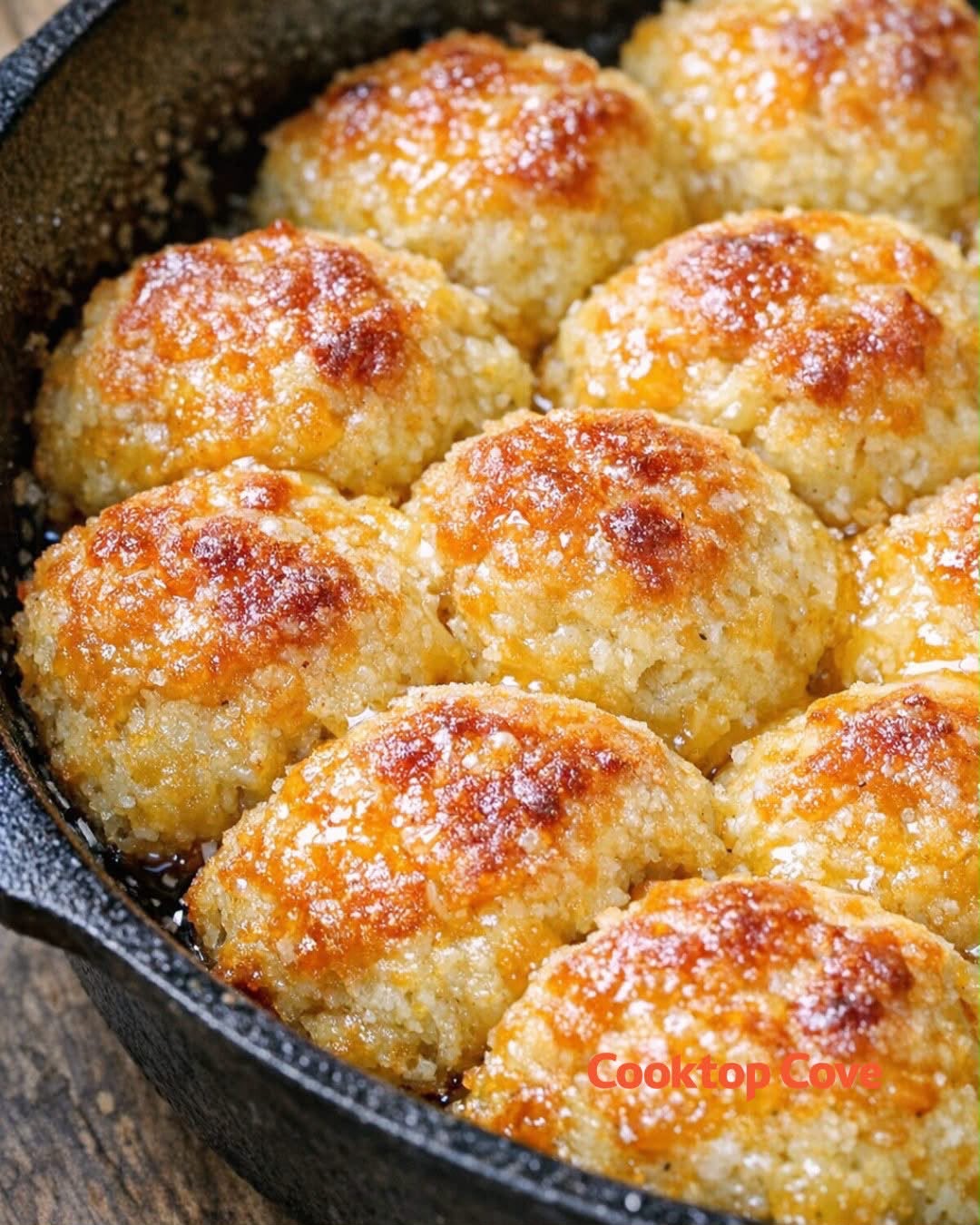
These are drop biscuits baked in a cast iron skillet, packed close together so they rise upward rather than spreading, then brushed with garlic butter and finished with Parmesan. The tops go golden and craggy while the sides stay soft where they touch.
There is no rolling, no cutting, and no biscuit cutter. The dough is stirred in one bowl and dropped straight into the pan.
Twelve minutes of work and about twenty in the oven.
Why You Will Love These Biscuits
No rolling or cutting. Drop biscuits are the most forgiving version of the form, and the least work.
The skillet forces them upward. Packed together, they support each other and rise instead of spreading flat.
One bowl and a spoon. No mixer, no pastry cutter, no floured surface.
Thirty minutes start to finish. Realistic on a weeknight or alongside a soup already on the stove.
Cast iron gives the best bottom crust. A preheated skillet browns the base in a way a baking sheet cannot.
Recipe Overview
Prep time: 12 minutes
Bake time: 18 to 22 minutes
Total time: About 35 minutes
Yield: 9 biscuits
Difficulty: Easy
Best for: Soup night, Sunday dinner, brunch, holidays, weeknight sides
Ingredients
For the Biscuits
• 2 1/2 cups (310 g) all-purpose flour, spooned and leveled
• 1 tablespoon baking powder
• 1 tablespoon granulated sugar
• 1 teaspoon garlic powder
• 1 teaspoon kosher salt
• 1/2 teaspoon black pepper
• 1/2 cup (115 g) unsalted butter, very cold and cubed
• 3/4 cup (75 g) finely grated Parmesan
• 1 cup (240 ml) cold buttermilk
For the Garlic Butter
• 4 tablespoons unsalted butter, melted
• 3 cloves garlic, finely minced
• 1/2 teaspoon dried Italian seasoning
• 1 tablespoon chopped fresh parsley
To Finish
• 1/4 cup (25 g) finely grated Parmesan
• Flaky sea salt
Choosing the Right Butter and Cheese
Cold butter is not optional. Solid pieces of butter in the dough melt in the oven and release steam, which is what creates the flaky layers. Softened or melted butter gives you a dense, cakey biscuit.
Cube it and freeze it for ten minutes before you start. On a warm day this is the difference between flaky and flat.
Finely grated Parmesan distributes better than shredded. Large shreds create pockets and weak points where the biscuit breaks apart.
Real Parmigiano-Reggiano is worth it here. Pre-grated Parmesan in a tub is dry and salty with much less flavour, and it does not brown as well.
Pecorino Romano is a sharper substitute. Reduce the salt slightly, since it is considerably saltier.
Buttermilk gives the lift and the tenderness. Its acidity reacts with the baking powder, and it tenderizes the crumb. Substitute a cup of milk with a tablespoon of lemon juice, rested for 5 minutes.
Why They Go In a Skillet, Touching
Arrangement is doing real work here, not just looking good.
Biscuits placed apart spread outward. With nothing to lean on, the dough relaxes sideways as it warms, and you get wide flat biscuits.
Biscuits packed together push upward. Each one supports its neighbours, so the only direction to expand is up. This is why they come out tall.
The sides stay soft. Where biscuits touch, the dough steams rather than browning, giving the soft pull-apart edges.
Cast iron browns the bottoms properly. It holds and conducts heat far better than a light baking sheet, which is why a skillet gives a crisper base.
Preheat the skillet if you want maximum crust. Ten minutes in the oven with a little butter in it, then drop the dough into the hot pan. This is optional but noticeable.
How to Make Garlic Parmesan Skillet Biscuits
Step 1: Prepare the oven and skillet
Preheat the oven to 425°F (220°C). Grease a 10-inch cast iron skillet with butter.
Step 2: Whisk the dry ingredients
In a large bowl, whisk the flour, baking powder, sugar, garlic powder, salt, and black pepper for a full 20 seconds.
Baking powder that is not evenly distributed leaves some biscuits flat and others domed.
Step 3: Cut in the butter
Add the cold cubed butter and rub it into the flour with your fingertips, or cut it in with a pastry blender, until the mixture looks like coarse crumbs with some pea-sized pieces remaining.
Leave visible pieces of butter. Those are what become steam pockets and flaky layers.
Work fast. Warm hands melt butter, and melted butter in the dough means dense biscuits.
Step 4: Add the Parmesan
Stir in the grated Parmesan until evenly distributed.
Step 5: Add the buttermilk
Pour in the cold buttermilk and stir with a fork just until the dough comes together into a shaggy mass, about 10 to 12 strokes.
Stop while it still looks rough. Overmixing develops gluten and turns biscuits tough.
Step 6: Drop into the skillet
Using a large cookie scoop or two spoons, drop 9 mounds of dough into the skillet, packed close together and touching.
Do not smooth the tops. The rough peaks catch the heat and turn golden.
Step 7: Bake
Bake for 18 to 22 minutes, until the tops are deep golden brown and the biscuits are firm to the touch.
Pale biscuits are underbaked. Wait for real colour on top.
Step 8: Make the garlic butter
While they bake, stir together the melted butter, minced garlic, Italian seasoning, and parsley.
Step 9: Brush and finish
Brush the garlic butter generously over the hot biscuits as soon as the skillet leaves the oven, then scatter the remaining Parmesan and flaky salt over the top.
Brush while hot. The butter soaks in rather than sitting on the surface.
Tips for the Best Biscuits
Keep the butter cold. Cube it and freeze it while you measure everything else.
Spoon and level the flour. Scooping the cup directly into the bag can add 25 percent more flour and produces dry, heavy biscuits.
Mix minimally. Ten to twelve strokes with a fork. Lumps are correct.
Pack them together in the skillet. This is what makes them rise tall.
Use fresh baking powder. If yours has been open longer than six months, test a teaspoon in hot water. It should fizz immediately.
Common Mistakes to Avoid
Using softened butter. Produces dense, cakey biscuits with no layers.
Overmixing the dough. The fastest route to tough, rubbery biscuits.
Spacing the biscuits apart. They spread outward instead of rising.
Underbaking. Pale biscuits taste doughy in the centre.
Using pre-grated Parmesan from a tub. Dry, oversalted, and it does not brown properly.
Easy Variations
• Cheddar bay style. Replace the Parmesan with sharp cheddar and add 1/2 teaspoon of Old Bay to the butter.
• Herb. Add 2 tablespoons of chopped chives or rosemary to the dough.
• Bacon. Fold in 1/2 cup of cooked crumbled bacon.
• Spicy. Add 1/2 teaspoon of red pepper flakes to the dough and cayenne to the butter.
• Sheet pan version. Bake on a lined baking sheet with the biscuits touching, for the same time.
• Muffin tin version. Divide into 12 greased muffin cups and bake for 16 to 18 minutes.
What to Serve With Them
Soup is the natural partner, particularly tomato, broccoli cheddar, or chicken noodle.
They work as a dinner roll alongside roast chicken, pot roast, chili, or a holiday meal.
For brunch, split one and build a breakfast sandwich with egg and bacon.
Serve them with sausage gravy for a full Southern breakfast.
Make-Ahead and Storage
Make-ahead: Whisk the dry ingredients and cut in the butter up to 2 days ahead, keeping the mixture in the refrigerator. Add the buttermilk and bake when you are ready. Do not mix the full dough in advance, since the baking powder starts working immediately.
Room temperature: Store in an airtight container for up to 2 days.
Refrigerator: Because of the cheese and buttermilk, refrigerate past day two. They keep for 4 days.
Freezer: Freeze the shaped unbaked dough mounds on a tray, then bag, for up to 3 months. Bake from frozen with 5 extra minutes.
To reheat: Warm at 350°F for 5 to 7 minutes. The oven restores the crust; the microwave does not.
Frequently Asked Questions
Why are my biscuits flat?
Dead baking powder, butter that was too warm, or biscuits spaced apart in the pan. All three are common.
Why are they tough?
Overmixing, or too much flour from scooping the measuring cup.
Can I use milk instead of buttermilk?
Yes. Add 1 tablespoon of lemon juice or vinegar to a cup of milk and let it stand 5 minutes.
Do I need a cast iron skillet?
No, but it gives the best bottom crust. A cake pan or a baking sheet with the biscuits touching both work.
Can I make the dough ahead?
Prepare the dry mixture with the butter cut in, but add the buttermilk only when you are ready to bake.
Can I double the recipe?
Yes, in two skillets. One overcrowded pan will leave the centre biscuits underbaked.
Nutrition Information
Approximate values per biscuit, based on 9 biscuits:
• Calories: 345
• Total fat: 20 g
• Saturated fat: 12 g
• Carbohydrates: 30 g
• Fiber: 1 g
• Protein: 10 g
• Sodium: 620 mg
Nutrition is estimated and will vary with brands and portion sizes.
Final Thoughts
Garlic Parmesan skillet biscuits come down to two rules: keep the butter cold, and stop stirring early.
Pack them into the skillet so they touch, bake until genuinely golden, and brush the garlic butter on while they are still hot enough to absorb it.