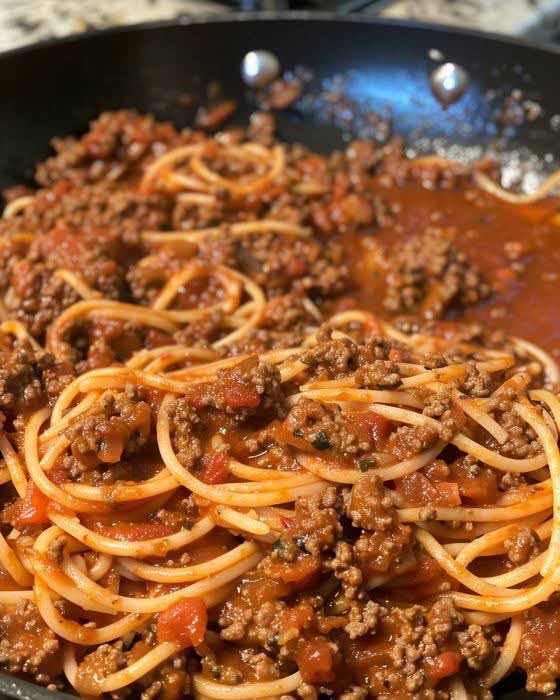
The difference between spaghetti with sauce poured on top and spaghetti that tastes properly cooked is one step: the drained pasta finishes in the pan with the sauce for two minutes, with a ladle of its cooking water.
That final toss is what produces the photo. The sauce clings to every strand instead of sliding off into a puddle at the bottom of the bowl.
Everything else here is a straightforward forty-minute meat sauce. It uses canned tomatoes, browns the beef properly, and does not pretend to be a four-hour ragù.
Why You Will Love This Recipe
The sauce clings instead of sliding. Two minutes of finishing in the pan changes the whole dish.
Forty minutes on a weeknight. Long enough for the sauce to taste cooked, short enough to be realistic.
One pot and one pan. Pasta boils, sauce simmers, everything ends up in the skillet.
It feeds six cheaply. A pound of beef and a pound of pasta go a long way.
The sauce freezes perfectly. Make a double batch and freeze half without the pasta.
Recipe Overview
Prep time: 10 minutes
Cook time: 30 minutes
Total time: About 40 minutes
Yield: 6 servings
Difficulty: Easy
Best for: Weeknight dinners, family meals, meal prep, feeding teenagers
Ingredients
For the Meat Sauce
• 1 pound (450 g) ground beef, 85/15
• 1 tablespoon olive oil
• 1 medium yellow onion, finely diced
• 1 carrot, finely diced
• 4 cloves garlic, minced
• 2 tablespoons tomato paste
• 1 can (28 oz) crushed tomatoes
• 1 can (14.5 oz) diced tomatoes, with juice
• 1 teaspoon dried oregano
• 1 teaspoon dried basil
• 1/2 teaspoon red pepper flakes, optional
• 1 teaspoon kosher salt
• 1/2 teaspoon black pepper
• 1 teaspoon granulated sugar
• 1 bay leaf
For the Pasta
• 1 pound (450 g) spaghetti
• 2 tablespoons kosher salt, for the water
To Finish
• 1/3 cup (35 g) grated Parmesan
• 2 tablespoons chopped fresh basil or parsley
• 1 tablespoon unsalted butter, optional
Choosing the Right Tomatoes and Beef
Crushed tomatoes give the body. They break down into a smooth base that coats pasta well.
Diced tomatoes give the texture. The visible pieces in the photo come from these. Using only crushed produces a uniform sauce with nothing to bite.
San Marzano tomatoes are worth it if the price is reasonable. They are less acidic and slightly sweeter, which means you need less sugar.
Whole peeled tomatoes crushed by hand are the best option of all, and take about a minute longer.
85/15 ground beef is the right fat level. Enough to carry flavour, not so much that the sauce turns greasy.
A beef and pork mix is a genuine upgrade. Half and half gives a softer, richer sauce closer to a traditional ragù.
Why the Pasta Water Matters
Reserving a cup of pasta cooking water before draining is the single most useful habit in pasta cooking, and it takes two seconds.
It is starchy, and starch is an emulsifier. Added to the sauce with the pasta, it binds the fat and the tomato into a coating that grips the strands rather than separating.
It is also salted, so it seasons as it thickens.
Plain water does not do this. The starch is the active ingredient, which is why the water has to come from the pasta pot.
Use about half a cup to start. Add more a splash at a time if the sauce tightens too far.
Reserve it before you drain. Everyone forgets this once. Put a mug in the sink next to the colander as a reminder.
How to Make Spaghetti with Meat Sauce
Step 1: Brown the beef
Heat the olive oil in a large deep skillet over medium-high heat. Add the ground beef and break it into large pieces.
Let it sit undisturbed for 3 minutes before stirring. Those browned crusty edges are where most of the flavour comes from, and constant stirring prevents them forming.
Cook for 6 to 8 minutes total, until well browned. Drain off excess fat, leaving about a tablespoon.
Step 2: Cook the vegetables
Reduce the heat to medium. Add the diced onion and carrot and cook for 5 minutes, until softened.
The carrot is not optional if you want a balanced sauce. It adds sweetness that means you need very little sugar.
Add the garlic and cook for 1 minute more.
Step 3: Cook the tomato paste
Stir in the tomato paste and cook for 2 minutes, stirring constantly, until it darkens slightly.
Cooking the paste rather than just stirring it in removes its raw metallic edge and deepens the colour of the finished sauce.
Step 4: Add the tomatoes and simmer
Add the crushed tomatoes, diced tomatoes with their juice, oregano, basil, red pepper flakes, salt, pepper, sugar, and bay leaf.
Bring to a simmer, then reduce the heat and cook uncovered for 20 to 25 minutes, stirring occasionally, until noticeably thickened.
Step 5: Boil the pasta
While the sauce simmers, bring a large pot of water to a rolling boil and add the salt.
Cook the spaghetti for one minute less than the package directs.
Step 6: Reserve the water
Scoop out 1 cup of pasta water before draining. Do not skip this.
Step 7: Combine in the pan
Drain the pasta and add it directly to the skillet with the sauce, along with 1/2 cup of the reserved water.
Step 8: Toss over heat
Toss with tongs over medium heat for 2 minutes, until the sauce coats every strand and the pasta finishes cooking.
Add more pasta water a splash at a time if it looks dry. The sauce should look glossy, not thick and dry.
Step 9: Finish and serve
Remove the bay leaf. Stir in the Parmesan, the fresh herbs, and the butter if using.
Serve immediately with extra Parmesan at the table.
Tips for the Best Meat Sauce
Salt the pasta water properly. Two tablespoons in a large pot. It should taste like seawater, and it is the only chance to season the pasta itself.
Do not stir the beef for the first three minutes. Browning needs contact and patience.
Simmer uncovered. A lid traps steam and leaves the sauce thin.
Undercook the pasta by a minute. It finishes in the sauce, absorbing flavour as it goes.
Never rinse the pasta. Rinsing washes away the surface starch that helps the sauce cling.
Common Mistakes to Avoid
Pouring sauce over plain pasta. This is the most common way spaghetti is served and the reason so much of it ends up as sauce at the bottom of the bowl.
Forgetting the pasta water. Once it goes down the drain there is no substitute.
Skipping the tomato paste step. Two minutes of cooking makes a noticeable difference to depth.
Simmering with a lid on. The sauce needs to reduce, and a lid prevents it.
Adding oil to the pasta water. It coats the strands and stops the sauce sticking to them.
Easy Variations
• With Italian sausage. Replace half the beef with crumbled Italian sausage.
• Red wine. Add 1/2 cup of dry red wine after the tomato paste and reduce for 3 minutes.
• Creamy. Stir 1/3 cup of heavy cream into the sauce at the end for a rosé-style sauce.
• Spicy arrabbiata style. Double the red pepper flakes and add a diced chili with the garlic.
• Vegetarian. Replace the beef with 12 ounces of finely chopped mushrooms browned hard, plus a tablespoon of soy sauce.
• Baked. Combine everything, top with mozzarella, and bake at 375°F for 20 minutes.
What to Serve With It
Garlic bread is the obvious partner and worth making from a real loaf rather than a frozen one.
A sharp green salad with vinaigrette does more for the meal than another rich side.
Roasted broccoli, green beans, or a simple tomato and onion salad all work.
Extra Parmesan and red pepper flakes on the table let people finish their own plates.
Make-Ahead and Storage
Make-ahead: The sauce is better on day two and can be made up to 4 days ahead. Cook the pasta fresh.
Refrigerator: Store sauce and pasta separately for up to 4 days if you can. Combined leftovers keep for 3 days but the pasta absorbs sauce and softens.
Freezer: Freeze the sauce alone for up to 3 months. Do not freeze it with the pasta.
To reheat: Warm the sauce in a pan with a splash of water. For combined leftovers, add 2 tablespoons of water and cover, warming gently on the stove rather than in the microwave.
Frequently Asked Questions
Why is my sauce watery?
It needs longer uncovered. Twenty minutes minimum, and canned tomatoes vary in how much liquid they carry.
Why does my sauce slide off the pasta?
The pasta was not finished in the pan with sauce and starchy water. That step is what makes it cling.
Can I use jarred sauce?
Yes, as a shortcut. Brown the beef and aromatics, add a 24-ounce jar, and simmer for 10 minutes. Finish the pasta in the pan the same way.
Do I need the sugar?
Only if your tomatoes are sharp. Taste the sauce after 15 minutes and add it if it needs balancing.
Can I make it in a slow cooker?
Yes for the sauce, on low for 5 hours after browning the beef. The pasta still cooks separately.
How much pasta per person?
About 2.5 to 3 ounces of dry pasta per person for a main course.
Nutrition Information
Approximate values per serving, based on 6 servings:
• Calories: 585
• Total fat: 19 g
• Saturated fat: 7 g
• Carbohydrates: 71 g
• Fiber: 6 g
• Protein: 32 g
• Sodium: 780 mg
Nutrition is estimated and will vary with brands and portion sizes.
Final Thoughts
A weeknight meat sauce does not need four hours. It needs beef browned properly, tomato paste cooked for two minutes, and twenty-five minutes of uncovered simmering.
Then reserve a cup of pasta water, finish the spaghetti in the pan, and toss it for two minutes. That last step is the one most people skip and the one that changes the plate.