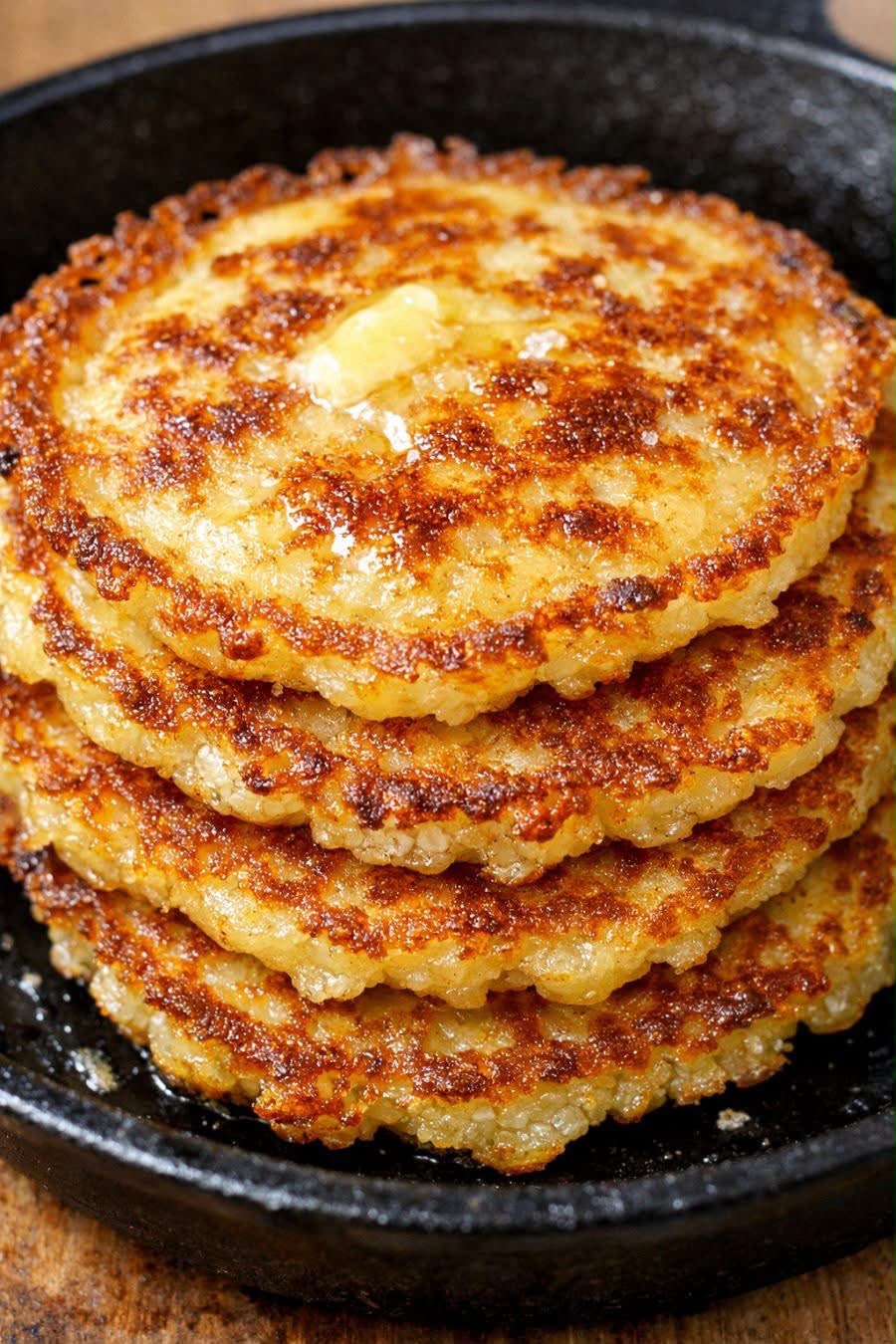
Crispy potato pancakes are a simple comfort-food recipe with a golden, crunchy outside and a warm, tender potato center. They are made from grated potatoes, a little onion, egg, flour, and basic seasonings, then pan-fried until beautifully browned. A small pat of butter melting on top makes them even more irresistible.
These homemade potato pancakes are ideal for breakfast, brunch, an easy side dish, or a snack with sour cream and herbs. They are budget-friendly, family-friendly, and made with ingredients that are often already in the kitchen. Whether you call them potato pancakes, potato fritters, or latkes, this classic recipe always delivers satisfying flavor.
Why You’ll Love This Recipe
This recipe creates potato pancakes that are crisp around the edges without being dry in the middle. The grated potatoes cook into tender layers, while a little flour and egg help everything hold together. The result is a warm, savory pancake with a delicious contrast between its crunchy crust and soft center.
Potato pancakes are also wonderfully versatile. They can be served plain with butter, topped with sour cream, paired with eggs, or enjoyed alongside roasted chicken, grilled meat, soup, or salad. They are a smart way to use extra potatoes and an easy option when you want homemade comfort food without a complicated recipe.
Recipe Information
Preparation time for crispy potato pancakes is about 20 minutes. Cooking time is around 25 minutes, depending on the size of your skillet and how many batches you cook. The total time is approximately 45 minutes. This recipe makes about 10 to 12 medium pancakes and serves four people as a side dish or two to three people as a main breakfast dish. The difficulty level is easy.
Main Ingredients Explained
Potatoes are the most important ingredient, so choose a variety that becomes fluffy inside while still developing crisp edges. Russet potatoes are excellent because they contain more starch and brown nicely in the pan. Yukon Gold potatoes can also be used for a creamier, slightly buttery result.
Onion adds a gentle savory flavor and helps balance the natural sweetness of potatoes. It is optional, but even a small amount makes traditional potato pancakes taste more complete. Egg acts as a binder and keeps the pancakes from falling apart when flipped. Flour absorbs excess moisture and gives the potato mixture enough structure to cook into neat patties.
A neutral cooking oil with a high smoke point, such as vegetable oil, sunflower oil, or avocado oil, is best for pan-frying. Butter can be added near the end for flavor, but oil should be used for the main frying because butter alone can brown too quickly.
Simple Recipe Overview
Begin by grating the potatoes and onion, then squeeze out as much liquid as possible. This is the key step for crisp potato pancakes. Mix the dry potato shreds with egg, flour, salt, pepper, and optional seasonings. Heat a thin layer of oil in a skillet, scoop in portions of the mixture, and flatten them gently.
Cook the pancakes until deeply golden on both sides. Transfer them to a paper towel-lined plate or a wire rack, then serve while they are still hot and crisp. The recipe is straightforward, but taking time to remove moisture from the potatoes makes a major difference in the final texture.
Ingredients
For this homemade potato pancake recipe, you will need 2 large russet potatoes, about 1½ pounds total, ½ small yellow onion, 1 large egg, ¼ cup all-purpose flour, ¾ teaspoon salt, ½ teaspoon black pepper, ¼ teaspoon garlic powder, ¼ teaspoon smoked paprika if desired, 3 to 4 tablespoons vegetable oil for frying, and butter for serving. You can also prepare sour cream, chopped chives, fresh parsley, applesauce, or a creamy herb sauce for serving.
How to Choose the Best Potatoes
Choose potatoes that feel firm, smooth, and heavy for their size. Avoid potatoes with soft spots, green skin, sprouts, or a strong musty smell. Russet potatoes are the most reliable choice for crispy potato pancakes because they have a dry, starchy texture that cooks well in hot oil.
If you prefer a richer interior, choose Yukon Gold potatoes. They contain more natural moisture, so squeezing the grated mixture very well becomes even more important. Whatever variety you use, select potatoes that are close in size so they grate and cook consistently.
Preparing the Potatoes
Wash the potatoes thoroughly and peel them if you want a smoother, more traditional pancake. Leaving a little skin on is also fine if the potatoes are clean, especially if you enjoy a more rustic texture. Peel the onion, then grate both the potatoes and onion using the large holes of a box grater or the grating attachment of a food processor.
Place the grated potatoes and onion in a clean kitchen towel, cheesecloth, or several layers of paper towel. Gather the cloth and squeeze firmly over the sink or a bowl. Remove as much liquid as possible. You may be surprised by how much moisture comes out, but this step is essential for getting crisp, golden edges.
After squeezing, place the grated potato mixture in a large bowl. If you are preparing the pancakes ahead of time, work quickly because raw potatoes can darken when exposed to air. A tiny squeeze of lemon juice can help slow browning, but do not add too much because it may affect the flavor.
Preparing the Remaining Ingredients
Crack the egg into a small bowl and beat it lightly with a fork. Measure the flour, salt, pepper, garlic powder, and paprika. Keeping the ingredients ready before you heat the skillet helps the cooking process go smoothly.
Add the egg, flour, salt, pepper, garlic powder, and paprika to the squeezed potato and onion mixture. Stir gently but thoroughly until the potato shreds are lightly coated. The mixture should hold together when pressed in your hand. If it seems very wet, add one extra tablespoon of flour. If it seems overly dry, add a small splash of beaten egg or a teaspoon of milk.
Step-by-Step Instructions
Place a large skillet over medium to medium-high heat. Add enough oil to coat the base of the pan with a thin layer. Let the oil heat for a few minutes. To test whether it is ready, drop in a tiny shred of potato. If it sizzles immediately, the pan is hot enough.
Scoop about ¼ cup of the potato mixture into the skillet for each pancake. Use the back of the spoon or a spatula to flatten each portion into a round shape about ½ inch thick. Do not make the pancakes too thick, or the center may not cook before the outside becomes too dark.
Cook the potato pancakes for about three to five minutes on the first side. Do not move them too soon. Letting them sit undisturbed gives the bottom time to form a strong golden crust. When the edges look browned and the pancake releases easily from the pan, carefully flip it using a wide spatula.
Cook the second side for another three to five minutes, until it is crisp and deeply golden. Transfer the cooked pancakes to a plate lined with paper towel or, for the crispiest results, to a wire rack set over a baking sheet. Continue with the remaining potato mixture, adding a little more oil between batches if the skillet becomes dry.
If you are cooking several batches, keep the finished pancakes warm in a 200°F oven while you finish the rest. Place them in a single layer on a baking sheet so steam does not make them soft.
Tips for the Best Result
The most important tip is to squeeze the grated potatoes very well. Moisture is the biggest reason potato pancakes turn out soft instead of crisp. Use a clean towel and press firmly until the potatoes feel much drier.
Use a properly heated skillet. If the oil is not hot enough, the pancakes absorb oil and become greasy. If the oil is smoking, the outside may burn too quickly. Medium to medium-high heat usually creates the best balance of crispness and even cooking.
Do not crowd the skillet. Leave space between the pancakes so heat can circulate and steam can escape. Cooking in smaller batches takes a little longer, but it gives every pancake a better golden crust.
Common Mistakes to Avoid
Avoid grating the potatoes too far in advance. Freshly grated potatoes give the best texture and color. If they sit too long, they may release more water and become gray or brown.
Do not use too much flour. Flour is important for binding, but adding too much can make the potato pancakes taste heavy or doughy. Start with the amount in the recipe and add only a little more if the mixture cannot hold together.
Avoid flipping too early. A potato pancake needs time to create a crisp bottom layer before it can be turned. If it sticks or breaks when you try to flip it, give it another minute before trying again.
Flavor Variations
For cheesy potato pancakes, fold ½ cup of shredded cheddar, mozzarella, or Parmesan cheese into the potato mixture. Cheese adds a rich flavor and creates crisp, golden bits around the edges as the pancakes fry.
For garlic herb potato pancakes, add one tablespoon of chopped parsley or chives along with a little extra garlic powder. Fresh herbs brighten the flavor and make the pancakes especially good with sour cream or yogurt sauce.
For a spicy version, add a pinch of cayenne pepper, crushed red pepper flakes, or a little hot paprika. Serve with a cool dip for a delicious contrast. You can also add finely chopped bell pepper or green onion for extra color and flavor.
For breakfast potato pancakes, top each warm pancake with a fried egg and a spoonful of creamy sauce. The crisp potato base works beautifully as a substitute for toast or hash browns.
How to Serve Potato Pancakes
Serve crispy potato pancakes immediately after frying with butter, sour cream, applesauce, or a creamy herb dip. Butter melting over the hot golden surface is simple, classic, and always delicious. Sour cream adds a cool, tangy flavor that balances the crispy fried potatoes.
For breakfast or brunch, pair them with scrambled eggs, fresh fruit, cheese, or turkey sausage. For lunch or dinner, serve them with roasted vegetables, grilled chicken, baked fish, soup, or a fresh salad. They are also a great party appetizer when made smaller and served with several dipping sauces.
Meal Prep and Storage
You can grate the potatoes and onion shortly before cooking, but it is best to fry the pancakes fresh. If you need to prepare the mixture ahead of time, store it in a sealed container in the refrigerator for only a short period and stir it again before cooking, as the potatoes may release more liquid.
Store leftover potato pancakes in an airtight container in the refrigerator for up to three days. Let them cool completely before storing so trapped steam does not make them soggy. Place parchment paper between layers if you stack them.
Freezing Instructions
Potato pancakes freeze well after cooking. Let them cool completely, then arrange them in a single layer on a baking sheet. Freeze until firm, then transfer them to a freezer-safe bag or container with parchment paper between layers.
Freeze for up to two months. This is useful for busy mornings, meal prep, or making a larger batch for future side dishes. You can reheat frozen pancakes directly from the freezer without thawing first.
Reheating Instructions
For the crispiest reheated potato pancakes, use an oven or air fryer. Bake them at 375°F for about 8 to 12 minutes, turning once if needed. In an air fryer, heat them at 375°F for about five to seven minutes.
Avoid using the microwave if you want crispy edges, since microwaving can make the pancakes soft. If you must use it, warm them briefly, then finish them in a dry skillet for a minute or two on each side.
Frequently Asked Questions
Can I make potato pancakes without onion? Yes. Onion adds flavor, but the recipe still works well without it. You can replace onion with chopped chives, green onion, or a small amount of onion powder if preferred.
Why are my potato pancakes falling apart? The potatoes may have contained too much moisture, or the mixture may need a little more flour or egg. Squeeze the potatoes well and make sure the mixture holds together when pressed before frying.
Can I bake potato pancakes instead of frying them? Yes, although they will not be quite as crisp as pan-fried pancakes. Place spoonfuls of the mixture on an oiled or parchment-lined baking tray, flatten them, brush lightly with oil, and bake at 425°F until golden, flipping once halfway through.
What can I use instead of all-purpose flour? Cornstarch, potato starch, or a gluten-free all-purpose flour blend can work well. Cornstarch is especially useful for helping the outside become crisp.
Can I use leftover mashed potatoes? Yes, but the recipe will have a different texture. Mix mashed potatoes with egg, flour, shredded cheese if desired, and seasonings, then form patties and fry them. Grated raw potatoes create the classic crispy potato pancake texture shown here.
Final Thoughts
Crispy old-fashioned potato pancakes are proof that a few simple ingredients can create something truly comforting. Their crunchy golden crust, tender potato center, and warm homemade flavor make them a recipe worth keeping for breakfast, dinner, and everything in between.
Serve them simply with butter and herbs or dress them up with cheese, dips, and toppings. Once you learn how to remove the moisture and cook them until golden, these easy potato pancakes can become one of your favorite homemade side dish recipes.