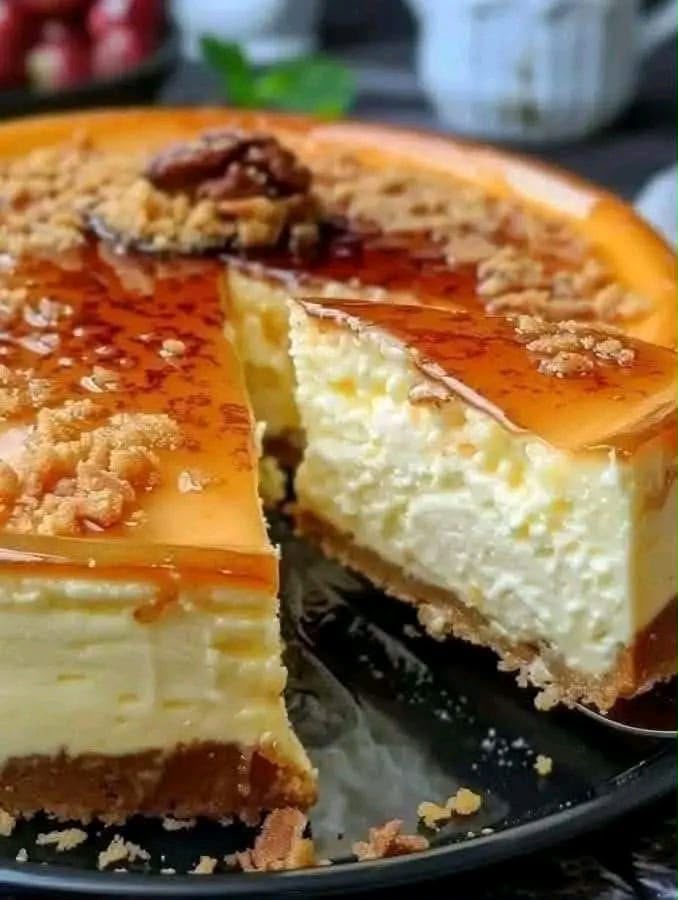
A Creamy Cheesecake with Buttery Caramel and Pecans
Caramel Pecan Cheesecake is a rich, creamy dessert with a buttery cookie crust, a smooth cheesecake filling, glossy caramel topping, and crunchy pecans. It is the kind of dessert that feels special from the first slice. The sweet caramel adds a deep buttery flavor, while the pecans bring a toasted crunch that balances the soft, creamy center.
This cheesecake is perfect for holidays, birthdays, dinner parties, Sunday desserts, and any time you want a bakery-style treat made at home. It looks impressive on the table, but the steps are easy when you prepare the crust, filling, and topping one at a time.
The secret to a great cheesecake is patience. Use room-temperature ingredients, mix the filling gently, bake it slowly, and allow it to cool completely before adding the caramel. The result is a smooth, velvety cheesecake with a beautiful caramel pecan finish that everyone will want to try.
Why You’ll Love This Recipe
This caramel pecan cheesecake combines several favorite dessert flavors in one recipe. The creamy cheesecake filling is lightly sweet and rich, the cookie crust adds a buttery base, and the caramel pecan topping makes each slice feel extra special.
It is a wonderful make-ahead dessert because cheesecake needs time to chill. You can prepare it the day before a celebration, then add the topping shortly before serving.
The recipe is also flexible. You can use graham crackers, vanilla wafers, or digestive biscuits for the crust. You can make a homemade caramel sauce or use a good-quality store-bought caramel sauce when you are short on time.
Every slice looks beautiful, especially when topped with pecan halves and extra caramel. It is a dessert that feels elegant but still brings the comforting, familiar taste of homemade cheesecake.
Recipe Information
Prep Time: 30 minutes
Bake Time: 55 to 65 minutes
Cooling and Chilling Time: At least 6 hours
Total Time: About 7 hours 30 minutes
Servings: 12 slices
Difficulty Level: Medium
Equipment Needed: 9-inch springform pan, mixing bowls, electric mixer, spatula, roasting pan, aluminum foil, and cooling rack
Main Ingredients Explained
Cream cheese is the heart of the cheesecake filling. Use full-fat block cream cheese for the richest flavor and the smoothest texture. Avoid spreadable cream cheese in tubs because it contains more moisture and may make the cheesecake soft.
Sour cream adds a light tang and makes the filling creamy without making it too heavy. Full-fat sour cream works best, but plain full-fat Greek yogurt can be used as an alternative.
Eggs give the cheesecake structure. They help the filling set during baking, so add them one at a time and mix gently. Too much mixing after adding eggs can introduce extra air and increase the chance of cracks.
Graham cracker crumbs form the buttery crust. They have a slightly sweet flavor that pairs perfectly with caramel and pecans. Vanilla wafers or digestive biscuits are also excellent options.
Caramel sauce adds a rich golden topping. It can be homemade or store-bought, but it should be thick enough to sit on top of the cheesecake without running too quickly down the sides.
Pecans give the dessert a toasted, nutty crunch. Toasting them before using brings out a deeper flavor and makes the topping even more delicious.
Simple Recipe Overview
Start by making the graham cracker crust and pressing it into a springform pan. Bake the crust briefly, then let it cool while you prepare the cheesecake filling.
Beat the cream cheese until smooth, then add sugar, sour cream, vanilla, and eggs. Pour the filling over the cooled crust and bake the cheesecake slowly in a water bath for the creamiest result.
After baking, let the cheesecake cool gradually, then refrigerate it for several hours or overnight. When it is fully chilled, spread caramel sauce over the top and finish with toasted pecans.
Slice the cheesecake with a warm sharp knife and serve it cold or let each slice rest for a few minutes at room temperature for an even creamier texture.
Ingredients
For the Crust:
2 cups graham cracker crumbs
1/4 cup granulated sugar
1/2 cup unsalted butter, melted
1/4 teaspoon salt
For the Cheesecake Filling:
24 ounces full-fat cream cheese, softened
1 cup granulated sugar
3/4 cup sour cream, room temperature
1 teaspoon vanilla extract
3 large eggs, room temperature
2 tablespoons all-purpose flour
1/4 teaspoon salt
For the Caramel Pecan Topping:
1 cup thick caramel sauce
1 cup pecans, roughly chopped
1 tablespoon unsalted butter
Pinch of salt, optional
Pecan halves for garnish, optional
How to Choose the Best Ingredients
Choose block cream cheese that is fresh and unopened. It should be softened at room temperature for about one hour before mixing. Softened cream cheese blends smoothly, while cold cream cheese can leave lumps in the filling.
For the crust, use fresh graham crackers that crush easily and have a sweet buttery smell. You can make crumbs in a food processor or place the crackers in a zip-top bag and crush them with a rolling pin.
Use real unsalted butter for the crust and topping. Butter creates the best flavor and helps the crumbs hold together after baking.
When buying caramel sauce, choose one that is thick and made with butter and cream if possible. Thin ice-cream syrup is usually too runny for cheesecake topping. A jarred caramel sauce or homemade caramel is a better choice.
For pecans, choose fresh nuts that are firm and fragrant. Avoid pecans that smell stale or look very dry. Toasted pecans have more flavor and stay crunchier on top of the smooth cheesecake.
Preparing the Main Ingredient
The main ingredient is cream cheese, and preparing it correctly makes a big difference. Take the cream cheese out of the refrigerator about one hour before baking. It should feel soft when pressed gently with a finger but should not be melted or warm.
Place the softened cream cheese in a large mixing bowl. Beat it on medium speed until completely smooth. Scrape down the sides and bottom of the bowl with a spatula so no small lumps remain.
Add the sugar and mix until blended. Do not beat the mixture for a long time at high speed. Too much air in the batter can cause the cheesecake to rise too quickly and crack as it cools.
Once the cream cheese and sugar are smooth, add sour cream, vanilla, flour, and salt. Mix on low speed until just combined. This creates a creamy base that is ready for the eggs.
Preparing the Remaining Ingredients
Preheat the oven to 325°F (165°C). Grease the bottom and sides of a 9-inch springform pan with butter or cooking spray.
For the crust, combine graham cracker crumbs, sugar, melted butter, and salt in a bowl. Stir until the crumbs look evenly moistened, similar to wet sand.
Press the crumb mixture firmly into the bottom of the springform pan. You can press it slightly up the sides if you like a taller crust. Use the bottom of a measuring cup to make the crust even and compact.
Bake the crust for 8 to 10 minutes, then remove it from the oven and let it cool while you prepare the filling.
Wrap the outside bottom and sides of the springform pan with two layers of heavy-duty aluminum foil. This helps protect the crust from water if you use a water bath.
Toast the chopped pecans in a dry skillet over medium-low heat for 4 to 5 minutes, stirring often. Once they smell nutty and fragrant, remove them from the heat and let them cool.
Step-by-Step Instructions
After preparing the cream cheese mixture, add the eggs one at a time. Mix on low speed after each egg, only until it disappears into the batter. Scrape the bowl as needed.
Pour the cheesecake filling over the cooled crust. Smooth the top gently with a spatula. Tap the pan lightly on the counter once or twice to remove a few large air bubbles.
Place the wrapped springform pan inside a larger roasting pan. Pour hot water into the roasting pan until it reaches about halfway up the sides of the springform pan. The water bath creates gentle, even heat and helps reduce cracking.
Carefully place the roasting pan in the oven. Bake for 55 to 65 minutes. The cheesecake is ready when the edges look set but the center still has a slight wobble when the pan is gently moved.
Turn off the oven. Crack the oven door open slightly and leave the cheesecake inside for one hour. This slow cooling step helps prevent sudden temperature changes that can cause cracks.
Remove the cheesecake from the water bath and take off the foil. Let it cool at room temperature for another hour. Cover the pan and refrigerate for at least 6 hours, preferably overnight.
When the cheesecake is completely chilled, run a thin knife around the edge of the pan and release the springform ring. Spread caramel sauce over the top, leaving a small border near the edge if you prefer.
Mix the toasted pecans with melted butter and a tiny pinch of salt. Spoon the pecans over the caramel topping. Add a few pecan halves in the center for a beautiful finish.
Tips for the Best Result
Always use room-temperature cream cheese, sour cream, and eggs. Cold ingredients do not blend as smoothly and can leave small lumps in the filling.
Mix the batter at low or medium-low speed once the eggs are added. High-speed mixing adds air, which can cause the cheesecake to puff up and then sink or crack.
Do not overbake the cheesecake. The center should still jiggle slightly when you turn off the oven. It will continue to set as it cools and chills.
Use a water bath if possible. It helps the cheesecake bake gently and creates a smooth, creamy texture. If you do not want to use a water bath, place a separate pan of hot water on the lower oven rack to add moisture.
Chill the cheesecake completely before topping it. Warm cheesecake can make caramel melt and slide off the top.
For clean slices, dip a sharp knife in hot water and wipe it dry before each cut. This creates smooth, neat pieces with less caramel sticking to the knife.
Common Mistakes to Avoid
Do not use cold cream cheese. It can create a lumpy filling that does not become perfectly smooth during baking.
Avoid opening the oven door repeatedly while the cheesecake bakes. Sudden temperature changes can cause the center to sink or the top to crack.
Do not bake until the center is completely firm. A fully firm center in the oven usually means the cheesecake has baked too long and may become dry.
Avoid adding the caramel topping before the cheesecake is chilled. The warm cheesecake surface will soften the caramel too much and may make the topping run down the sides.
Do not rush the chilling process. Cheesecake needs several hours in the refrigerator to set fully. Cutting it too early can result in soft, messy slices.
Ideas and Variations
For a salted caramel cheesecake, sprinkle a light pinch of flaky sea salt over the caramel just before serving. Salt makes the caramel taste deeper and balances the sweetness.
For a chocolate caramel pecan version, spread a thin layer of chocolate ganache over the chilled cheesecake before adding the caramel and pecans. Chocolate, caramel, and pecans make a rich, bakery-style combination.
For a turtle cheesecake flavor, add mini chocolate chips to the crust or scatter chopped chocolate over the caramel topping. This creates the classic chocolate, caramel, and pecan flavor combination.
For a maple pecan cheesecake, add one tablespoon of maple syrup to the filling and replace some of the caramel sauce with maple caramel. This version is especially nice in autumn.
For a cinnamon crust, add 1/2 teaspoon of ground cinnamon to the graham cracker crumbs. Cinnamon adds warmth and pairs beautifully with pecans and caramel.
For a smaller cheesecake, cut the recipe in half and bake it in a 6-inch springform pan. The baking time will be shorter, so begin checking it around 35 minutes.
How to Serve
Caramel Pecan Cheesecake is best served chilled, but letting each slice rest at room temperature for 10 minutes before eating makes the filling extra creamy.
Serve it plain with its caramel pecan topping, or add a small swirl of whipped cream beside each slice. A tiny drizzle of extra caramel sauce adds a beautiful finishing touch.
Fresh berries such as strawberries, raspberries, or blackberries can brighten the plate and balance the rich caramel flavor. A cup of coffee, espresso, cold milk, or hot tea also pairs beautifully with this dessert.
For a holiday table, arrange pecan halves around the edge of the cheesecake and add a few extra caramel drizzles. The glossy topping makes the dessert look impressive without requiring complicated decoration.
Meal Prep and Storage
Cheesecake is ideal for making ahead. Bake it one day before your event, allow it to chill overnight, and add the caramel pecan topping before serving.
Store leftover cheesecake covered in the refrigerator for up to 5 days. Keep it in the springform pan or transfer slices to an airtight container.
If the caramel topping becomes firm after chilling, let the cheesecake sit at room temperature for 10 to 15 minutes before serving. This softens the caramel slightly without affecting the cheesecake.
For the best appearance, store extra caramel sauce separately and add a fresh drizzle to individual slices just before serving. This keeps the topping glossy and attractive.
How to Freeze
Cheesecake freezes very well, but it is best to freeze it without the caramel pecan topping. Allow the baked cheesecake to cool and chill completely first.
Wrap the whole cheesecake or individual slices tightly in plastic wrap. Then cover with foil or place in a freezer-safe container. Freeze for up to 2 months.
To thaw, transfer the cheesecake to the refrigerator and let it thaw overnight. Do not thaw it at room temperature because condensation can make the surface wet.
Once thawed, add fresh caramel sauce and toasted pecans. This gives the cheesecake the best texture and presentation.
How to Reheat
Cheesecake should not be reheated because it is designed to be served chilled. Heating it can soften the filling too much and change the texture.
If you prefer a less cold slice, take it out of the refrigerator 10 to 15 minutes before eating. This gives the cheesecake a softer, silkier texture while keeping it properly chilled.
If the caramel sauce is very firm, warm only the caramel in a microwave-safe bowl for a few seconds. Let it cool slightly, then drizzle it over the cheesecake slices.
Never microwave a whole slice for a long time, as the filling may melt and the crust can become soft.
Frequently Asked Questions
Can I make this cheesecake without a water bath?
Yes. The cheesecake can bake without a water bath, but the chances of cracks are slightly higher. Place a pan of hot water on the lower oven rack to add moisture and help the oven heat more gently.
Why did my cheesecake crack?
Cracks can happen from overmixing, overbaking, using cold ingredients, or cooling the cheesecake too quickly. The caramel topping covers most small cracks beautifully, so the cheesecake will still look and taste great.
Can I use store-bought caramel sauce?
Yes. Choose a thick caramel sauce designed for desserts, not a thin syrup. Warm it slightly if needed so it spreads easily over the chilled cheesecake.
Can I use walnuts instead of pecans?
Yes. Walnuts work well and add a slightly earthier flavor. Pecans are sweeter and more classic for caramel cheesecake, but both are delicious.
How do I know the cheesecake is done?
The edges should look set, but the center 2 to 3 inches should wobble gently when you move the pan. It should not look liquid or sloshy. The center will finish setting as it cools.
Final Thoughts
Caramel Pecan Cheesecake is a beautiful dessert that brings together creamy cheesecake, buttery crust, sweet caramel, and toasted nutty pecans. It is rich enough for a celebration but simple enough to make at home with basic baking ingredients.
Take your time with the cooling and chilling steps, and you will be rewarded with smooth slices and a perfectly creamy center. Whether you serve it for a holiday, birthday, family dinner, or weekend treat, this caramel pecan cheesecake is a dessert that always feels special.