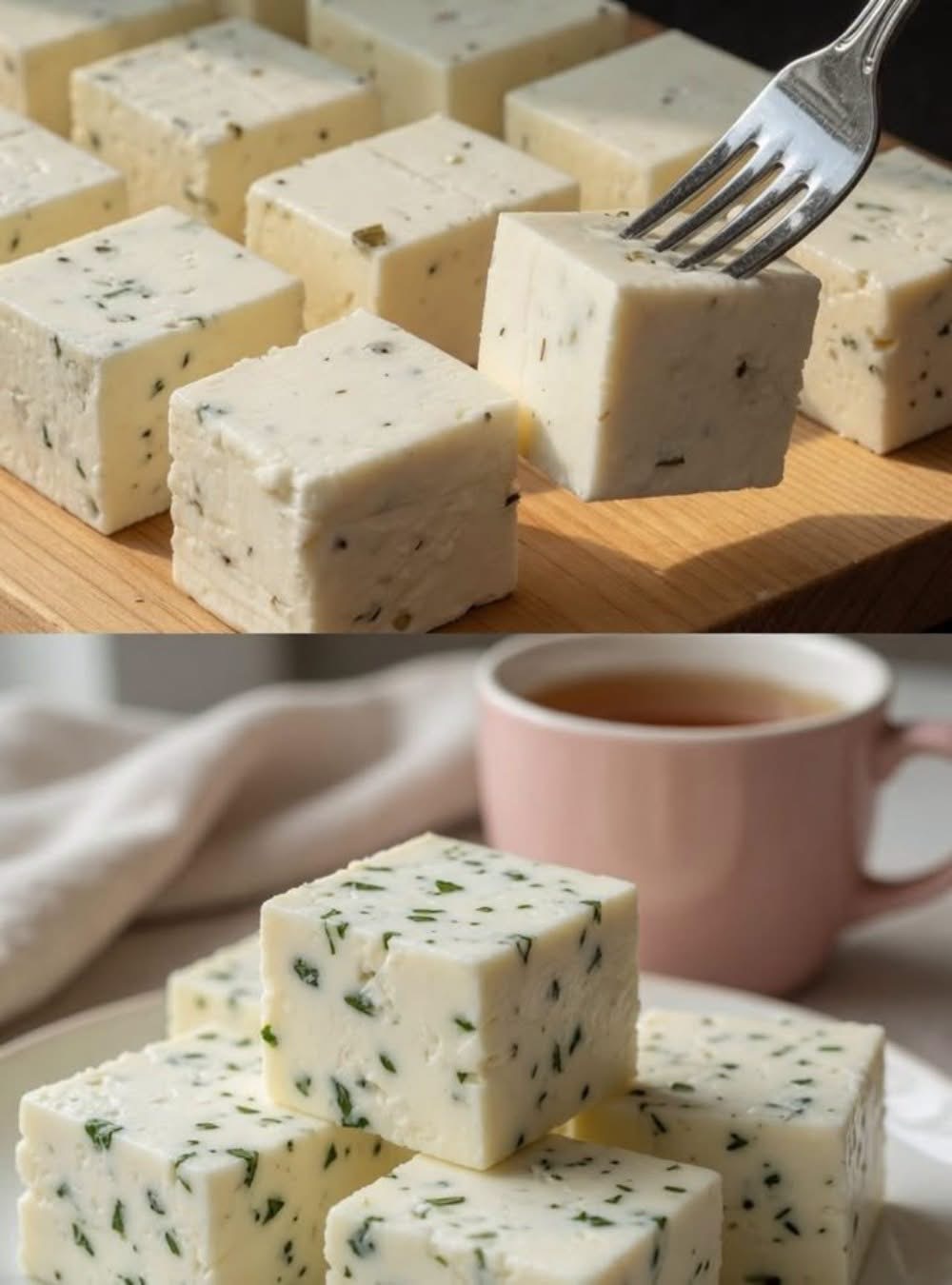
The Ultimate Guide to 2-Ingredient 6-Minute Fresh Cheese
Making fresh, artisanal cheese at home sounds like a project that requires specialized caves, complex cultures, and days of patient waiting. However, you can bypass all of that complexity with this lightning-fast recipe.
Using only two basic ingredients and taking exactly six minutes of active cooking time, this method yields a pristine, creamy, multi-purpose fresh cheese. It mimics traditional farmers’ cheese, paneer, and fresh ricotta. Below is a comprehensive, deep-dive exploration into the art, science, history, and practice of this culinary miracle.
1. Introduction to Acid-Coagulated Cheese
The recipe relies on the simple scientific process of acid coagulation. When milk is heated and combined with a food-safe acid—such as fresh lemon juice or white vinegar—it instantly separates into solid curds and liquid whey.
This basic chemical reaction eliminates the need for rennet or bacterial cultures, allowing anyone with a stove and a pot to become an instant cheesemaker. The resulting cheese is mild, milky, incredibly fresh, and completely free of artificial preservatives, stabilizers, or chemical additives.
2. Historical Background and Cultural Origins
The origin of acid-coagulated quick cheeses stretches back thousands of years across multiple continents. Because it requires no aging or specialized enzymes, this was likely one of the earliest forms of cheesemaking discovered by humanity.
                  +-----------------------------------+

                  | ANCIENT ACID-COAGULATED CHEESES  |
                  +-----------------------------------+
                                    |
         +--------------------------+--------------------------+

         |                                                     |
         v                                                     v
+------------------+                                  +------------------+

|   SOUTH ASIA     |                                  |  MEDITERRANEAN   |
| (Paneer/Chhena)  |                                  |    (Ricotta)     |
| Used in curds &  |                                  | Made by recooking|
| sweets like      |                                  | whey with added  |
| Rasgulla.        |                                  | fresh milk/acid. |
+------------------+                                  +------------------+
The South Asian Heritage: Paneer and Chhena
In India and neighboring countries, acid-set cheese is a foundational cornerstone of the daily diet. Known as paneer when pressed firm, or chhena when left soft and crumbly, this cheese dates back centuries. It became an essential source of dense protein for vegetarian populations. Historically, lemon juice, yogurt, or sour whey served as the acidic catalysts to curdle the rich milk of water buffaloes or cows.
The European Farmers’ Traditions
Throughout Eastern and Central Europe, rural households relied heavily on variants of Twaróg, Quark, or simple pot cheeses. Farmers warmed raw milk until it naturally soured or accelerated the process using citric extracts. It provided a fast way to preserve daily milk yields before refrigeration existed. In Italy, the concept evolved slightly into Ricotta(literally meaning “recooked”), which originally utilized the residual whey from hard cheesemaking, spiked with fresh acid to draw out the remaining proteins.
3. The Science and Chemistry of Formation
To understand how milk transforms into solid cheese in under six minutes, we must examine the molecular structure of dairy components. Milk is a complex emulsion of water, fat, lactose sugars, and proteins.
+-------------------------------------------------------------------------+

|                         MILK MOLECULAR TRANSFORMATION                   |
+-------------------------------------------------------------------------+

|                                                                         |
|  1. NATURALLY STABLE STATE                                              |
|     [Casein Micelles] (- Charges)  <-- Repel Each Other -->  [Micelles] |
|                                                                         |
|  2. HEATING & ACID ADDITION                                             |
|     Heat loosens structures. Acid introduces positive Hydrogen Ions (H+) |
|                                                                         |
|  3. ISOELECTRIC POINT REACHED (pH 4.6)                                   |
|     Negative charges neutralized.                                       |
|     [Casein Protein] + [Casein Protein] <-- Bond Together --> [CURDS]    |
|                                                                         |
+-------------------------------------------------------------------------+
Casein Micelles and Electrical Charges
The primary proteins responsible for cheesemaking are casein proteins. In liquid milk, these proteins cluster together into tiny spherical structures called micelles. These micelles carry a net negative electrical charge. Because like charges repel, the micelles bounce off one another, staying suspended evenly throughout the liquid.
The Impact of Thermal Energy
Heating the milk destabilizes these structural clusters. As temperature rises toward a simmer, the thermal energy causes the proteins to unfold, exposing sections that naturally want to bond with other molecules.
Neutralization at the Isoelectric Point
When you add an acid like vinegar or lemon juice, you introduce a massive wave of positively charged hydrogen ions ($H^+$) into the warm milk. These positive ions instantly neutralize the negative charges on the casein micelles.
Without their repellent electrical shield, the proteins collapse inward and bond tightly to one another. They form a microscopic web that traps fat droplets while squeezing out water. This specific tipping point occurs when the dairy reaches an isoelectric point of approximately pH 4.6. The solid network floats to the top as curds, leaving behind the translucent, yellowish liquid known as whey.
4. Complete Ingredient Breakdown
This recipe lives and dies by the quality of its two core components. Here is what you need and why:
- Whole Bovine or Caprine Milk (1 Liter / 4 Cups): You must use milk containing its natural fat content. Fat provides the cheese with its luxurious creaminess, smooth structural integrity, and deep flavor profile. Crucial Note:Avoid Ultra-Pasteurized (UHT) milk. The ultra-high temperatures used during UHT processing permanently damage the proteins, preventing them from knitting into tight curds and leaving you with a cloudy, uncoagulated liquid.
- Food Acid Catalyst (2-3 Tablespoons): You can use either fresh strained lemon juice or standard distilled white vinegar (5% acidity). Lemon juice infuses the cheese with a bright, faintly citrusy undertone, while white vinegar yields a neutral profile ideal for savory dishes.
5. Step-by-Step Culinary Methods and Instructions
Follow these chronological steps carefully to achieve complete milk separation and perfect curd formation within the designated 6-minute window.
+------------------+      +------------------+      +------------------+

| 1. HEAT MILK     | ---> | 2. ADD ACID      | ---> | 3. CURD FORMATION|
| Bring to gentle  |      | Off-heat, swirl  |      | Watch separation |
| simmer (90°C).   |      | in acid agent.   |      | clear whey.      |
+------------------+      +------------------+      +------------------+
                                                                   |
                                                                   v
+------------------+      +------------------+      +------------------+

| 6. ENJOY/STORE   | <--- | 5. SHAPE/PRESS   | <--- | 4. DRAIN CURDS   |
| Ready to slice,  |      | Apply weight for |      | Pour through thin|
| crumble, or dip! |      | firm blocks.     |      | lined colander.  |
+------------------+      +------------------+      +------------------+
Step 1: Thermal Preparation (Minutes 0 to 4)
Pour one liter of fresh whole milk into a heavy-bottomed saucepan or pot. Place the pot over medium-high heat. Stir the liquid continuously with a heat-resistant spatula, scraping the bottom of the pan to prevent the dairy sugars from scorching. Bring the milk up to a gentle simmer, just under a rolling boil, reaching roughly 90°C (194°F). You will see small bubbles crowding around the interior perimeter of the pan and steam rising rapidly from the surface.
Step 2: Acid Activation and Coagulation (Minutes 4 to 5)
Remove the pot entirely from the heat source to prevent boiling over. Immediately pour in your two tablespoons of acid. Give the mixture one slow, gentle swirl with your spoon to distribute the acid evenly, then stop stirring completely. Let the mixture sit undisturbed for 60 seconds. Within moments, you will see thick, snow-white clumps forming on the surface as the surrounding liquid turns into a clear, greenish-yellow tint. If the whey remains cloudy or milky, stir in one additional teaspoon of acid to complete the separation.
Step 3: Isolation and Moisture Extraction (Minute 5 to 6)
Place a fine-mesh colander over a large bowl and line it with two layers of clean cheesecloth, a thin lint-free linen towel, or a large paper coffee filter. Carefully pour the contents of the pot through the lined colander. The clear liquid whey will drain straight through into the bowl below, leaving a dense cluster of hot, steaming curds resting safely inside the fabric.
6. Advanced Post-Processing and Textural Manipulation
Once your six minutes are up and the curds are safely isolated, you can choose how to shape and finish the cheese based on your final recipe goals.
The Loose Crumble Method
If you want a soft, spreadable cheese resembling ricotta or cottage cheese, let the curds drain naturally in the colander for 5 to 10 minutes. Transfer the warm mass to a small bowl, sprinkle with a pinch of sea salt, and whip gently with a fork. This style is perfect for spreading onto toast, tossing into hot pasta, or stirring into pastry fillings.
The Pressed Block Method
To create a sliceable cheese like paneer or queso blanco, gather the edges of the cheesecloth and twist them tightly around the curds to wring out excess moisture. Shape the wrapped bundle into a flat disk or square block and leave it in the colander. Place a heavy object—such as a cast-iron skillet, a heavy cutting board, or a large can of tomatoes—directly on top of the wrapped cheese. Let it compress under this weight for 20 to 30 minutes. Remove the cloth to reveal a firm, consolidated block of solid cheese that you can cleanly cube, slice, or pan-fry without it melting.
7. Nutritional Profiling and Macronutrient Values
Because this cheese retains the bulk of milk’s natural fats and proteins while discarding the water-soluble elements, it is a highly concentrated source of daily nutrition.
Macronutrient Estimates
Below is an estimated breakdown for a standard 100-gram serving of fresh cheese crafted from whole cow’s milk:
| Nutrient Category | Value per 100g | Daily Value Percentage (DV %) |
|---|---|---|
| Total Calories | 265 kcal | 13% |
| Protein | 18.0 g | 36% |
| Total Fat | 20.5 g | 26% |
| Saturated Fat | 13.0 g | 65% |
| Carbohydrates | 2.2 g | <1% |
| Sugars (Lactose) | 1.5 g | — |
| Calcium | 480 mg | 48% |
| Sodium (Unsalted) | 35 mg | 1.5% |
Micro-Nutritional Elements
- Bioavailable Calcium: This cheese serves as a foundational source of calcium, preserving nearly half of your daily requirements in a single small portion to support bone matrix density.
- High-Biological Value Proteins: The curd block contains all nine essential amino acids needed for tissue repair and muscle maintenance, making it highly bioavailable.
- Reduced Lactose Load: A significant portion of the natural sugar (lactose) stays dissolved within the discarded liquid whey, making this fresh cheese significantly easier to digest for individuals with mild dairy sensitivities.
8. Health and Wellness Benefits
Incorporating fresh, homemade cheese into your weekly meal planning yields several health advantages over processed alternatives:
- Zero Chemical Additives: Store-bought cheeses often contain anti-caking agents, emulsifiers, sodium phosphates, and synthetic preservatives to extend shelf life. This 6-minute alternative delivers a pure, clean food source.
- Cardiovascular and Bone Integrity: The combination of calcium, phosphorus, and milk fats aids in maintaining strong teeth and structural skeletal systems while supporting healthy nervous system cellular signaling.
- Weight Management and Satiety: The dense combination of fat and protein slows down gastric emptying, keeping you feeling full for longer periods and helping prevent sudden blood sugar spikes.
9. For the True Cheese Lovers: Culinary Adaptations
For dedicated cheese enthusiasts, this simple recipe provides a blank canvas for endless flavor innovations. Try these modifications to take your cheese to the next level:
- The Herbed Mediterranean Block: Before pressing your curds into a solid block, fold in one teaspoon of dried oregano, cracked black pepper, red chili flakes, and a pinch of coarse sea salt. The heat of the fresh curds locks in the aromatics, creating a stunning savory block perfect for charcuterie boards.
- The Honey-Nut Dessert Spread: Take the soft, unpressed curds and whip them with a tablespoon of raw honey, a dash of ground cinnamon, and a handful of toasted, crushed walnuts. Serve it alongside fresh figs or sliced pears for an elegant dessert.
- The Golden Pan-Seared Cube: Because this cheese does not melt under high heat, you can cut the pressed block into thick cubes and toss them straight into a hot skillet with olive oil or ghee. Sear for 1 to 2 minutes per side until a deep, golden-brown crust forms, then slide them into salads or vegetable stews.
10. Conclusion and Summary
The ability to create delicious, wholesome food from scratch with minimal time and resources is a timeless kitchen skill. This 2-ingredient, 6-minute cheese proves that you do not need industrial machinery or chemical stabilizers to enjoy premium artisan food at home. By mastering the simple balance of heat and acid, you open the door to a world of fresh flavors, historical traditions, and customizable nutrition right on your kitchen counter.
If you plan on making this cheese today, tell me:
- Do you want to use lemon juice or white vinegar?
- Will you make a soft spread or a firm sliceable block?
I can give you tailored serving suggestions based on your choice!