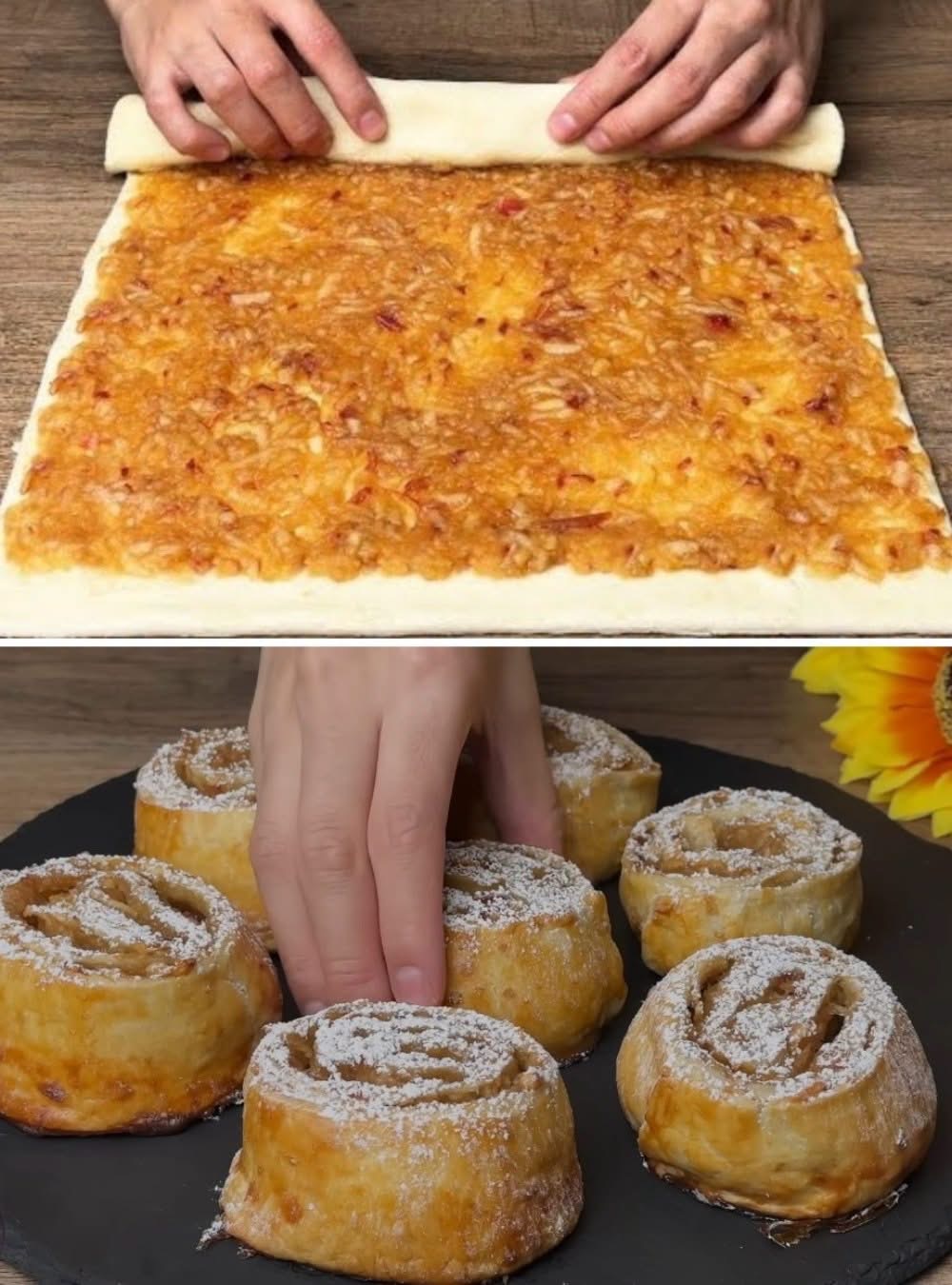
Nothing evokes the warmth of home quite like a Grandma’s Style Layered Apple Pie, featuring an ultra-flaky double crust, precisely layered spiced apples, and a rich caramel glaze. This definitive guide delivers the full culinary architecture, scientific mechanics, historical heritage, and nutritional data for baking the ultimate nostalgic showstopper.
Section 1: Introduction to the Ultimate Layered Apple Pie
Baking an apple pie is more than just combining basic pantry staples; it is an act of sensory time travel. The aroma of bubbling brown sugar, sharp apple cider vinegar, and spicy cassia cinnamon wafting from a hot oven has the unique ability to anchor us to memories of a simpler past.
Traditional apple pies often suffer from structural pitfalls: a hollow gap between the top crust and the fruit, a soggy bottom crust, or a loose, watery filling that collapses into a puddle when sliced. This specialized Mile-High Layered Apple Pie solves every single one of those structural issues through methodical preparation. By slicing the fruit paper-thin and shingling the pieces into concentric layers, you maximize density, eliminate air pockets, and ensure that every single wedge holds its shape perfectly on the plate.
Section 2: Comprehensive Ingredients List
Achieving the perfect balance of flavor and structural integrity requires high-quality ingredients. Each element must be carefully measured to guarantee a crisp pastry and a perfectly set filling.
For the Flaky Pastry Dough (Pâte Brisée)
- All-Purpose Flour: 375 grams (unbleached, approximately 3 level cups)
- Unsalted Butter: 225 grams (2 sticks), chilled completely and cut into 1/2-inch cubes
- Vegetable Shortening or Leaf Lard: 50 grams, chilled thoroughly
- Ice Water: 60 to 90 milliliters (4 to 6 tablespoons), kept near freezing
- Apple Cider Vinegar: 15 milliliters (1 tablespoon), ice-cold
- Fine Sea Salt: 6 grams (1 teaspoon)
- Granulated White Sugar: 12 grams (1 tablespoon)
For the Shingled Apple Filling
- Baking Apples (Mixed Varieties): 2.5 kilograms (approx. 5 to 6 pounds or 10-12 medium apples)
- Dark Brown Sugar: 150 grams (packed)
- Granulated White Sugar: 100 grams
- Fresh Lemon Juice: 30 milliliters (2 tablespoons)
- Ground Cinnamon (Cassia or Saigon): 8 grams (2 teaspoons)
- Ground Nutmeg: 2 grams (1/2 teaspoon, freshly grated)
- Ground Allspice or Cloves: 1 gram (1/4 teaspoon)
- Fine Sea Salt: 2 grams (1/4 teaspoon)
- Tapioca Starch or Cornstarch: 35 grams (approx. 4 tablespoons)
- Boiled Apple Cider or Apple Jelly: 60 milliliters (1/4 cup)
- Unsalted Butter: 30 grams (2 tablespoons), melted
For Assembly and the Decorative Crust Finish
- Large Egg: 1 whole egg (beaten with 1 tablespoon of heavy cream for the egg wash)
- Demerara or Coarse Sanding Sugar: 25 grams (2 tablespoons) for a crunchy topping
Section 3: Step-by-Step Instructions
Follow these chronological steps exactly to build your high-density pie.
Step 1: Prepare the Flaky Dough
- Whisk the flour, sea salt, and granulated sugar together in a massive chilled mixing bowl.
- Toss the ice-cold cubed butter and shortening into the dry flour mixture until every piece is coated.
- Work the fats into the flour using a pastry blender or your fingertips until the mixture resembles coarse meal with pea-sized chunks of butter remaining.
- Combine the cold ice water and apple cider vinegar in a small cup.
- Drizzle 4 tablespoons of the liquid over the flour mixture, tossing gently with a fork.
- Add more liquid, one teaspoon at a time, until the dough barely holds together when pressed.
- Divide the dough into two distinct portions (60% for the base crust, 40% for the top lattice).
- Flatten each piece into a smooth disc, wrap tightly in plastic, and chill in the refrigerator for at least two hours.
Step 2: Slice and Macerate the Fruit
- Peel, core, and cut the apples in half from stem to base.
- Slice the halves into paper-thin semi-circles using a sharp mandoline or chef’s knife, targeting a thickness of exactly 1/8 of an inch.
- Place the thin apple slices into an oversized bowl.
- Add the fresh lemon juice, granulated sugar, dark brown sugar, and sea salt.
- Toss the mixture thoroughly with your hands to coat every single slice evenly.
- Let the apples sit at room temperature for 45 to 60 minutes to draw out excess moisture.
- Strain the accumulated liquid through a colander into a saucepan, leaving the apples in the bowl.
Step 3: Reduce the Caramel Glaze
- Add the boiled apple cider (or apple jelly) directly into the saucepan containing the strained apple juices.
- Bring the mixture to a boil over medium-high heat, stirring frequently.
- Reduce the liquid until it transforms into a thick, syrupy, golden-brown caramel glaze.
- Remove the saucepan from the heat and whisk in the 2 tablespoons of melted butter.
- Pour this warm caramel glaze over the macerated apples, along with the tapioca starch, ground cinnamon, nutmeg, and allspice.
- Toss gently to ensure all spices and starches are distributed without breaking the thin fruit slices.
Step 4: Roll the Base Crust and Layer the Pie
- Roll out the larger disc of chilled dough on a lightly floured surface into a 13-inch circle.
- Transfer the dough circle carefully into a deep-dish 9-inch pie plate, leaving an inch of overhang.
- Begin laying the apple slices into the pastry shell by hand, shingling them flat in tight, concentric circles.
- Press down firmly with your palms every few layers to compact the fruit and eliminate hidden air pockets.
- Continue stacking until the fruit forms a dense, level mound that sits well above the rim of the dish.
Step 5: Construct the Top Lattice Crust
- Roll the remaining disc of dough into a 12-inch circle.
- Cut the dough circle into even strips using a pastry wheel or sharp knife.
- Weave the strips over the dense apple filling to create a tight, traditional lattice pattern.
- Trim, fold, and crimp the edges together tightly to seal the top and bottom crusts.
- Chill the assembled pie in the refrigerator for 30 minutes to firm up the butter before baking.
Step 6: Bake to Golden Perfection
- Preheat your oven to 425°F (218°C) and place a heavy baking sheet on the center rack.
- Brush the top of the chilled lattice crust with the egg wash and sprinkle generously with coarse Demerara sugar.
- Place the pie directly onto the preheated baking sheet.
- Bake at 425°F (218°C) for 20 minutes until the pastry begins to set and turn light golden.
- Reduce the oven temperature to 375°F (190°C) and continue baking for 50 to 60 minutes.
- Cool the finished pie completely on a wire rack for at least 4 hours before slicing.
Section 4: Advanced Methods and Structural Techniques
The difference between an amateur dessert and a bakery-quality masterpiece comes down to fundamental food science. This section breaks down the two key methods used to perfect this pie’s texture.
[Macerate Apples] ──► [Draw Out Liquid] ──► [Reduce Liquid to Caramel]
                                                      │
[Pack Slices Dense] ◄── [Toss Apples with Starch] ◄───┘
The Maceration and Reduction Method
Raw apples contain high amounts of water and cell-bound air. When baked directly inside a pie, this liquid releases all at once, boiling the fruit into mush and creating a large hollow gap beneath the top crust.
Macerating the fruit with sugar and salt before baking draws out this excess water through osmosis. Boiling this drawn-out liquid down into a concentrated glaze serves two purposes: it locks intense apple flavor back into the fruit and prevents a soggy bottom crust.
The Concentric Shingling Method
Tossing chopped or chunky apples into a pie dish leaves large gaps of trapped air. As the fruit softens in the oven, these empty pockets collapse, causing the top crust to sag or sink.
Slicing the apples thin and shingling them flat in concentric rings creates a highly stable structure. This structural density allows the pie to slice cleanly like a cake while keeping the top lattice crust perfectly supported.
Section 5: Historical Evolution of Apple Pie
The phrase “as American as apple pie” is iconic, but the roots of this dessert trace back through centuries of global history.
| Era / Culture | Structural Styling & Characteristics | Notable Technical Developments |
|---|---|---|
| Medieval England (14th Century) | Inedible “coffins” or “ryes” (hard rye pastry shells) containing unpeeled, unsweetened fruit. | Used strictly for food preservation; the thick crust shell was discarded. |
| French Renaissance | Elegant open-face tarts (Tarte Tatin) featuring uniform, caramelized fruit slices. | Introduced classic puff pastry and advanced fruit layering techniques. |
| Colonial America | Deep-dish, rustic pies made with dried or preserved winter apples. | Adapted European baking styles to fit rugged, wild ingredients. |
| 19th Century America | Double-crusted, heavily spiced pies utilizing refined cane sugar and lard. | Solidified the modern sweet apple dessert as a staple of home baking. |
Section 6: Formation and Layer Assembly Mechanics
Understanding the internal architecture of a layered pie helps prevent common baking mistakes during assembly.
- Crust Insulation: The base dough must be rolled to an even thickness of 1/8 inch. If the base is too thin, it will tear under the weight of the dense fruit filling; if it is too thick, the bottom will stay doughy and underbaked.
- Density Packing: When assembling the layers, press down firmly on the fruit with clean hands after every three layers. This compression pushes out tiny pockets of air, settling the fruit into a solid mass that cuts beautifully.
- The Venting System: A lattice top crust acts as a natural ventilation system. It allows steam from the baking fruit to escape easily, keeping the pastry strips crisp and preventing the filling from getting watery.
Section 7: Nutritional Deep-Dive
This homemade pie uses whole, real ingredients without artificial preservatives. The detailed nutritional breakdown per generous slice (based on a 9-inch pie cut into 8 equal servings) includes:
- Calories: 540 kcal
- Total Fat: 24g (Saturated Fat: 14g, Monounsaturated Fat: 8g)
- Cholesterol: 65mg
- Sodium: 320mg
- Total Carbohydrates: 78g (Dietary Fiber: 6g, Total Sugars: 42g)
- Protein: 5g
- Vitamin C: 12% DV
- Calcium: 4% DV
- Iron: 10% DV
Section 8: Health and Ingredient Benefits
While this deep-dish layered pie is a rich, indulgent dessert, its core components offer several natural health benefits.
- Dietary Fiber and Pectin: Baking apples are rich in soluble fiber and apple pectin, which support healthy digestion and help regulate blood sugar levels.
- Antioxidant Compounds: Apples contain high amounts of polyphenols and Vitamin C, which help protect cells from oxidative stress.
- Metabolic Support from Spices: Ground cinnamon and nutmeg contain natural anti-inflammatory compounds that help support healthy digestion.
- Whole Food Integrity: Making your pie crust from scratch avoids the hydrogenated trans fats, artificial flavorings, and chemical preservatives commonly found in store-bought desserts.
Section 9: For the True Apple Pie Lover
For passionate bakers, a great pie is an art form. You can easily customize this classic recipe to suit your own personal taste:
- The Ultimate Apple Blend: For the best balance of flavor, mix tart, firm varieties like Granny Smith with sweet, aromatic baking apples like Honeycrisp, Braeburn, or Jonagold.
- The Cheese Tradition: In New England and parts of Great Britain, it is tradition to serve a slice of warm apple pie alongside a sharp piece of aged white cheddar cheese. The savory saltiness of the cheese cuts through the sweetness of the fruit beautifully.
- Classic À La Mode: For the ultimate comfort dessert, serve your warm slice of pie with a generous scoop of cold vanilla bean ice cream. The melting cream blends with the spiced apple glaze to create a rich sauce.
Section 10: Conclusion and Final Verdict
Mastering a towering, layered apple pie is a wonderful milestone for any home baker. By using professional techniques—like macerating the fruit to prevent a soggy crust and packing the slices tightly to eliminate air pockets—you elevate a simple rustic recipe into a magnificent centerpiece.
Taking the extra time to slice, glaze, and shingle the apples creates a beautiful presentation and a delicious blend of textures. Pulling this golden, bubbling masterpiece out of your oven brings the unmistakable comfort of a traditional farmhouse kitchen straight into your home.
Next Steps for Your Baking Journey
If you want to tailor this recipe further, let me know:
- Your preferred apple varieties available locally.
- Whether you want to adapt this for a gluten-free or vegan diet.
- If you would prefer a streusel crumb topping instead of a lattice crust.
I can provide specific adjustments to match your exact baking goals!